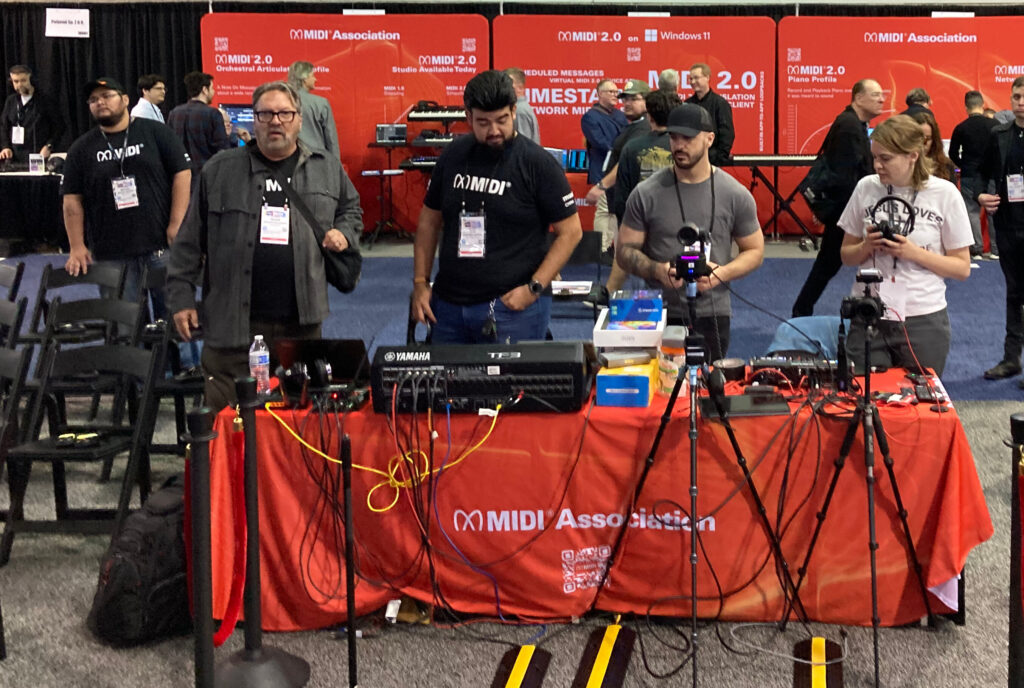
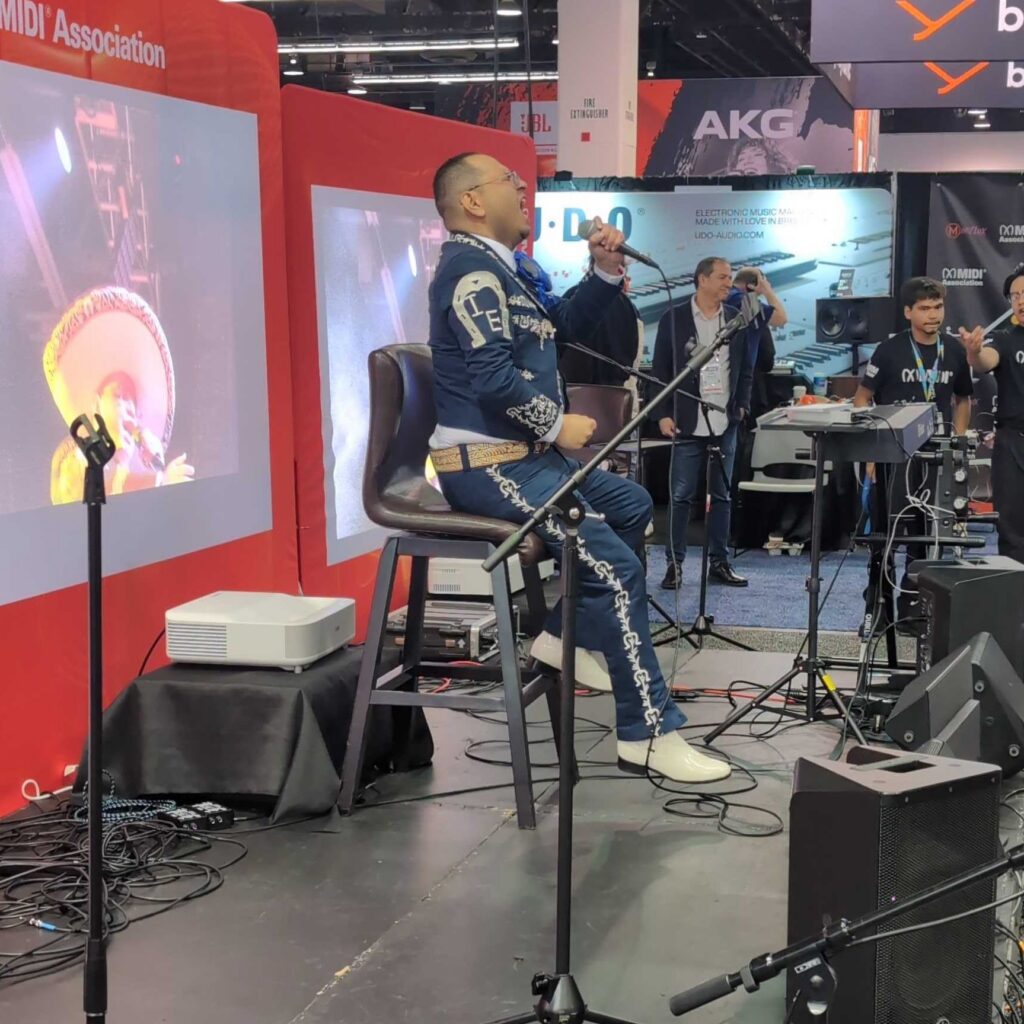
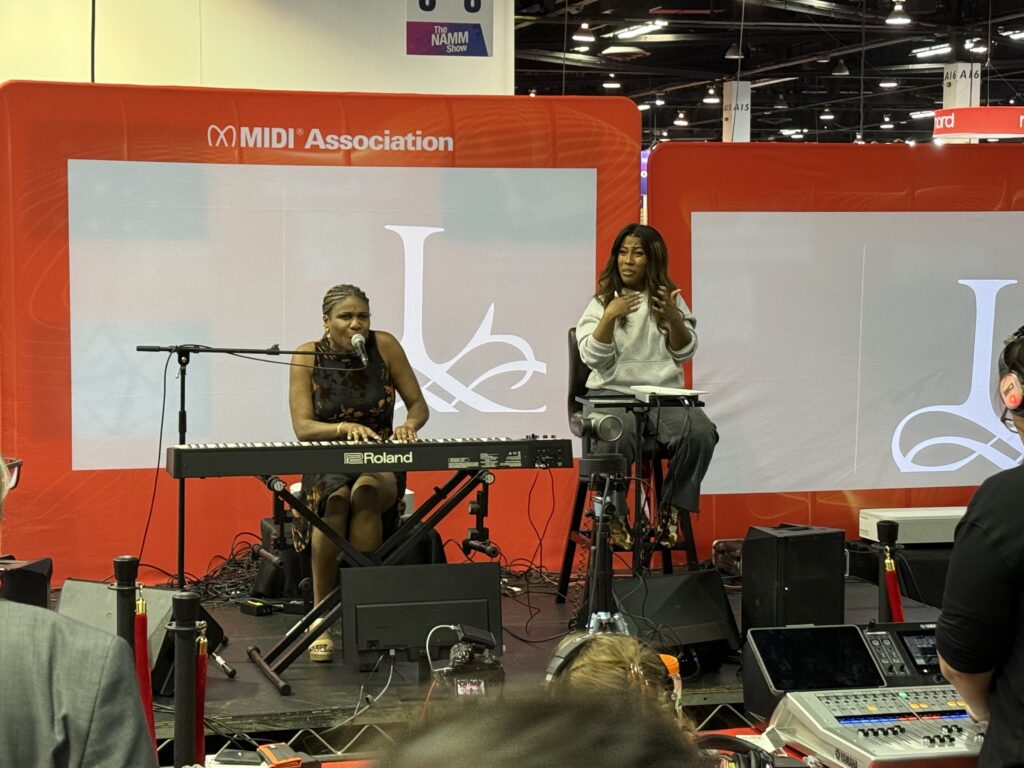
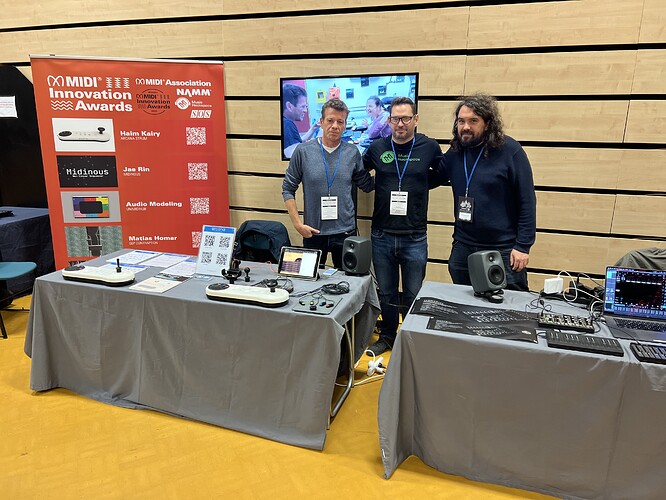
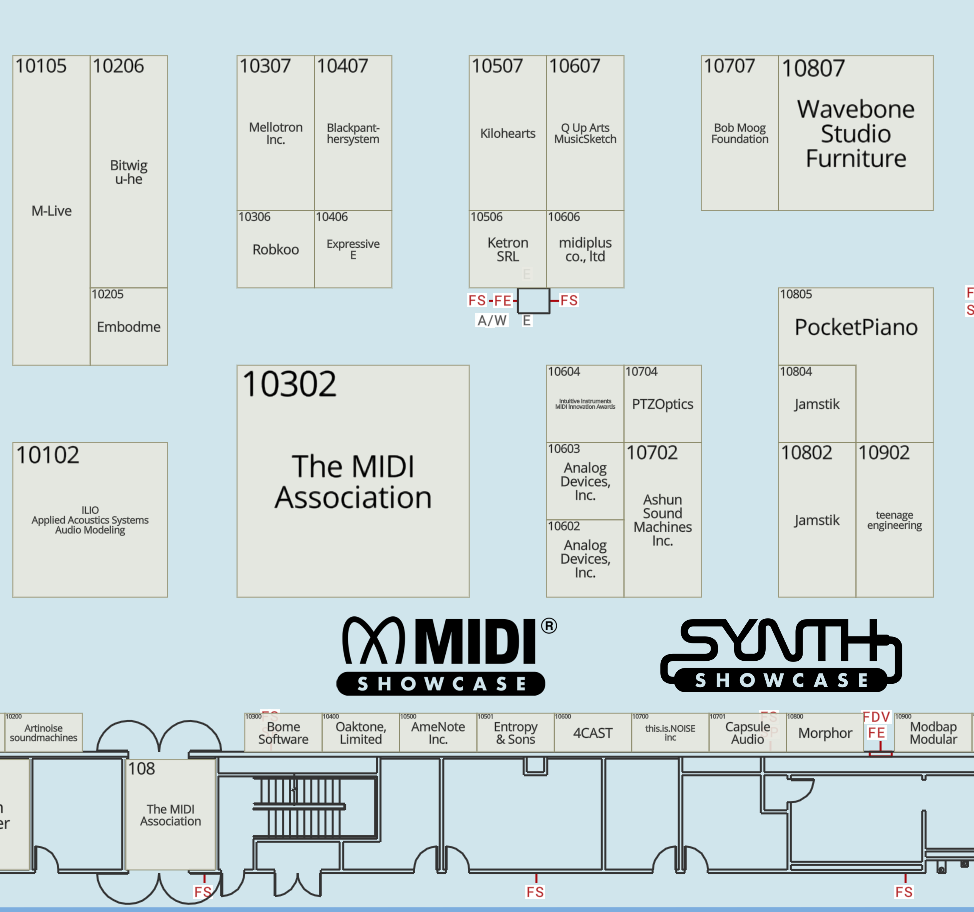
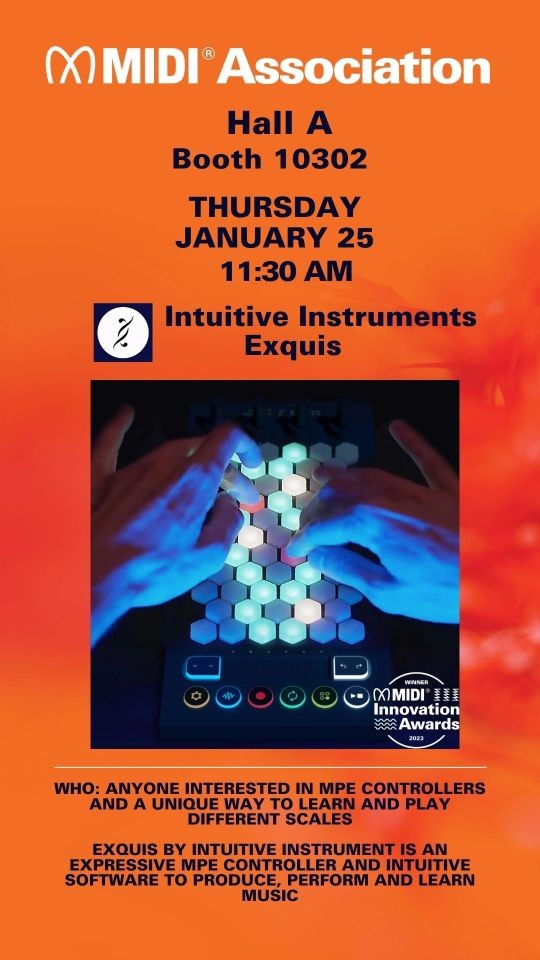
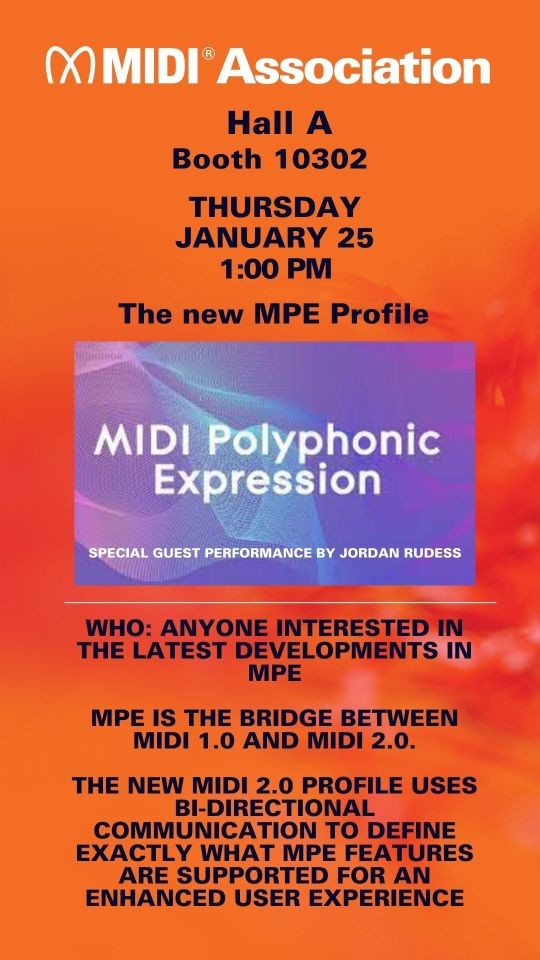
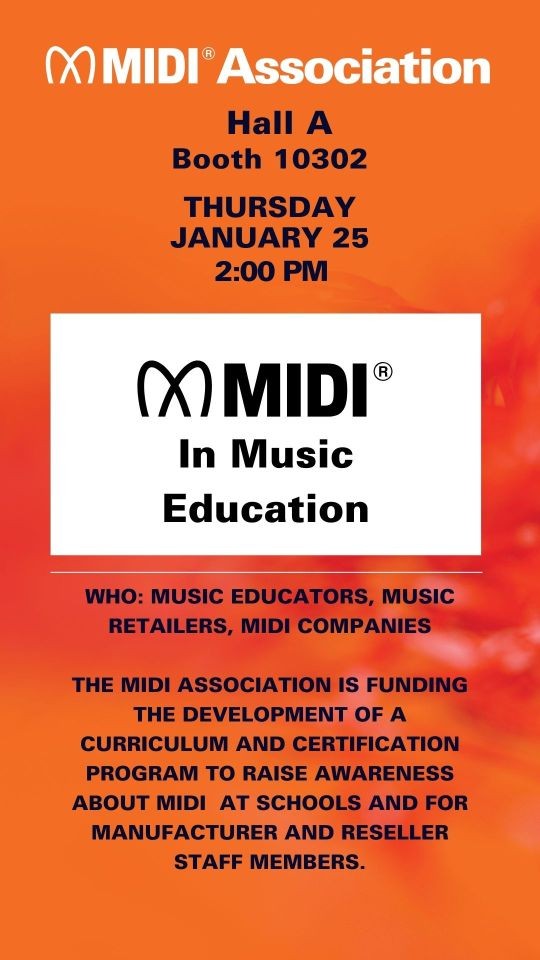
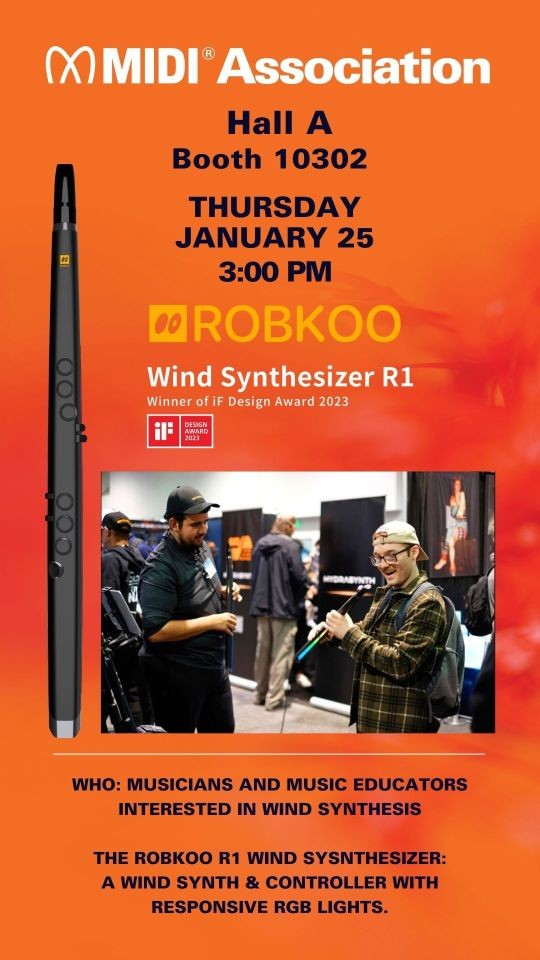
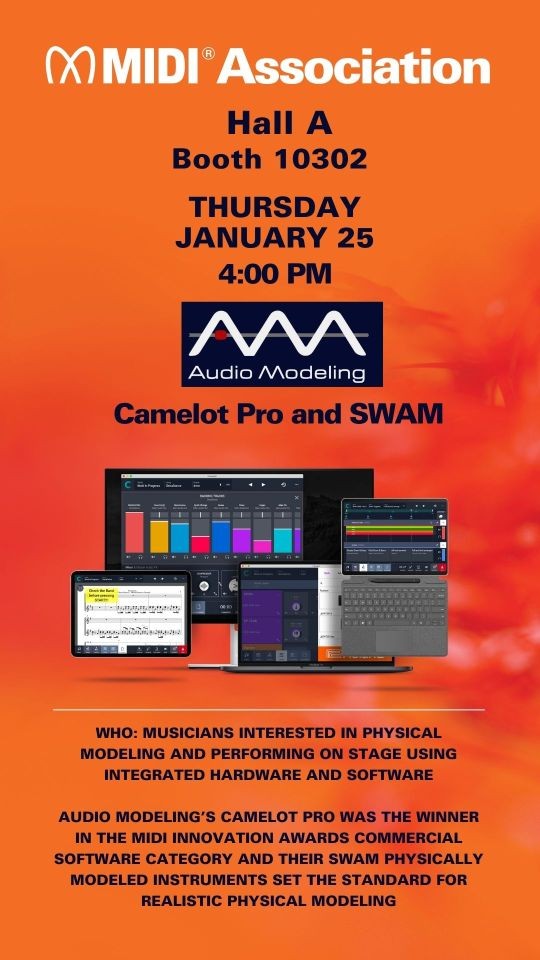
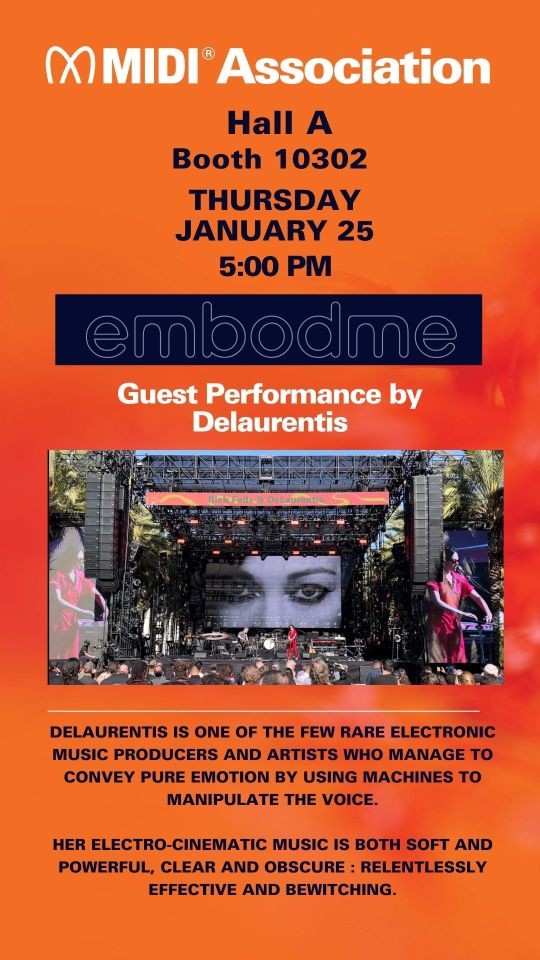
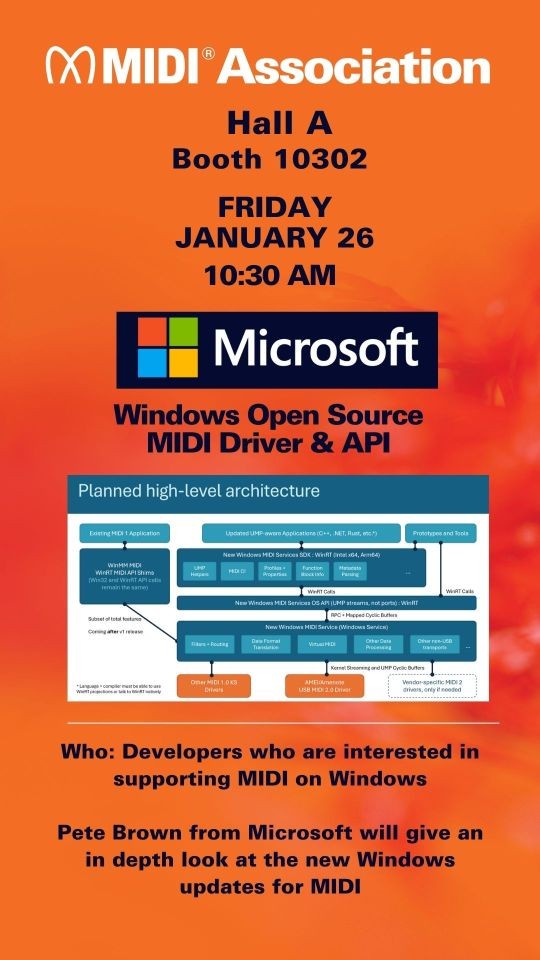
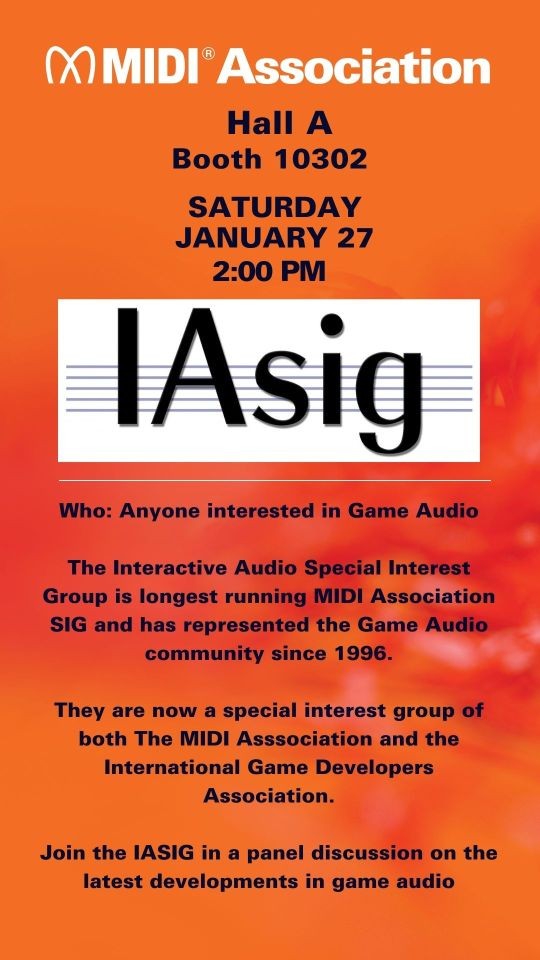
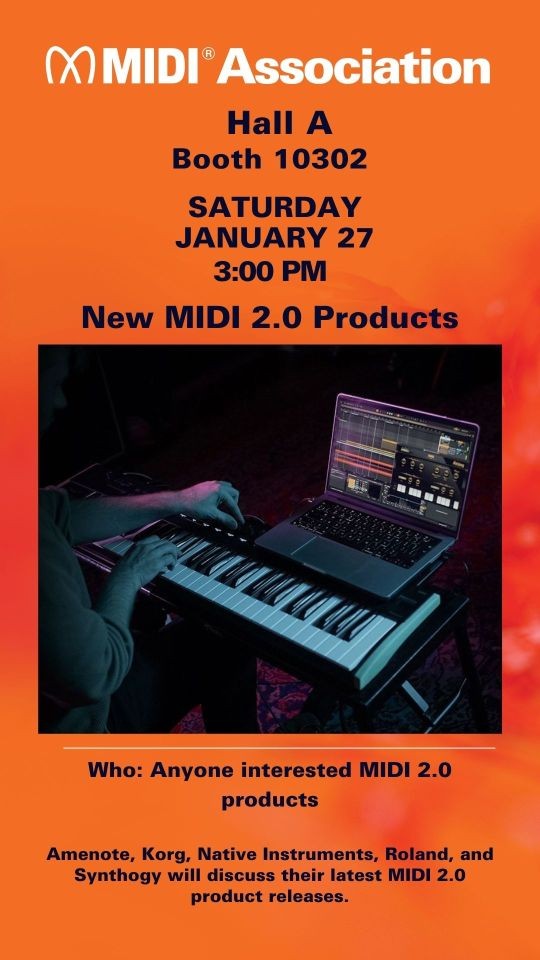
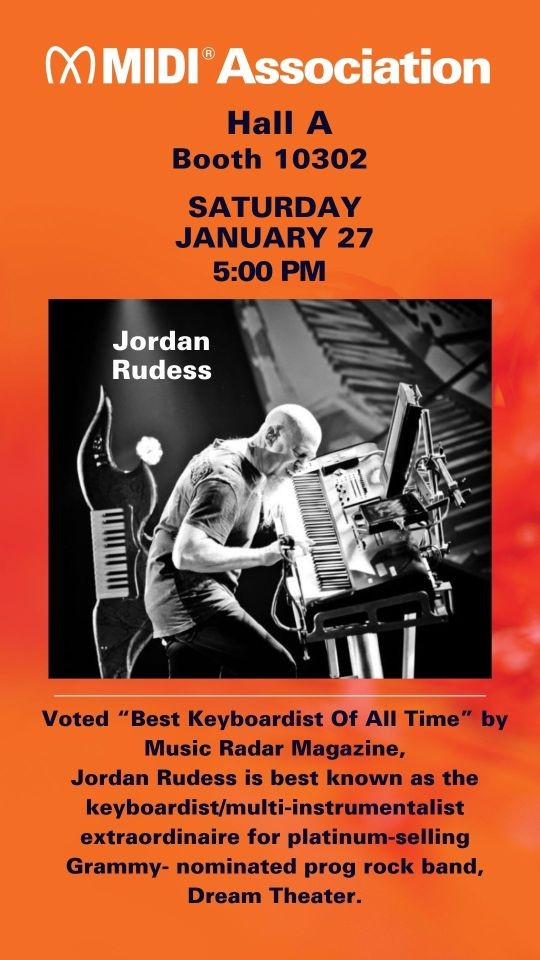
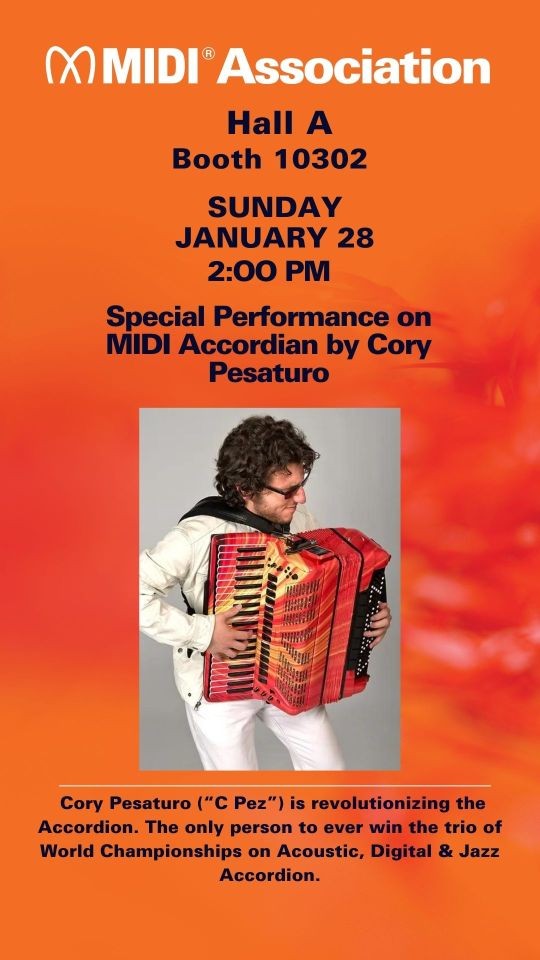
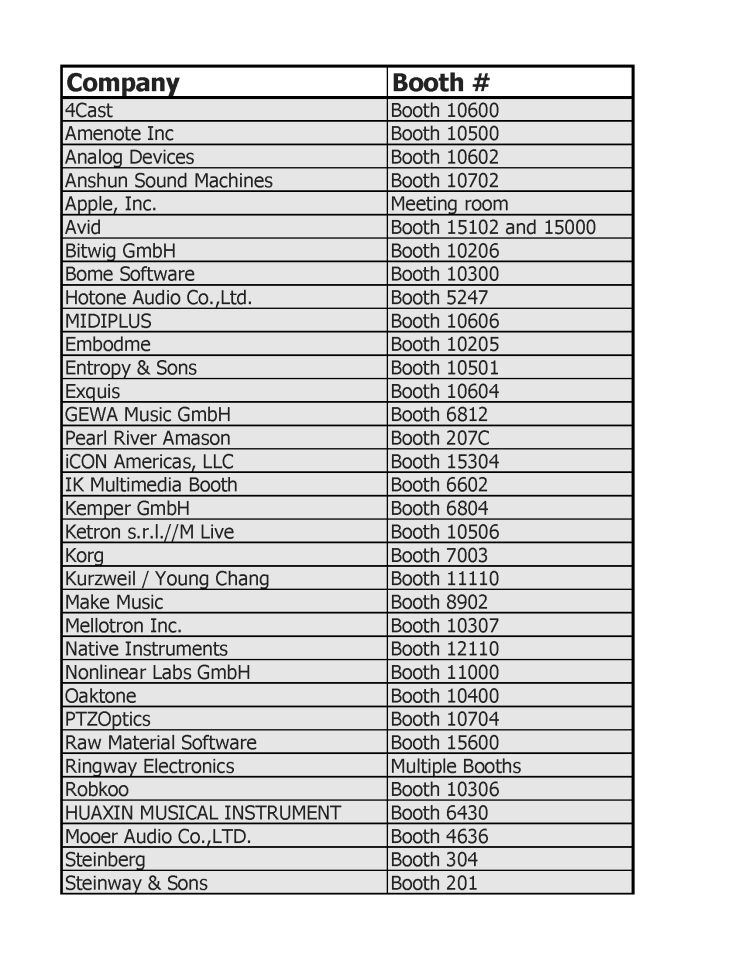
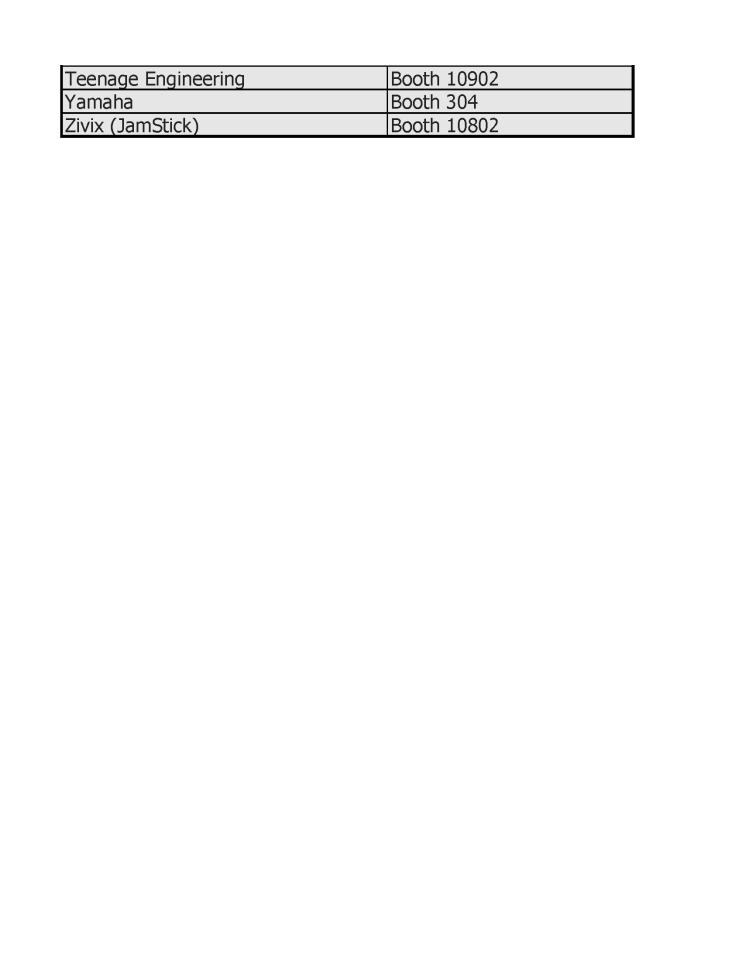
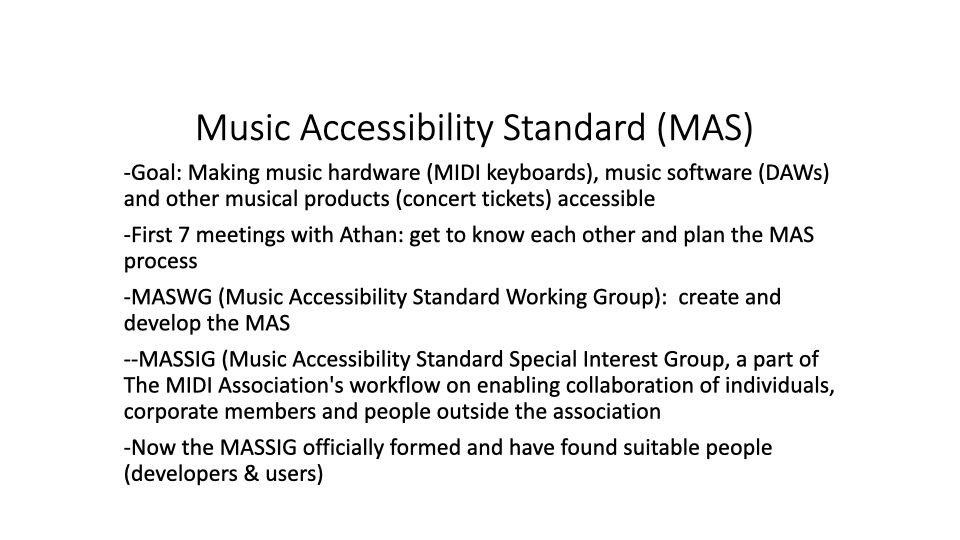
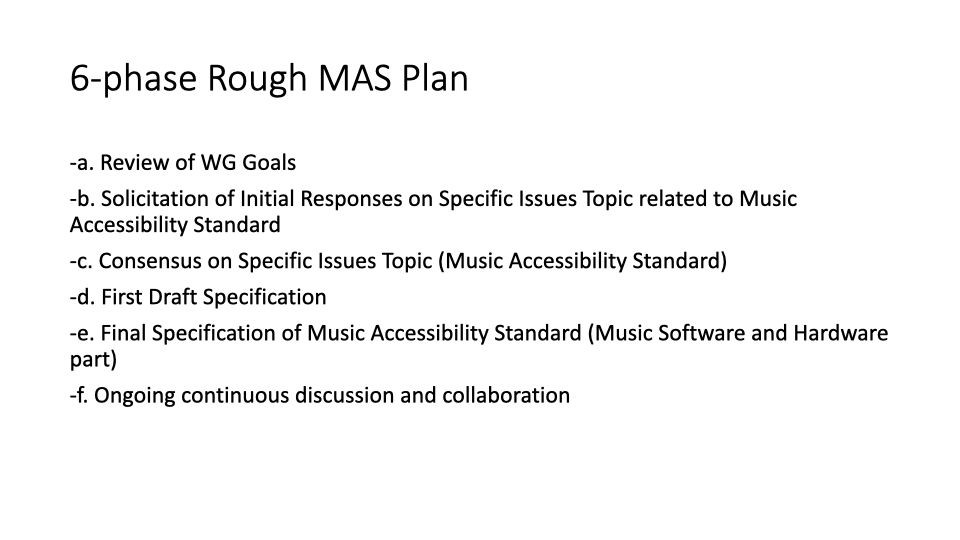
As usual, NAMM 2026 was a blur of activity at The MIDI Association booth.
We hosted 21 events over three days at our booth and participated in many Tec Tracks and A3E sessions as well.
We know this article has a LOT of information in it. But take your time and read through everything. Maybe bookmark it and come back to it a couple of times.
Finally much of the best stuff is at the very end so make sure you see the details of our MIDI In Music Education and Music Accessibility initiatives.
We recorded audio and video or all our sessions and over the course of the next two weeks will be doing articles on each of the events we hosted and participated in.
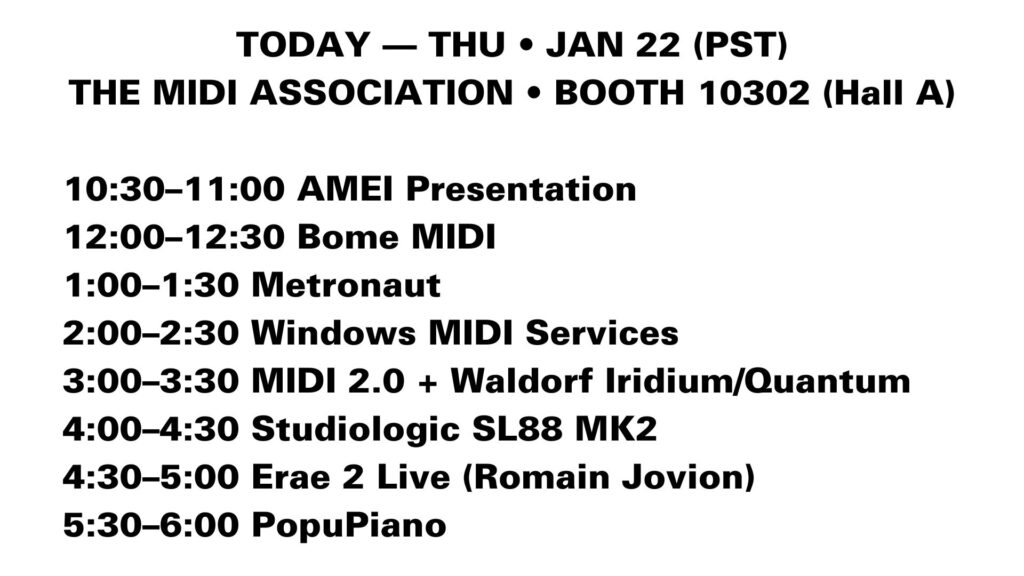
The MIDI Association Thursday Booth Schedule
Day 1 – MIDI 2.0 Product Day
The first day was focused on MIDI 2.0 products in the market.
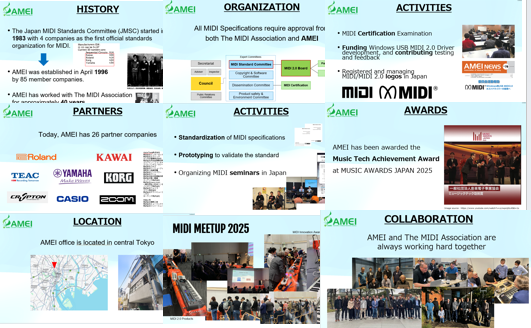
The day started with a presentation by Takayuki Tomisawa from Roland, Chair of AMEI’s MIDI 2.0 working group who explained their long cooperative relationship with the MIDI Association.
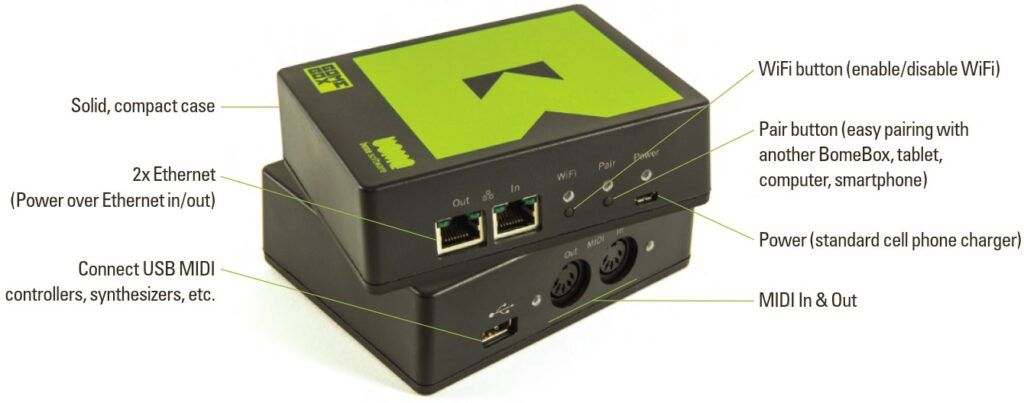
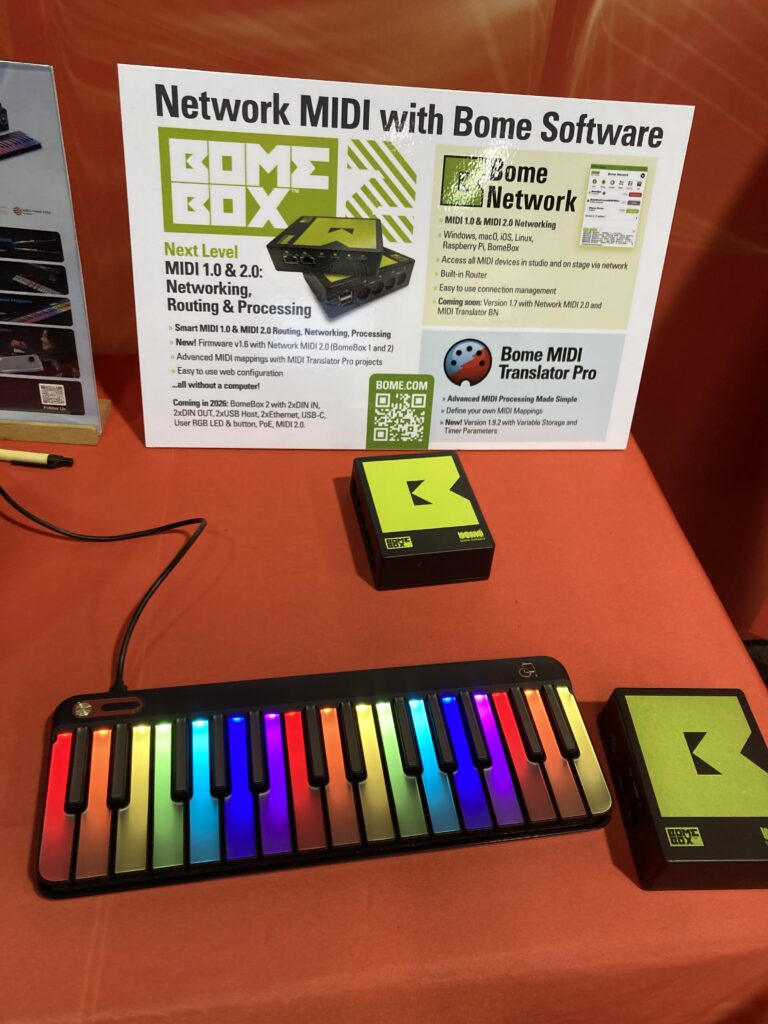
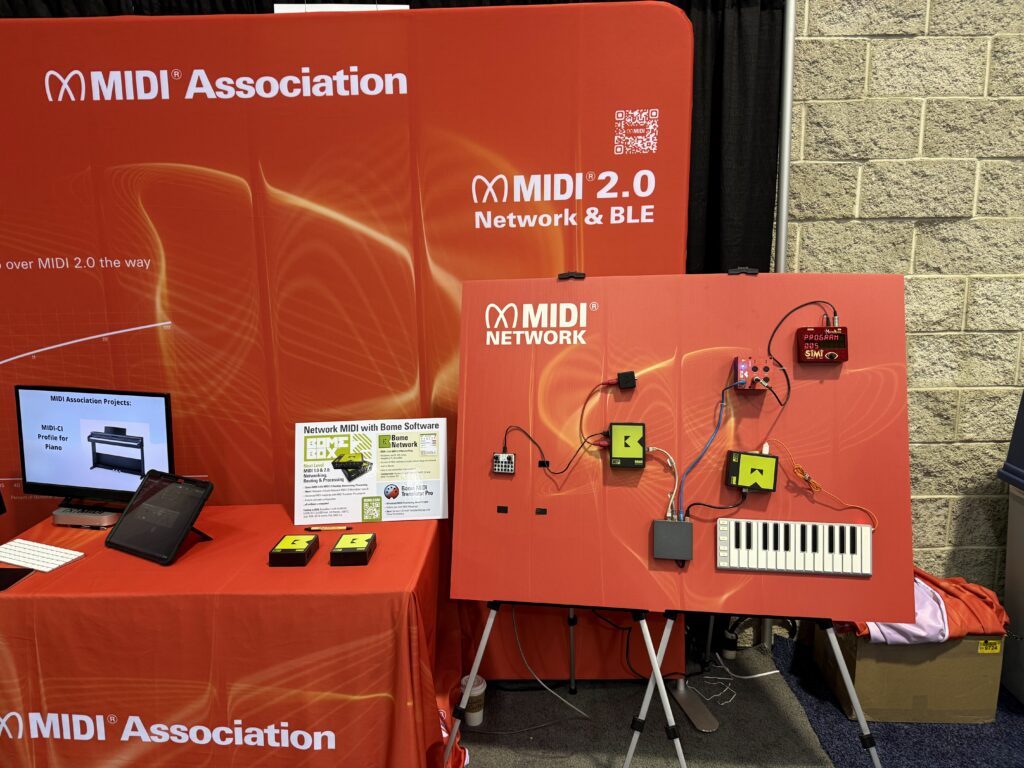
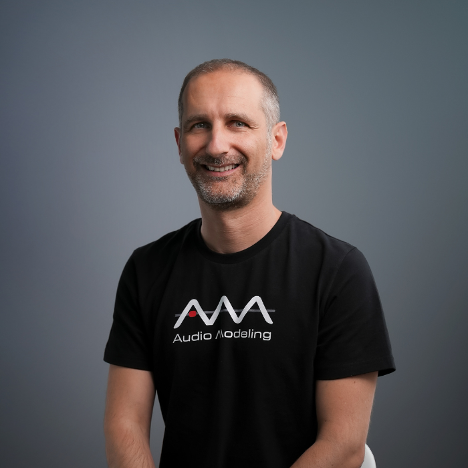
Florian Bomers introduced the Bome MIDI products—Bome MIDI Translator Pro, Bome Network, and the BomeBox—and demonstrated how they can be used individually or together to enable advanced MIDI routing, processing, and control. Using real-world examples, he showed practical solutions before highlighting what’s new and offering an exclusive look at what’s coming in 2026.
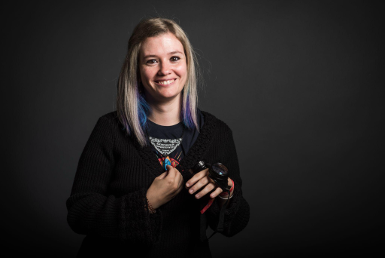
One of our newest members is Metronaut which is headed up by Arshia Cont.
Metronaut is a unique AI-Powered mobile App for amateur musicians! Metronaut allows musicians to Practice and learn thousands of masterpieces while getting feedback and being accompanied by high-quality backing tracks that adapts to them as they practice.
Chosen by Apple as Editor’s Choice for two consecutive years, Metronaut is empowering hundreds of thousands musicians worldwide in 21 languages by helping them to enjoy practicing music.
Arshia Cont is the CEO and Co-founder of the Music Tech Startup Antescofo, behind the mobile Application Metronaut. After completing a PhD in Computer Music in UC San Diego, he served as research scientist between 2008 and 2016 at IRCAM, a center dedicated to fostering music technology and artistic creativity; and head of the MuTant research team at INRIA. In the same period, he acted as the director of Research/Creativity Interfaces in the institute where he founded the Ircam Musical Research Residency program and pushed Ircam Forum to the social network era.
One of the most important announcements about MIDI 2.0 came from Microsoft. We found an excellent article from the European Motion Picture Association.
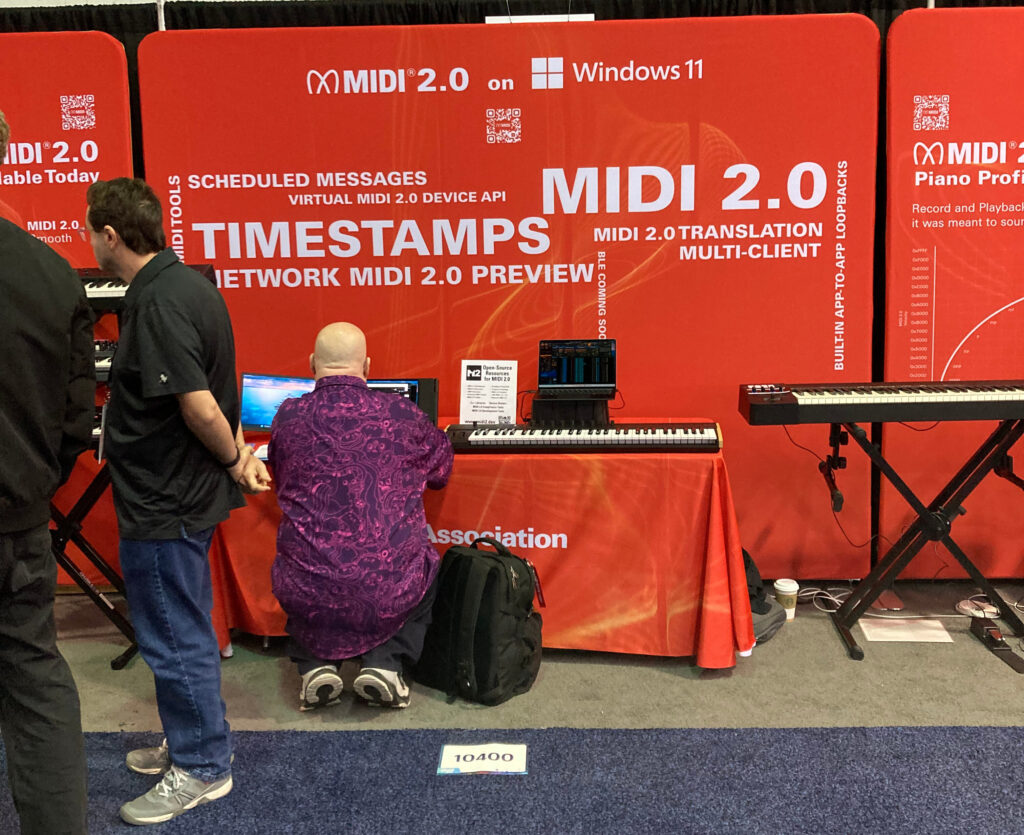
At NAMM 2026, Microsoft made waves by highlighting a major step forward in music technology: its ongoing Windows MIDI Services initiative — a full-stack integration of MIDI 2.0 support and next-generation MIDI tools into Windows 11.
This represents the most significant update to MIDI on Windows in decades and promises a huge leap for musicians, producers, and developers working in electronic music and digital audio production.
What’s New in Windows MIDI Services
Built-In MIDI 2.0 Support Microsoft has introduced the Windows MIDI Services stack with full support for the MIDI 2.0 standard — offering higher-resolution data messages, bi-directional communication, improved timing, and richer control over musical parameters compared with the decades-old MIDI 1.0 protocol.
Universal USB MIDI 2.0 Class Driver Thanks to a collaboration with AMEI (Association of Musical Electronics Industry) and contributions from partners like AmeNote, the new USB MIDI 2.0 class driver enables both MIDI 2.0 devices and compatible MIDI 1.0 devices to communicate efficiently with Windows applications.
Multi-Client & App Interoperability Windows MIDI Services brings multi-client MIDI support, meaning multiple applications can share access to MIDI endpoints simultaneously — a big improvement for workflows involving DAWs, controllers, and monitoring tools.
Developer Tools & SDK Accompanying the core stack is a Windows MIDI Services App SDK and set of tools that make it easier for developers to build next-generation music apps and utilities with enhanced MIDI features. These include utilities for diagnostics, loopback creation, port management, and more.
Why This Matters to Musicians For the first time, Windows users gain an integrated platform that fully embraces the potential of MIDI 2.0, a standard designed to unlock higher expressiveness, finer control resolution, and modern two-way communication between instruments and software.
While initially available via Windows Insider previews and SDK releases, this technology points toward broader availability throughout 2026 as Microsoft rolls out support into production Windows 11 updates.
Whether you’re using advanced controllers, cutting-edge synths, or complex DAW setups, the new Windows MIDI Services stack promises more reliable timing, better device interoperability, and richer creative potential for electronic musicians and producers everywhere.
Learn more about Windows MIDI Services and the MIDI SDK tools on Microsoft’s official GitHub and documentation pages.
European Motion Picture Association
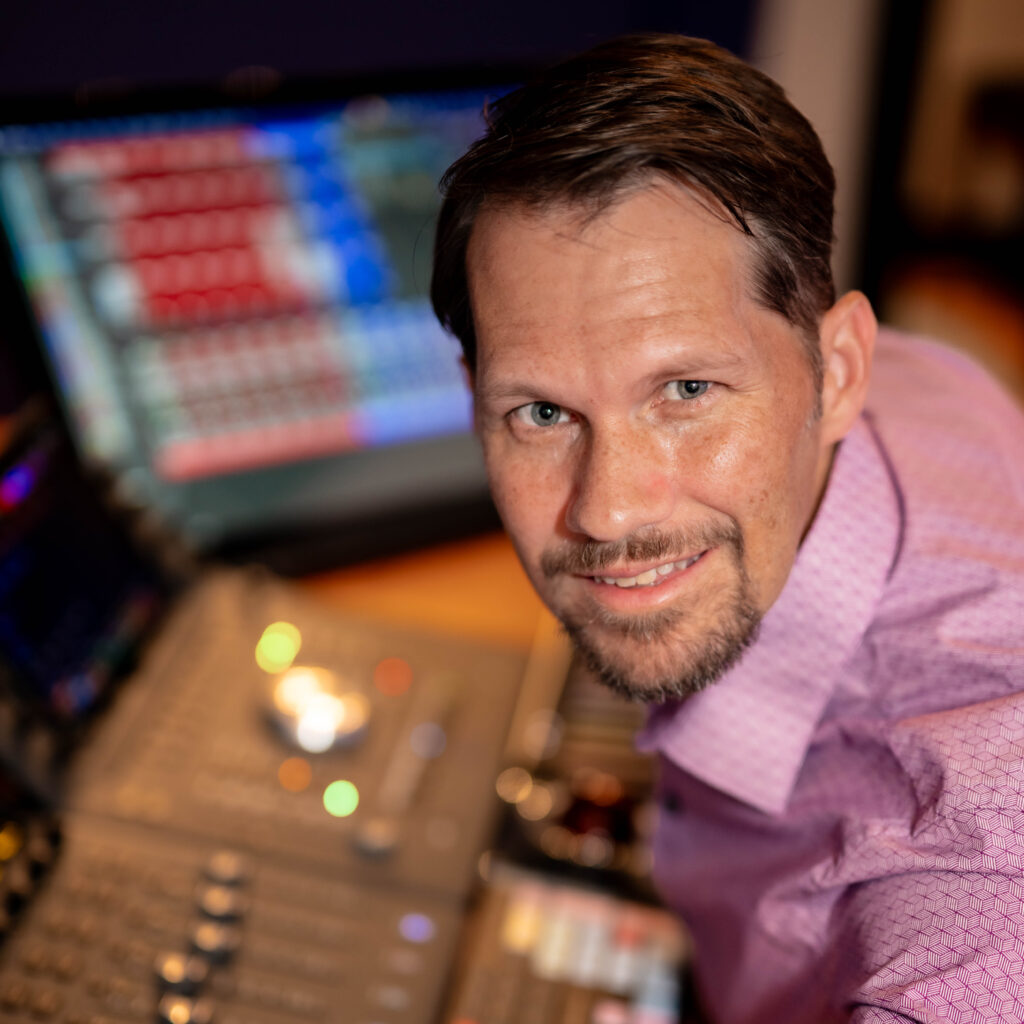
Here is a bit more detail from MIDI Association Exec Board Chair and Microsoft lead MIDI developer, Pete Brown.
As announced at the NAMM Show, assuming all proceeds as planned, Windows MIDI Services will start rolling out at the end of this week to retail supported Windows 11 builds (24h2, 25h2). This will be installed as a KB update, through Windows Update. If you do not have Windows Update enabled (LTS etc.) you likely will not get the new feature.
Pete Brown
Microsoft
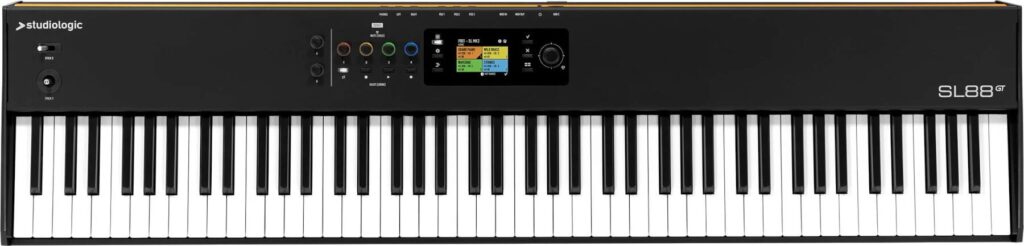
StudioLogic SL88 MK2
There are now a number of MIDI controllers on the market that support MIDI 2.0 hi resolution controllers including the StudioLogic SL88 MK2.
At the end of every day we featured performances showing off MIDI 2.0 in action.
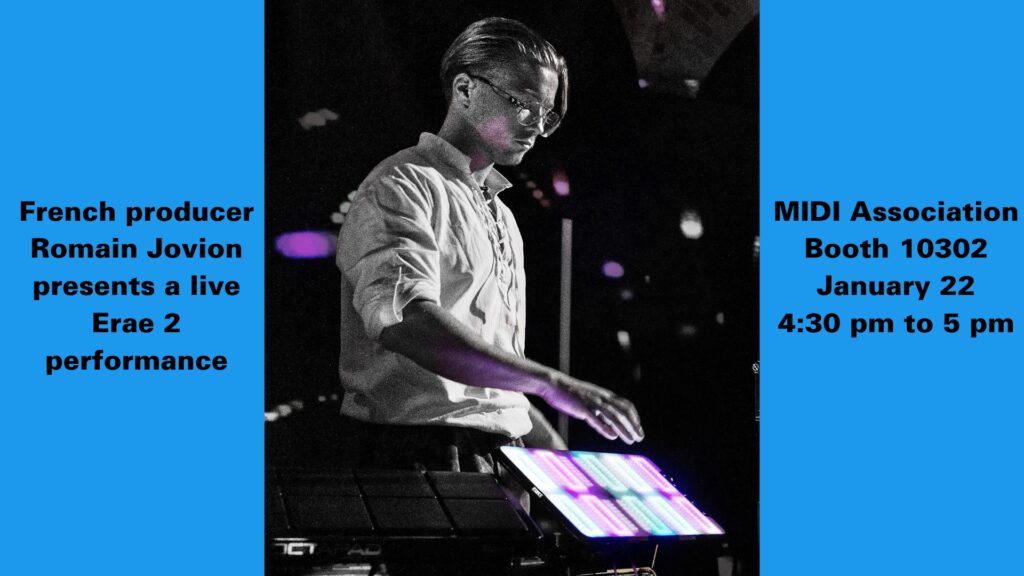
This performance featured French Producer Romain Jovian performing on the Erae Touch.
The multitrack recordings of the performances are currently being mixed and synced with the multi camera video feeds controlled by a Roland video switcher.
We are planning on having all the performance up in the next two weeks.
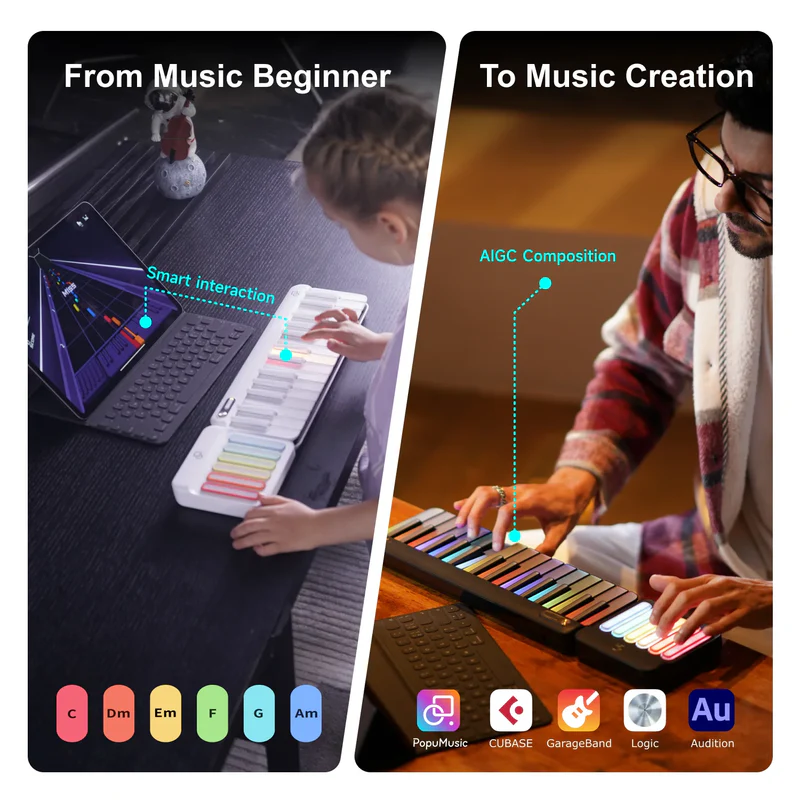
PopuPiano and Party Speaker
New MIDI Association member Popumusic presented their products. On top of doing a presentation, the folks from Popumusic also loaned us lighted keyboards and party speakers for our network display.
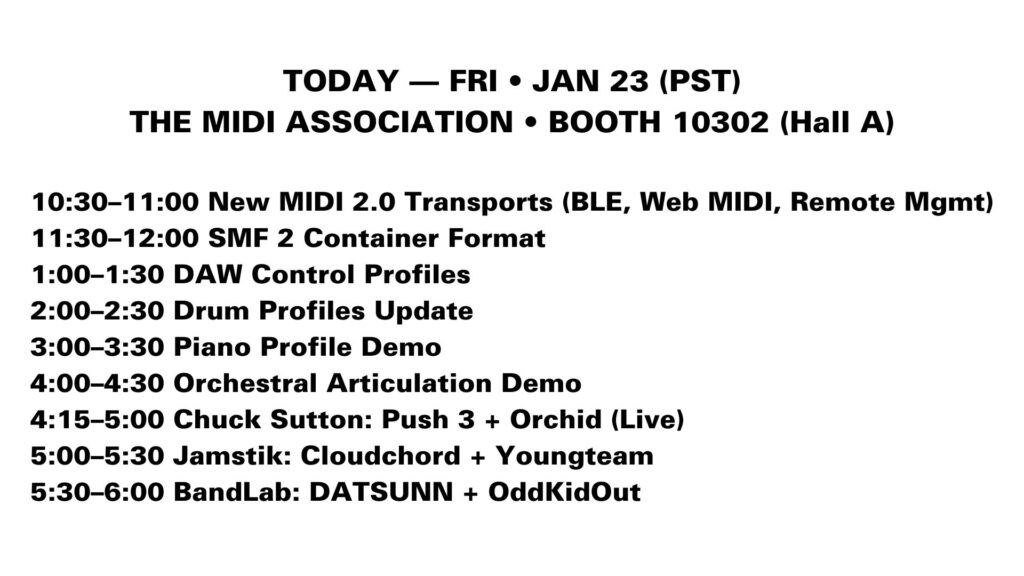
The MIDI Association Friday Booth Schedule
Friday focused on MIDI 2.0 specifications and at the end of the day performances from young artists from Smoothloop.
New MIDI 2.0 Transports-BLE, Web MIDI and Transport Remote Management
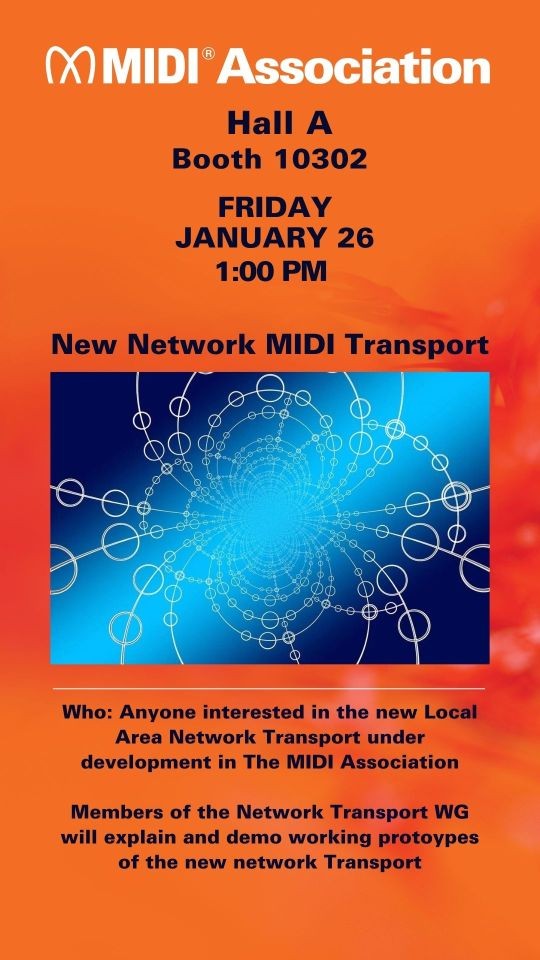
Members of the Transport working group highlighted the latest progress on MIDI 2.0 transports for Bluetooth, Web MIDI and updates to the Network spec to add remote management capabilities.
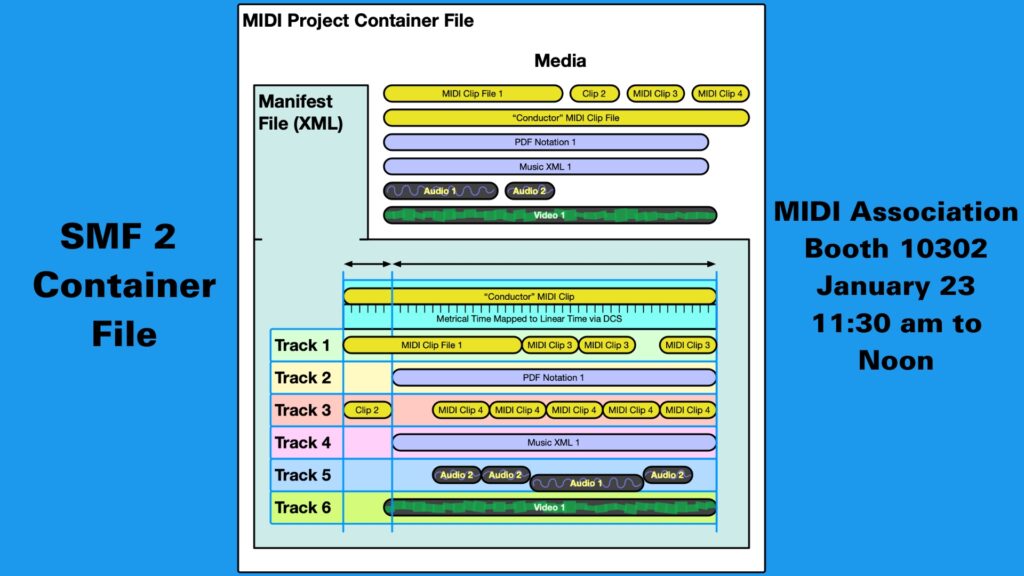
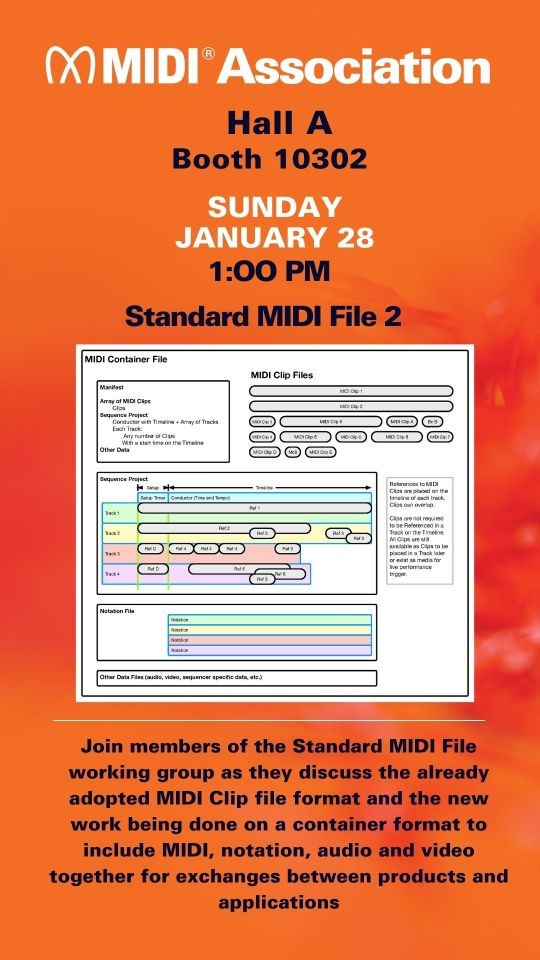
SMF2 Container Format
The MIDI Project Container File format is intended to deliver multiple tracks of MIDI data and other media. The set of tracks and media used in the file are enumerated and arranged in a Manifest file in XML format. Media types supported include: ● MIDI Clip Files (for MIDI 1.0 and MIDI 2.0) ● Musical Notation (MusicXML or PDF ) ● Audio Files ● Video Files ● Lyrics: may be in MIDI Clip Files and/or in Musical Notation files. ● Metadata – XML and MIDI Message
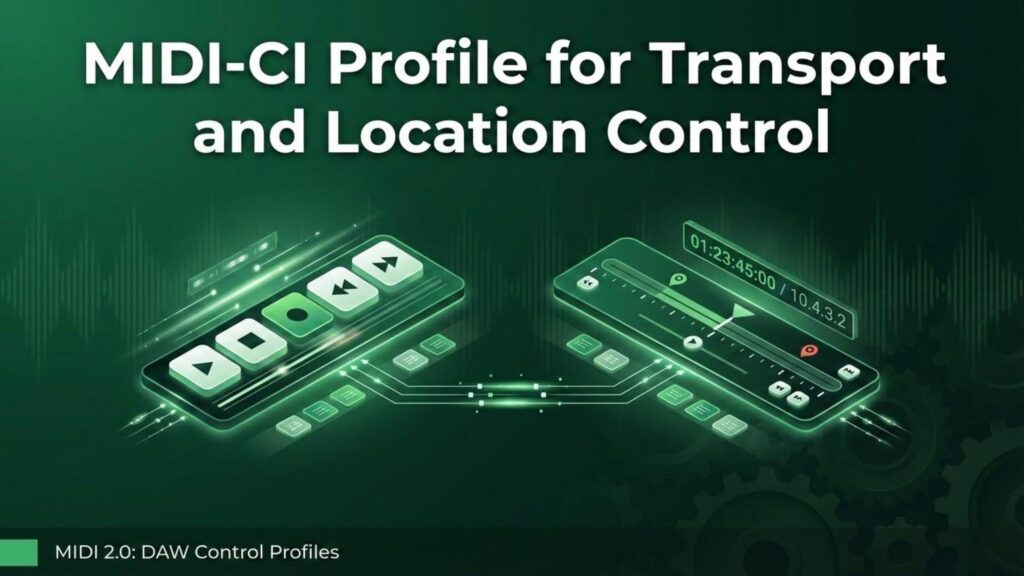
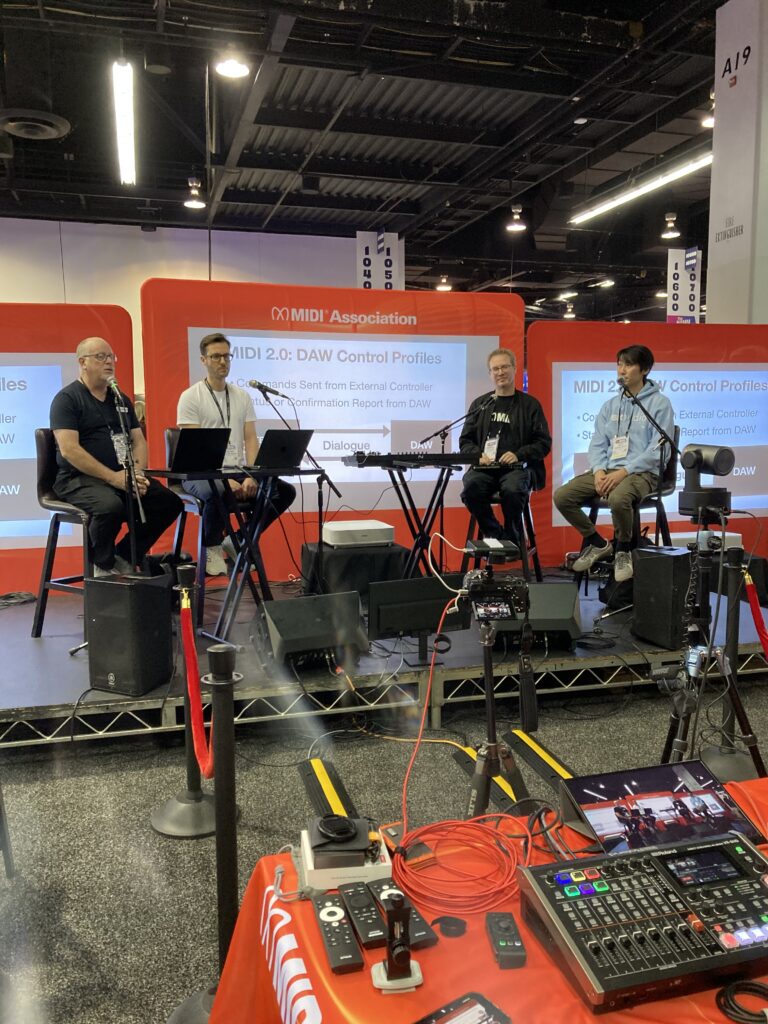
DAW Control Profiles
The MIDI Association is working on a modular set of MIDI 2.0 DAW Control Profiles intended to eventually replace Mackie Control with a unified industry standard for all hardware and software.
MIDI 2.0 WG Chair Mike Kent from Amenote, Jochen Troppe from Steinberg and TSB Chair Andrew Mee
The modular approach was taken because of the wide variety of capabilities of DAW controllers from simple start, stop and record buttons to elaborate devices with multiple displays.
Drum Profiles Update
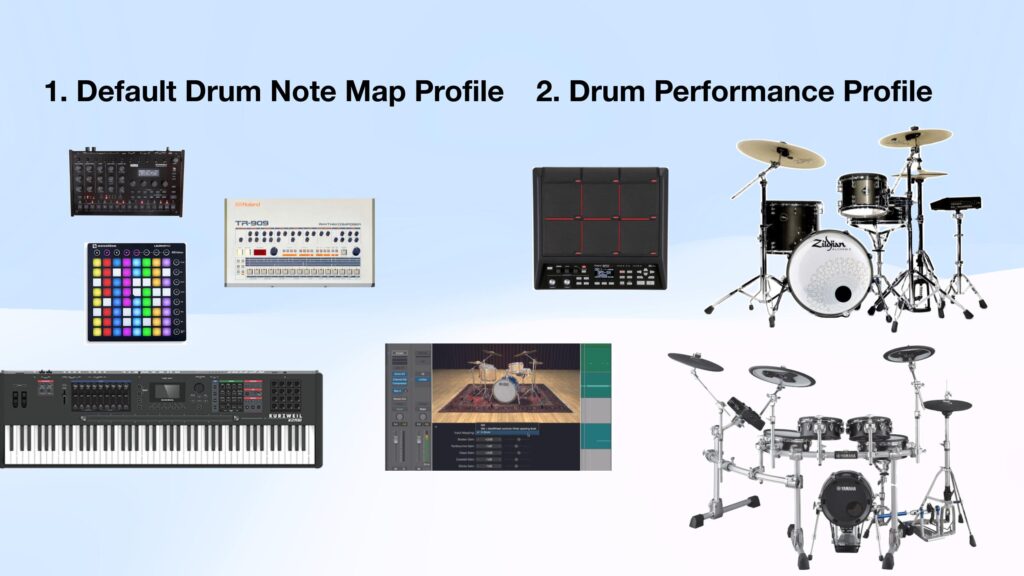
The MIDI Association has worked on two Drum Profiles in 2025.
The Default Drum Note Map Profile specifies 62 Drum/Percussion Sounds mapped to Specified Note Numbers.
This is the common GM based mapping in many Drum Machines and Synthesizers since the 1980s.
This Profile was adopted in the fall of 2025.
The Drum Performance Profile is focused on the more advanced features available in electronic drums kits which have positional sensing for cymbals and drums and complex hihat configurations.
The Drum Performance Profile design is complete and it should be approved in Q1 of 2026.
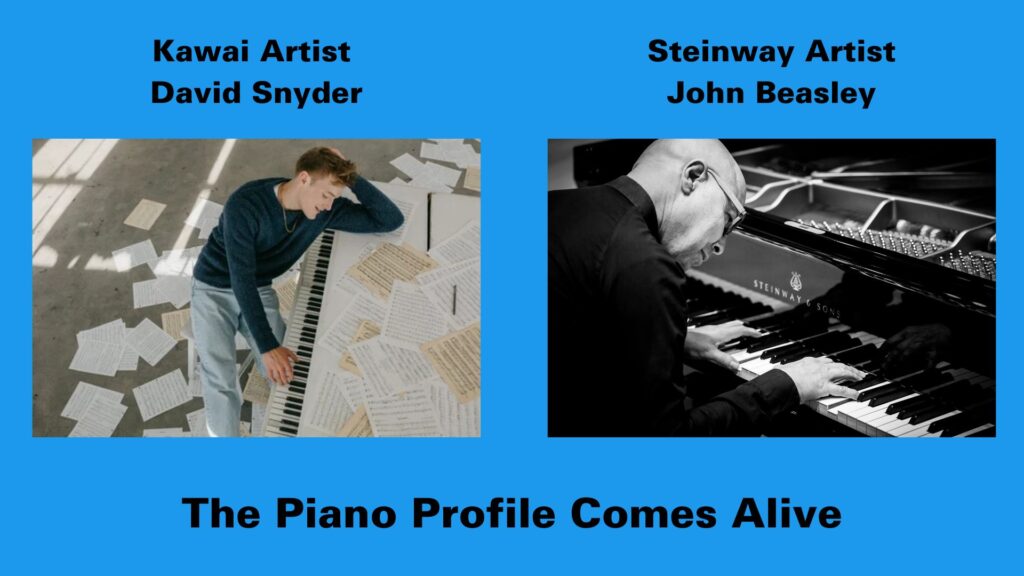
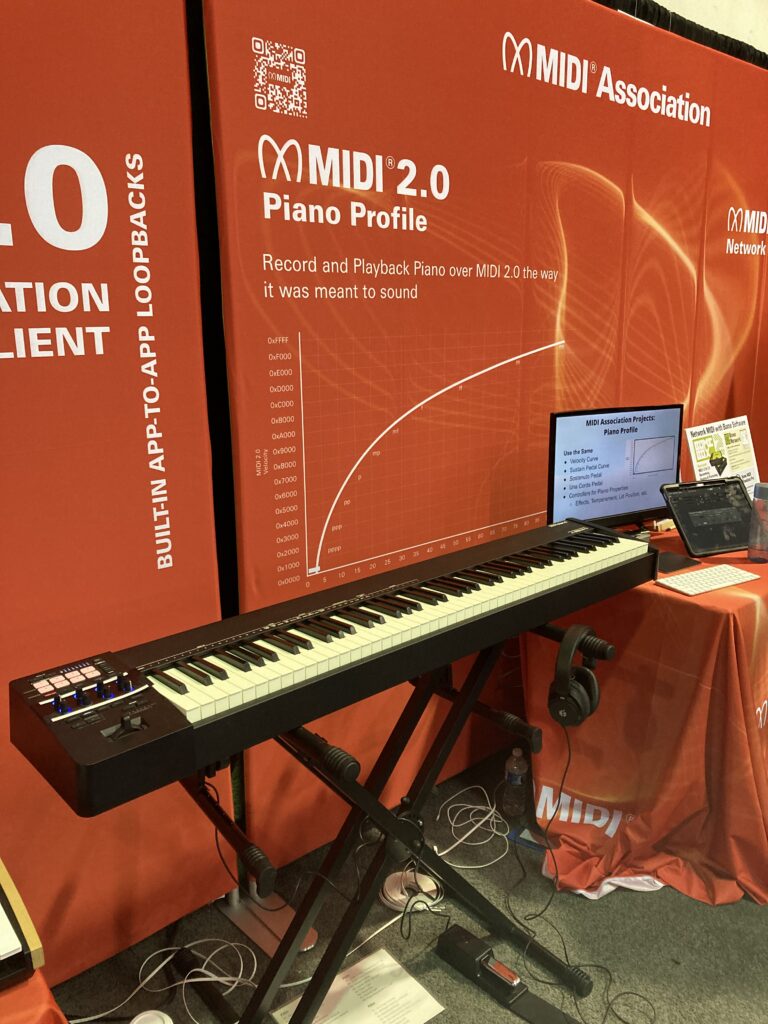
Just before the 2026 NAMM show, The MIDI Association and AMEi passed the Piano Profile specification.
The Piano Profile standardizes the velocity and pedal curves and the registered controllers used to control a piano’s performance via MIDI.
The model is based on the acoustic piano which is why it was important to have Kawai, Steinway and Yamaha involved in the project.
Kawai Artist David Snyder and Steinway Artist John Beasley performed on a Roland A88 MKII and Synthogy Ivory software that supports the Piano Profile.
During the show, both Roland and Synthogy released updates for support of the Piano Profile.
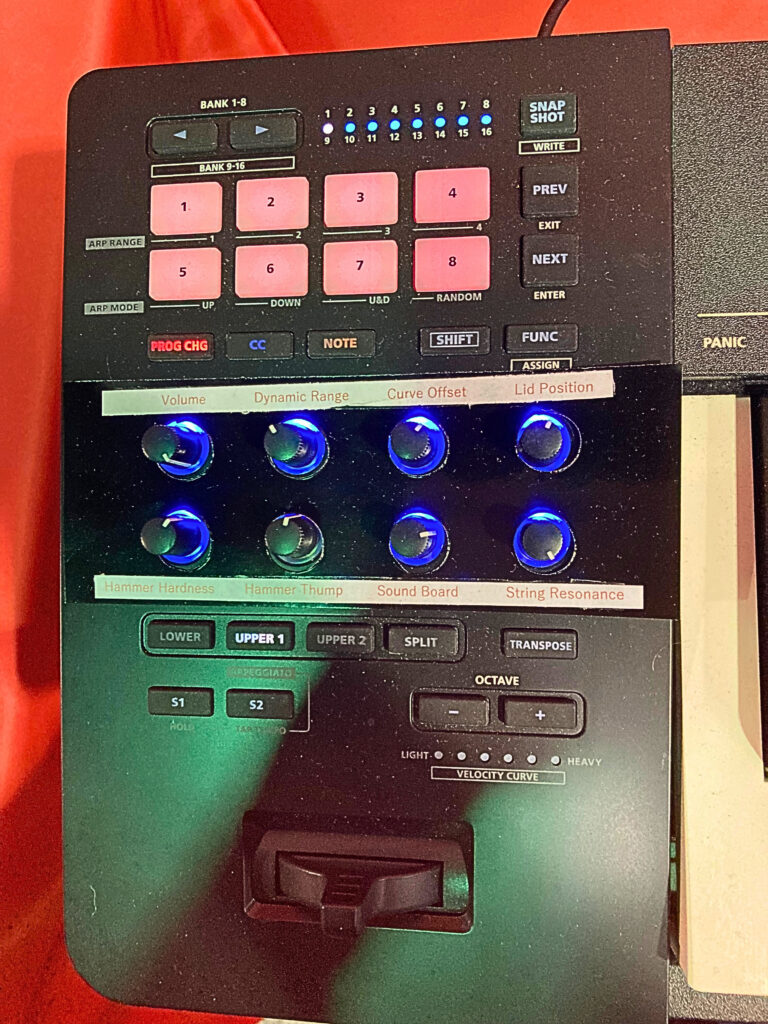
A88 MKII with Registered Controllers for Volume, Dynamic Range, Curve Offset, Lid Position, Hammer Hardness, Thump Noise, Sound Board Resonance, and String Resonance.
Again we will be posting the performances on the Roland A88 MKII and Synthogy Ivory by David Snyder, John Beasley, Lachi and Ellis Hall when the multitrack recordings have been mixed.
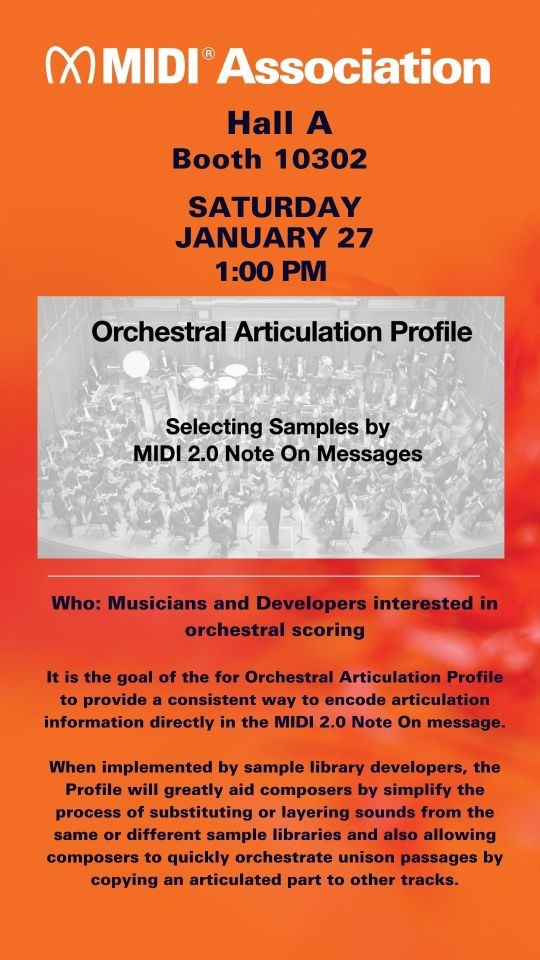
Orchestral Articulation Demo
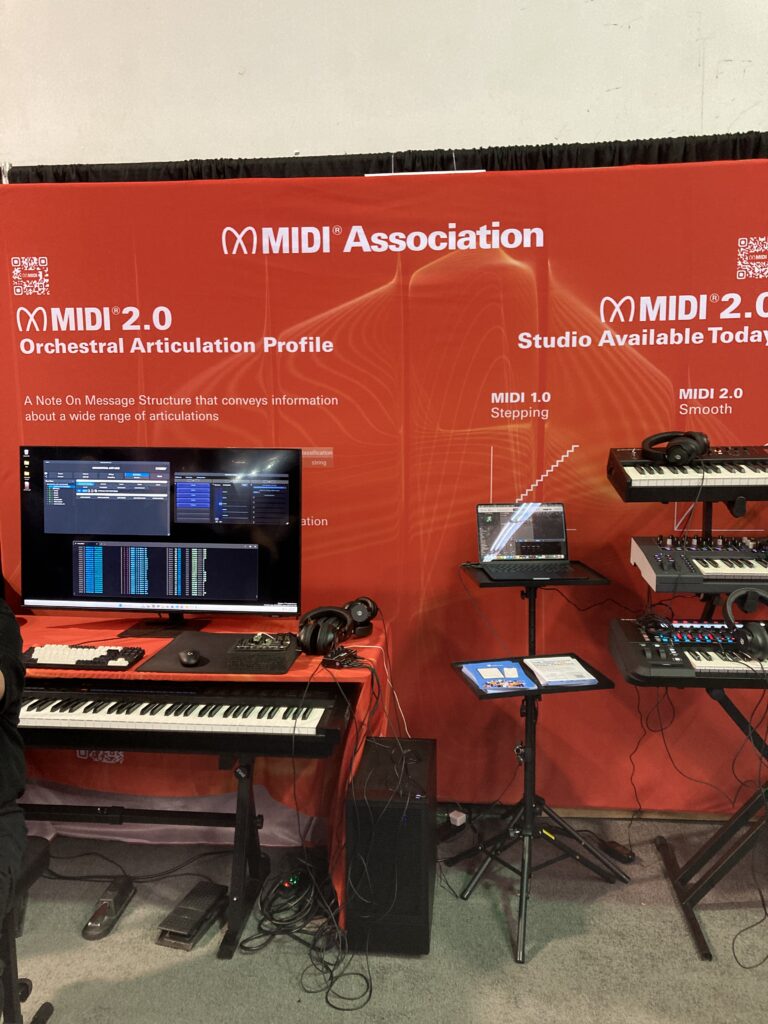
The MIDI Association showed a working demo of the Orchestral Articulation Profile at NAMM 2026.
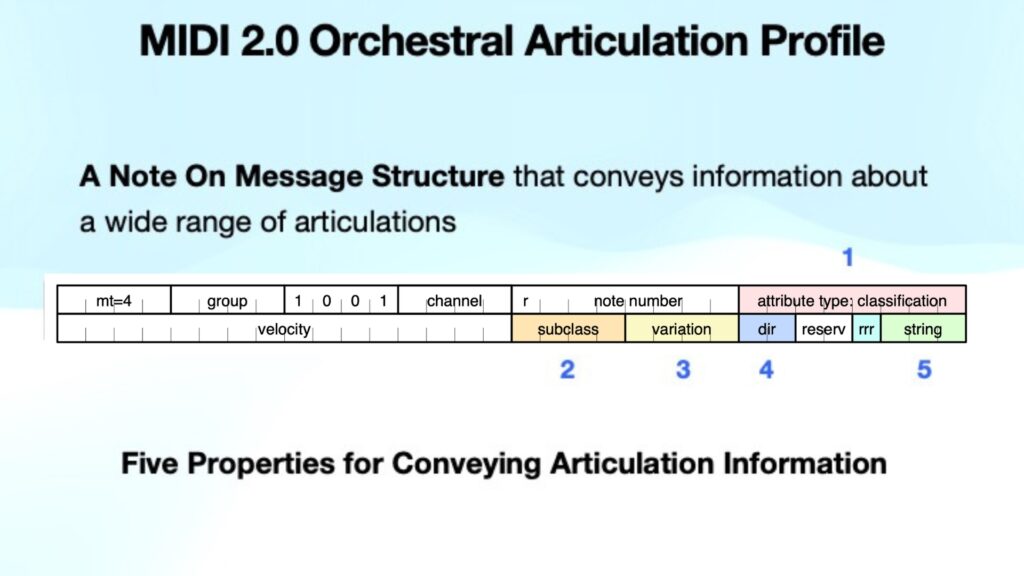
This profile will standardize the method for embedding articulations directly into the MIDI 2.0 Note On message.
Once implemented by plugin companies using the MIDI -CI helper library being developed by the 4 plugin format companies ( AU, AAX, CLAP and VST), this will provide composers a standardized way to handle orchestral articulations.
MIDI Association member Audio Impressions has developed a sample library that supports a wide range of different articulations and The MIDI Association helped create a hardware prototype that allows switching the articulations by MIDI 2.0 note attributes.
These performances will also be made available soon.
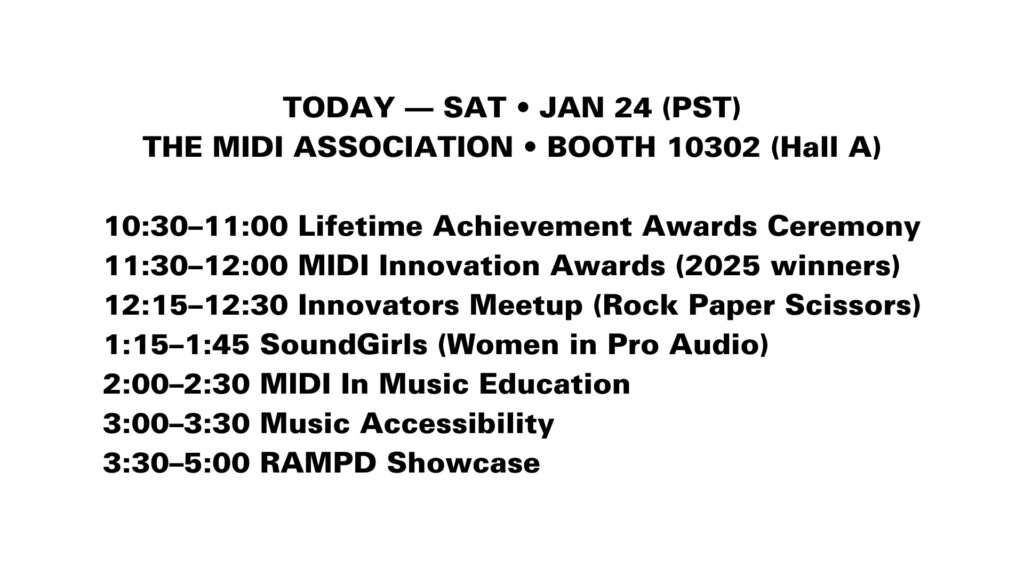
The MIDI Association Saturday Booth Schedule
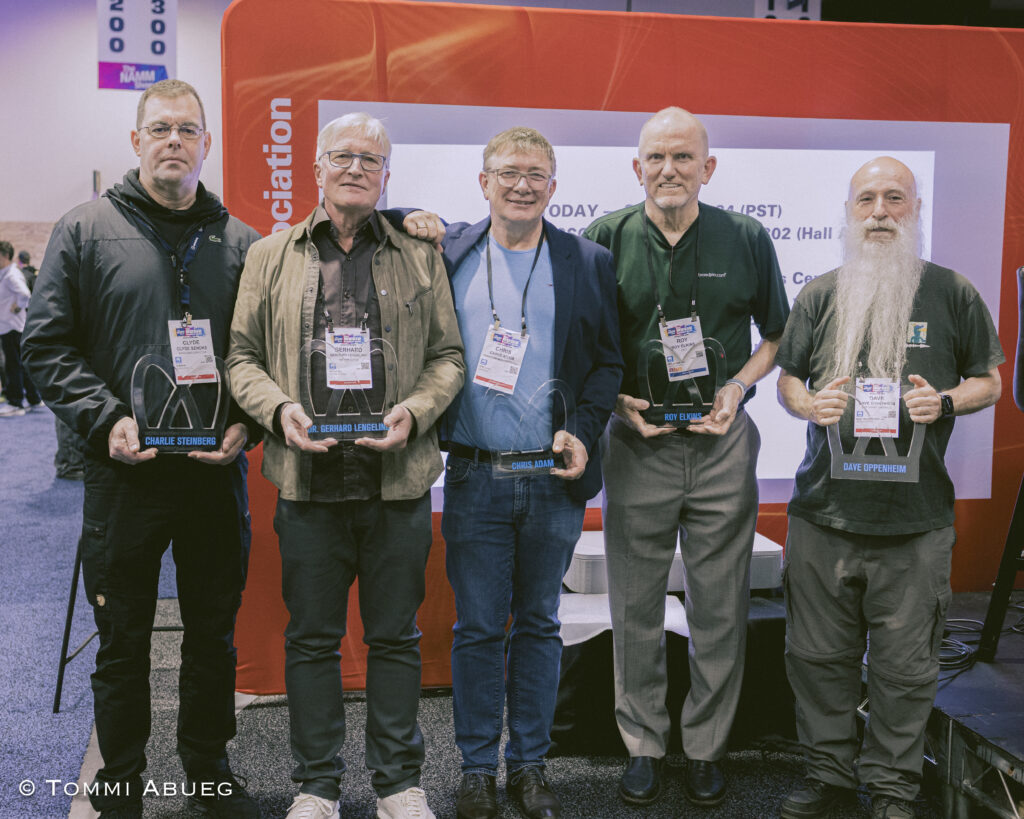
2026 MIDI Association Lifetime Achievement Awards Ceremony
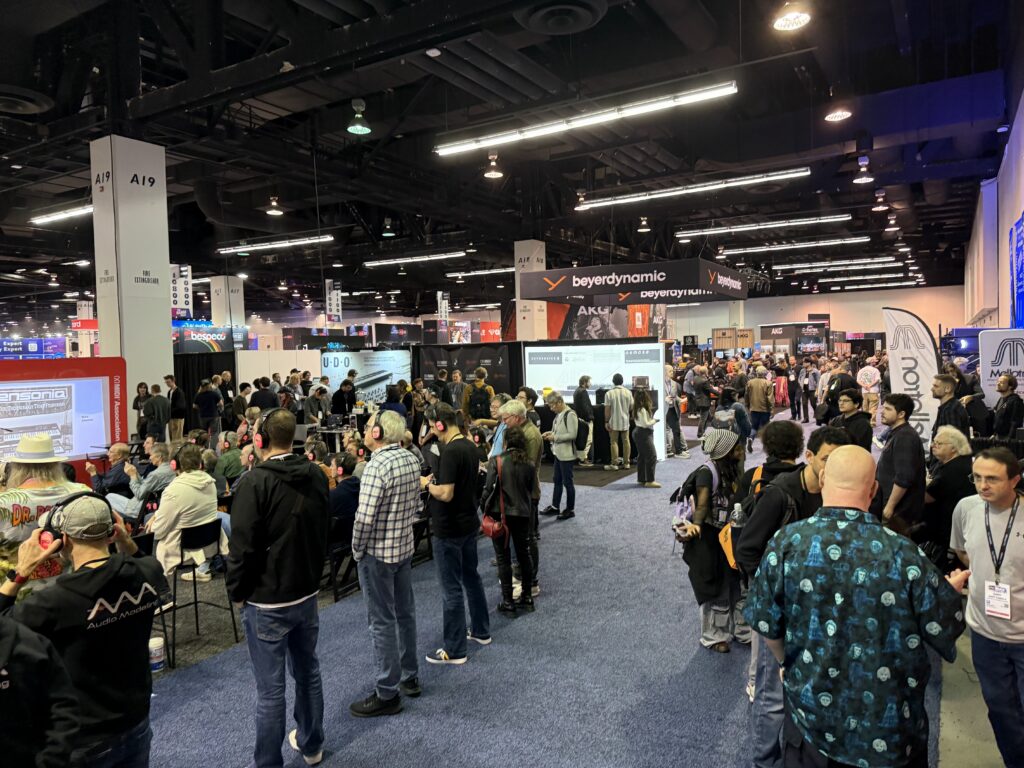
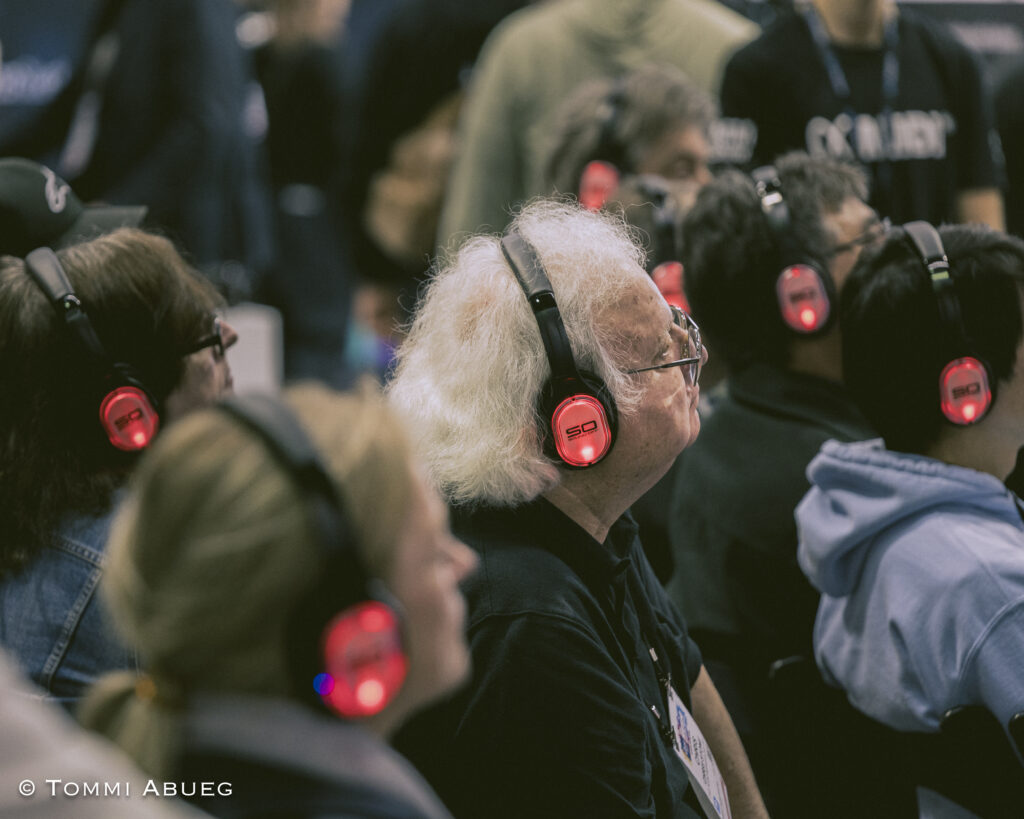
As you can see from the picture above, it was literally standing room only for 2026 MIDI Association Lifetime Achievement Awards. All 50 seats in the booth were filled and many people were standing in the aisles to see the presentation.
The MIDI Association honored pioneers whose work helped define MIDI, computer music, and modern music production.
• Chris Adam — Co-founder of C-Lab and Emagic, key architect behind Notator and Logic
• Roy Elkins — Connector of artists, technology, and community across the global music ecosystem
• Greg Hendershott — Founder of Cakewalk, who democratized MIDI sequencing on personal computers
• David Kusek — Founder of Passport Designs and pioneer of computer music and MIDI education
• Gerhard Lengeling — Co-founder of C-Lab and Emagic, creator of Logic and architect of modern DAWs
• Dave Oppenheim — Co-founder of Opcode Systems and pioneer of MIDI sequencing and DAW workflows
• Charlie Steinberg — Founder of Steinberg, visionary behind modern MIDI sequencing and virtual studios
• Emile “Dr. T” Tobenfeld — Algorithmic music innovator who expanded MIDI’s creative boundaries
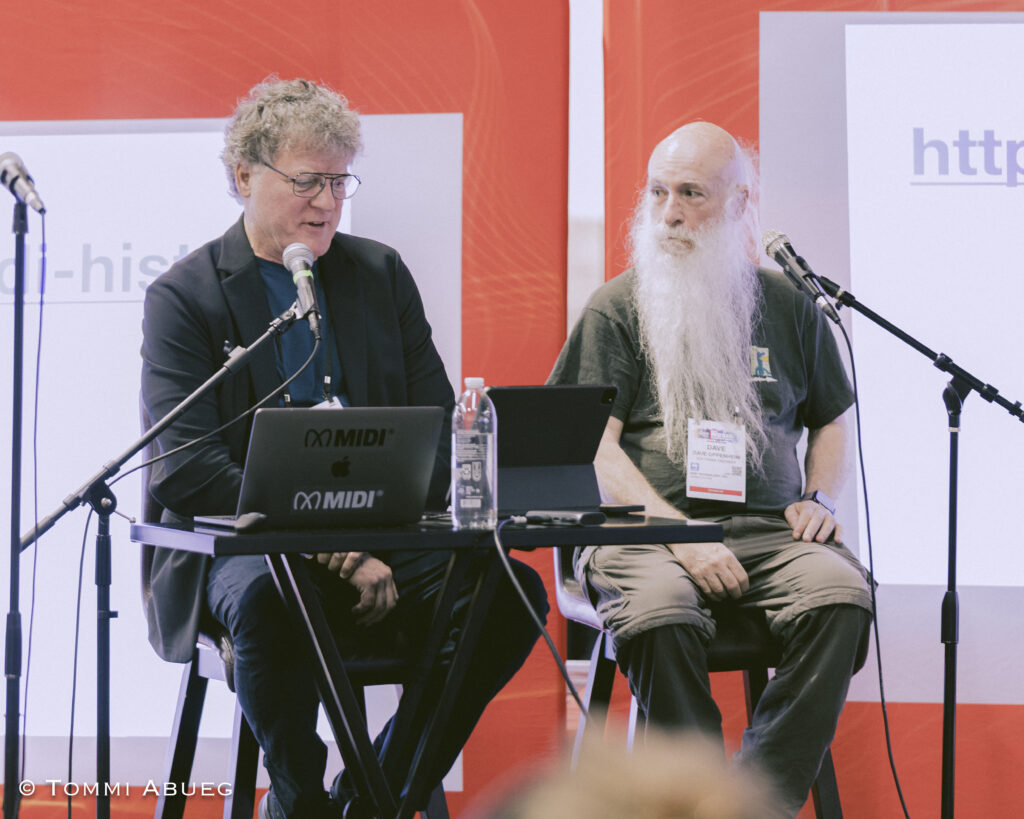
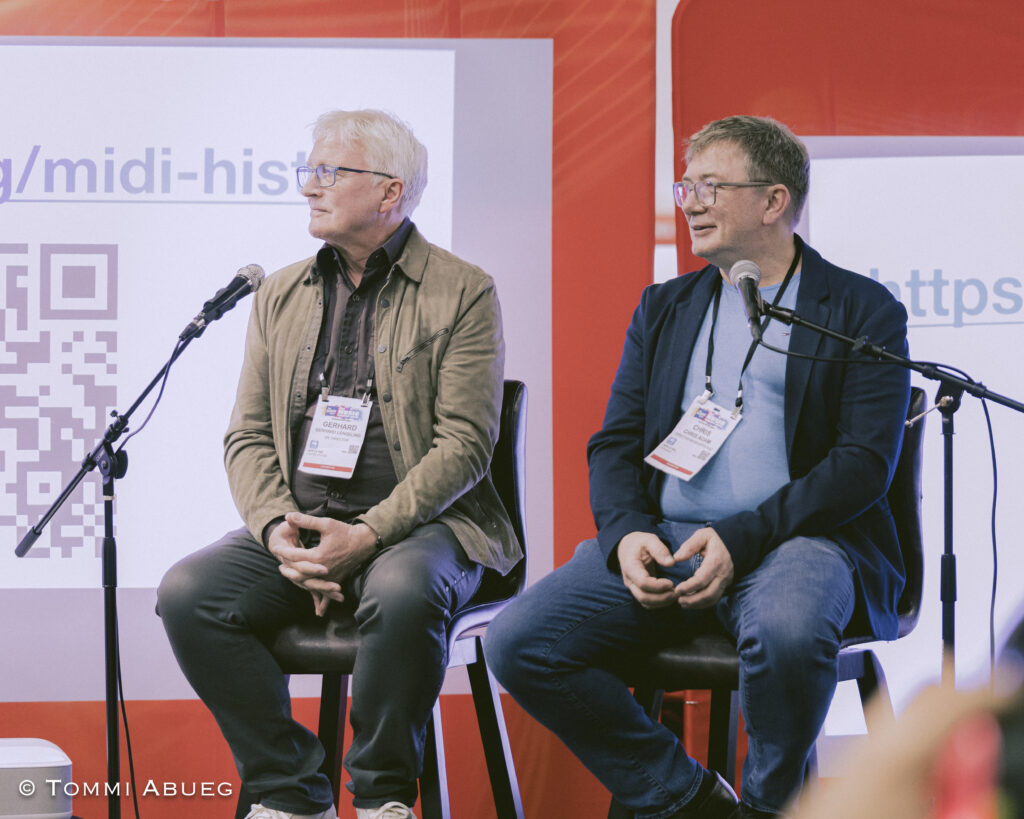
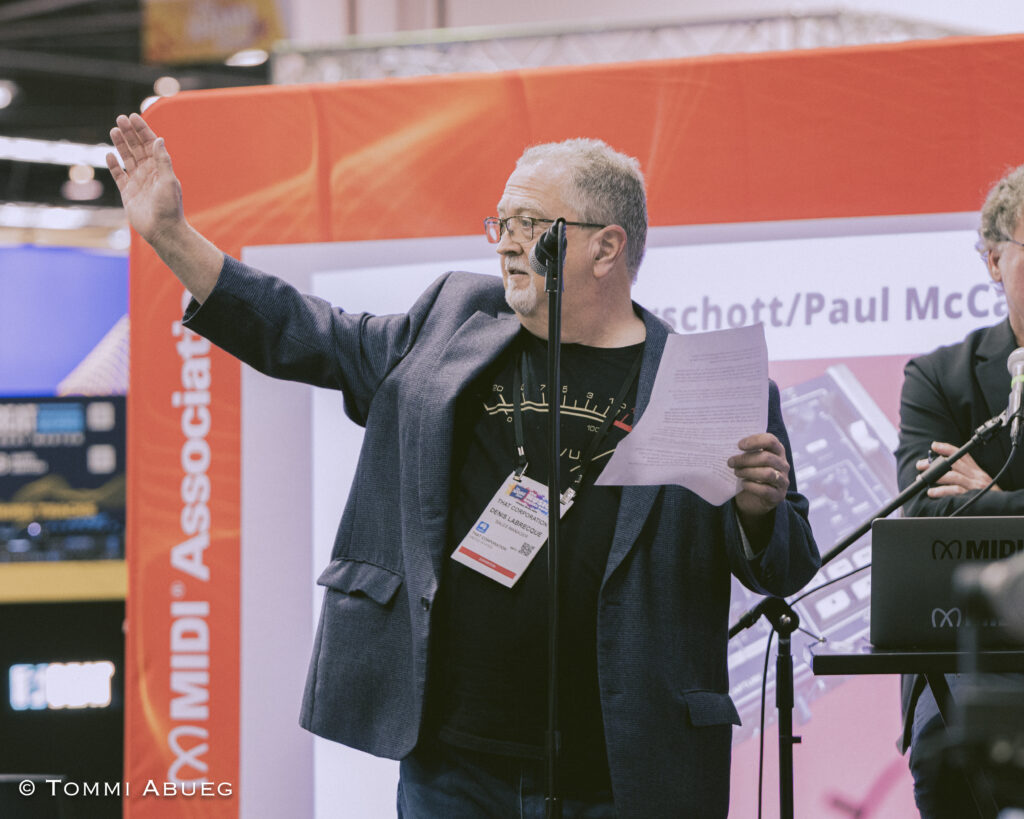
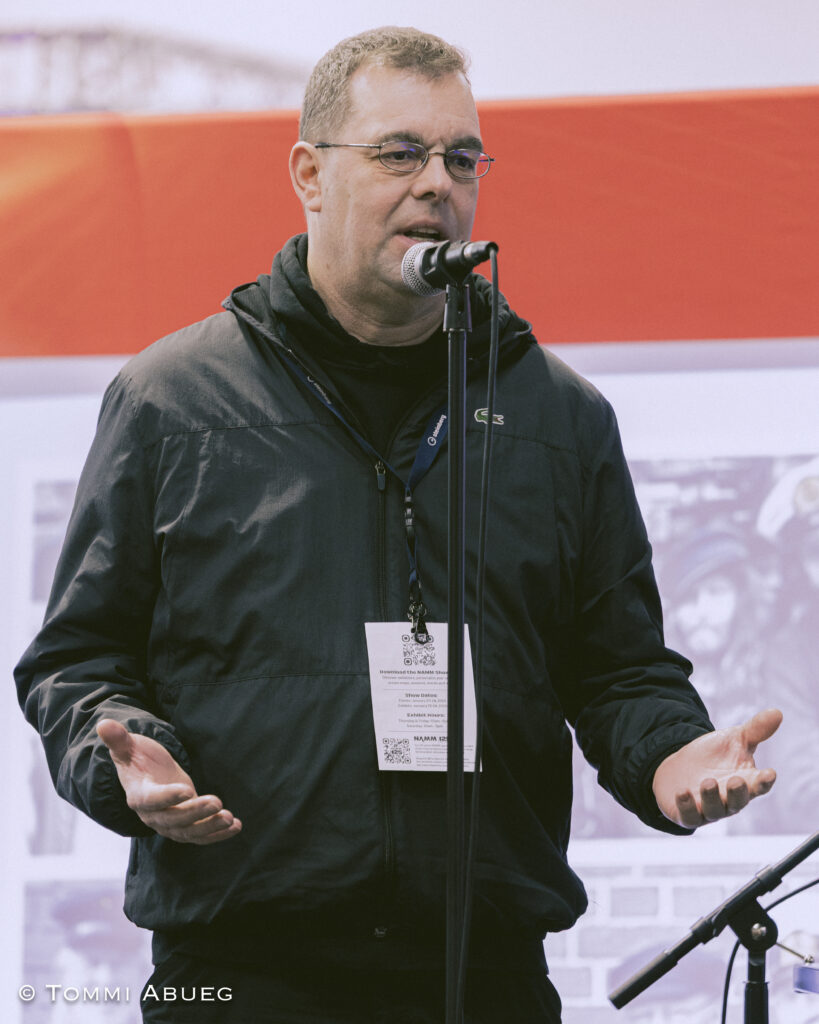
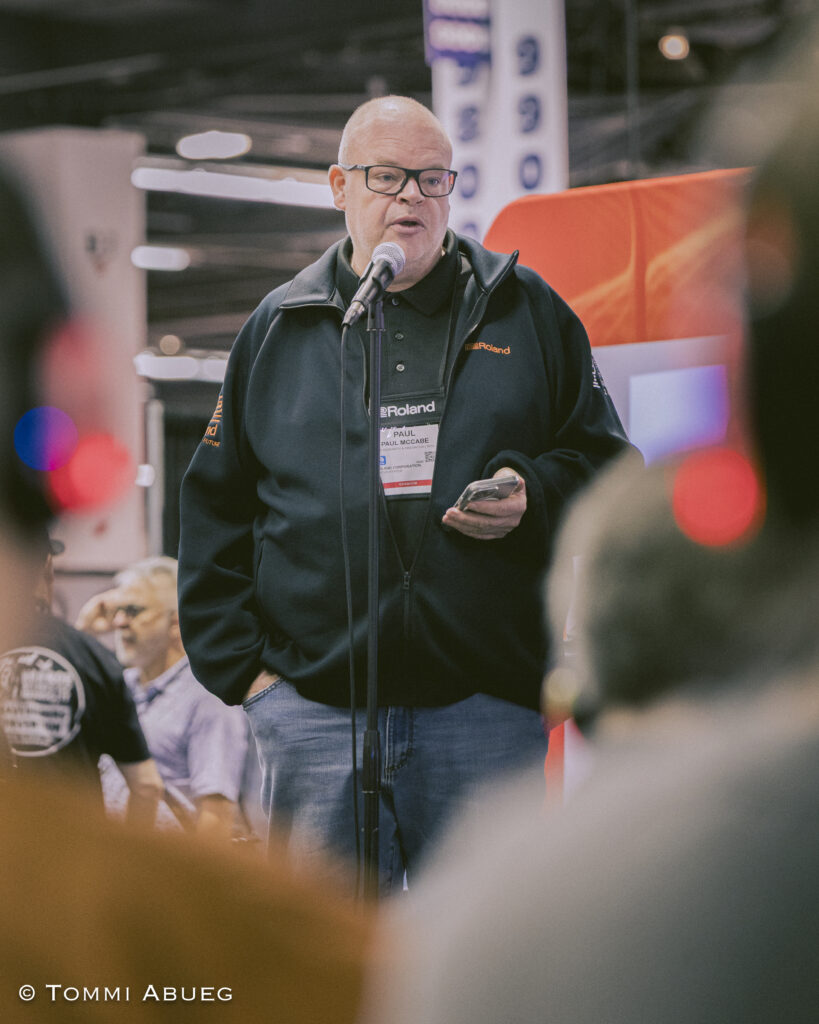
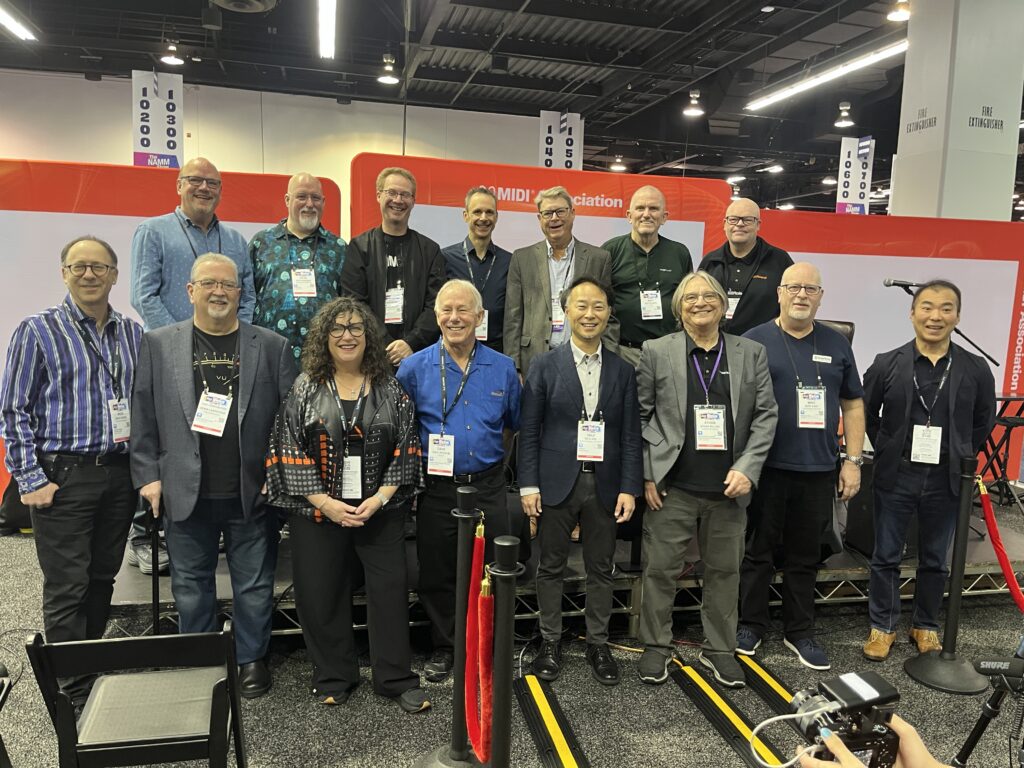
Chris Halaby, panel moderator and David Oppenheim – together they founded Opcode Systems and launched Vision, one of the first DAWs to include audio. Gerhard Lengling and Chris Adam who were the developers behind C-Lab and EMagic. Denis Labreque (former MIDI Association Exec Board member) accepting for David KusekClyde Sendke, managing director of Steinberg accepting on behalf of Charlie SteinbergPaul McCabe from Roland accept on behalf of Greg Hendershott from CakewalkClyde Sendke from Steinberg (accepting on behalf of Charlie Steinberg), Gerhard Lengling and Chris Adams from EMagic, Roy Elkins from Ensoniq, Sonic Foundry and Broadjam an d Dave Oppenheim from Opcode Vision.Gathering of MIDI Association Lifetime Achievement Award winners and TSB and Exec Board members
If you would like to read about the Lifetime Achievement Award winners, there are articles for every Lifetime Achievement Award winner here.
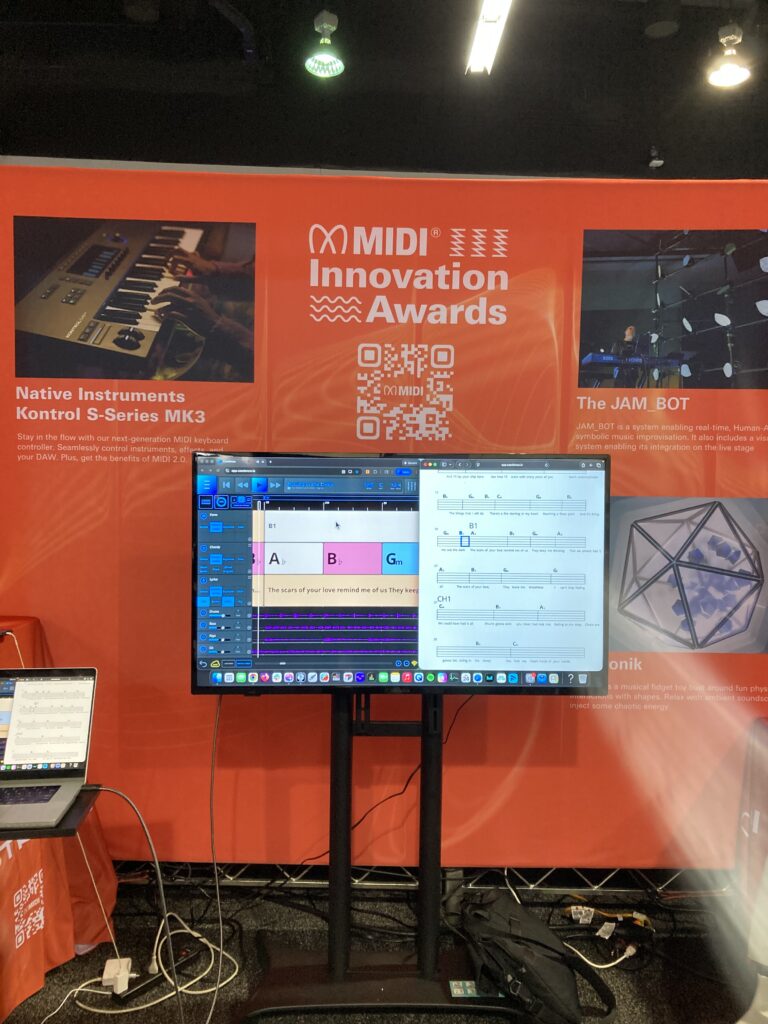
We had a display of MIDI Innovation Awards all three days of the show.
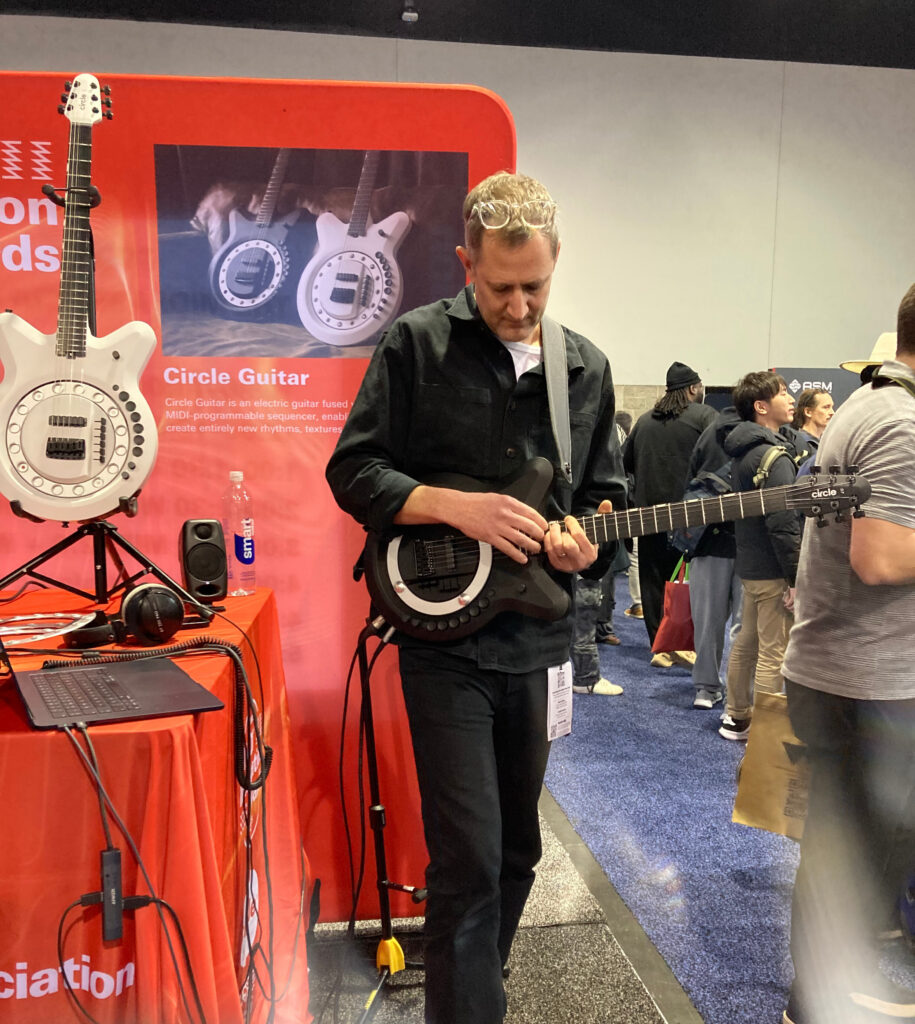
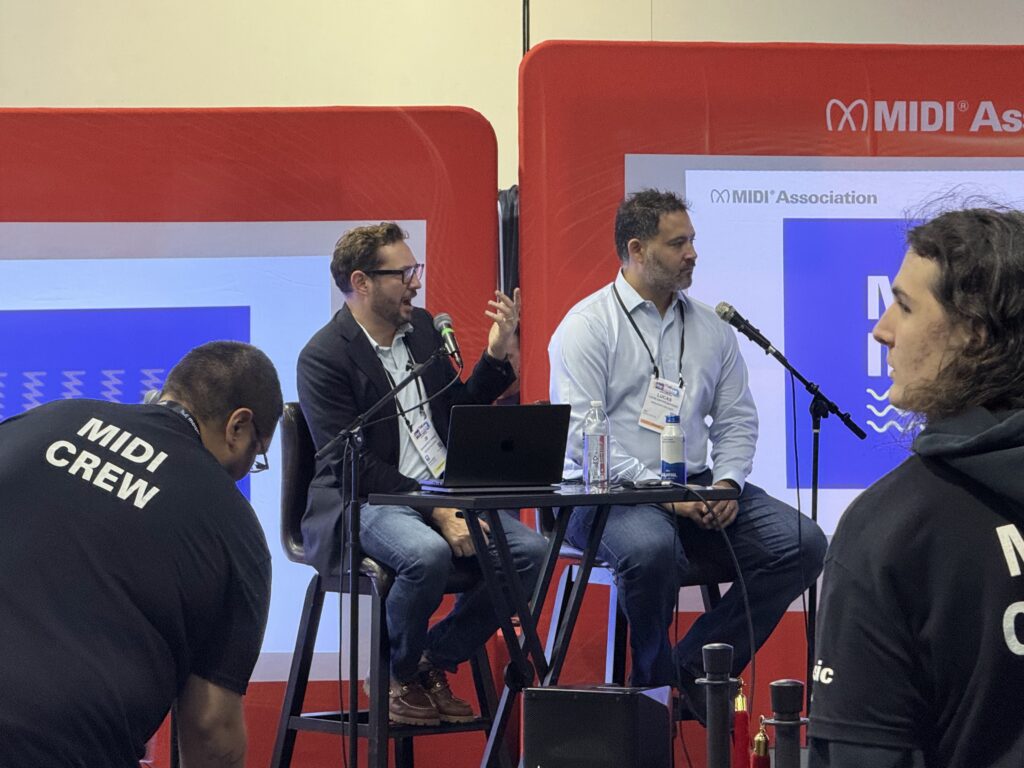
Then Jean Baptiste Thiebaut from Music Hackspace held a panel with MIDI Innovation Award Judge Lucas Cantor Santiago, 2026 MIDI Innovation Award winners Anthony Dickens from Circle Instruments and Mike Venter from Azoteq talked about their experiences with The MIDI Innovation Awards.
Innovators Meetup with Rock Paper Scissors
Our friends from Rock, Paper Scissors held an Innovators Meetup where a whole group of people got to network and share their ideas on Innovation.
Karrie Keyes, long time monitor engineer for Pearl Jam hosted a panel on Sound Girls.
SoundGirls was established to provide women working in professional audio a community to come to for support and advice, and for empowerment and inspiration.
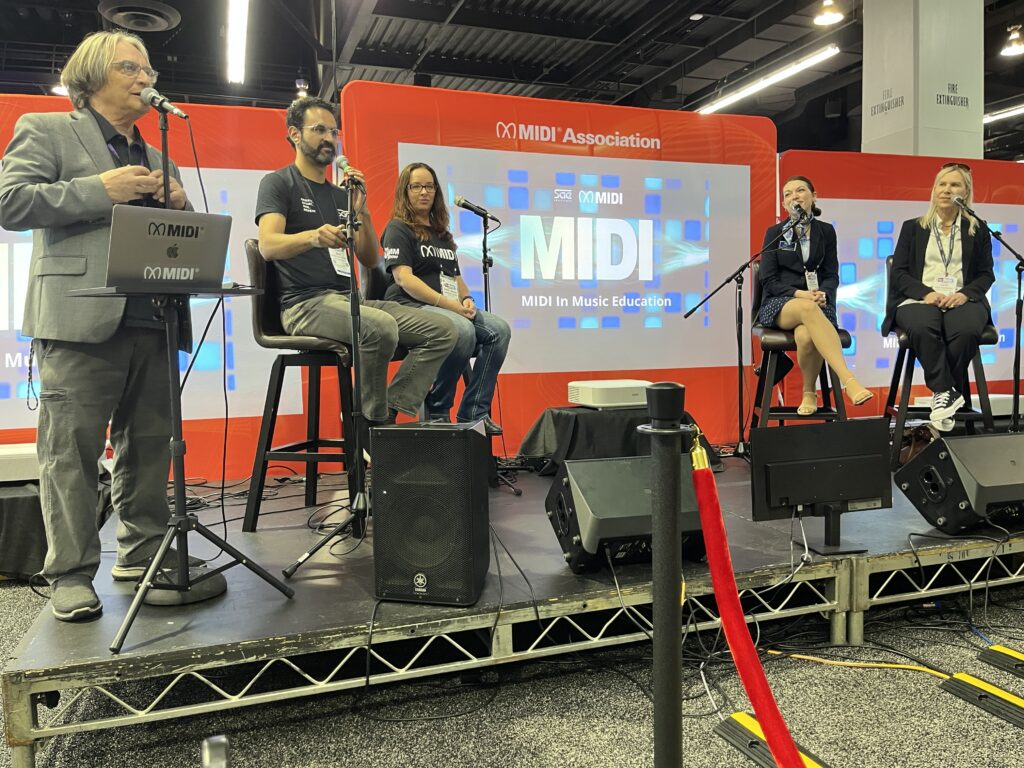
MIDI In Music Education
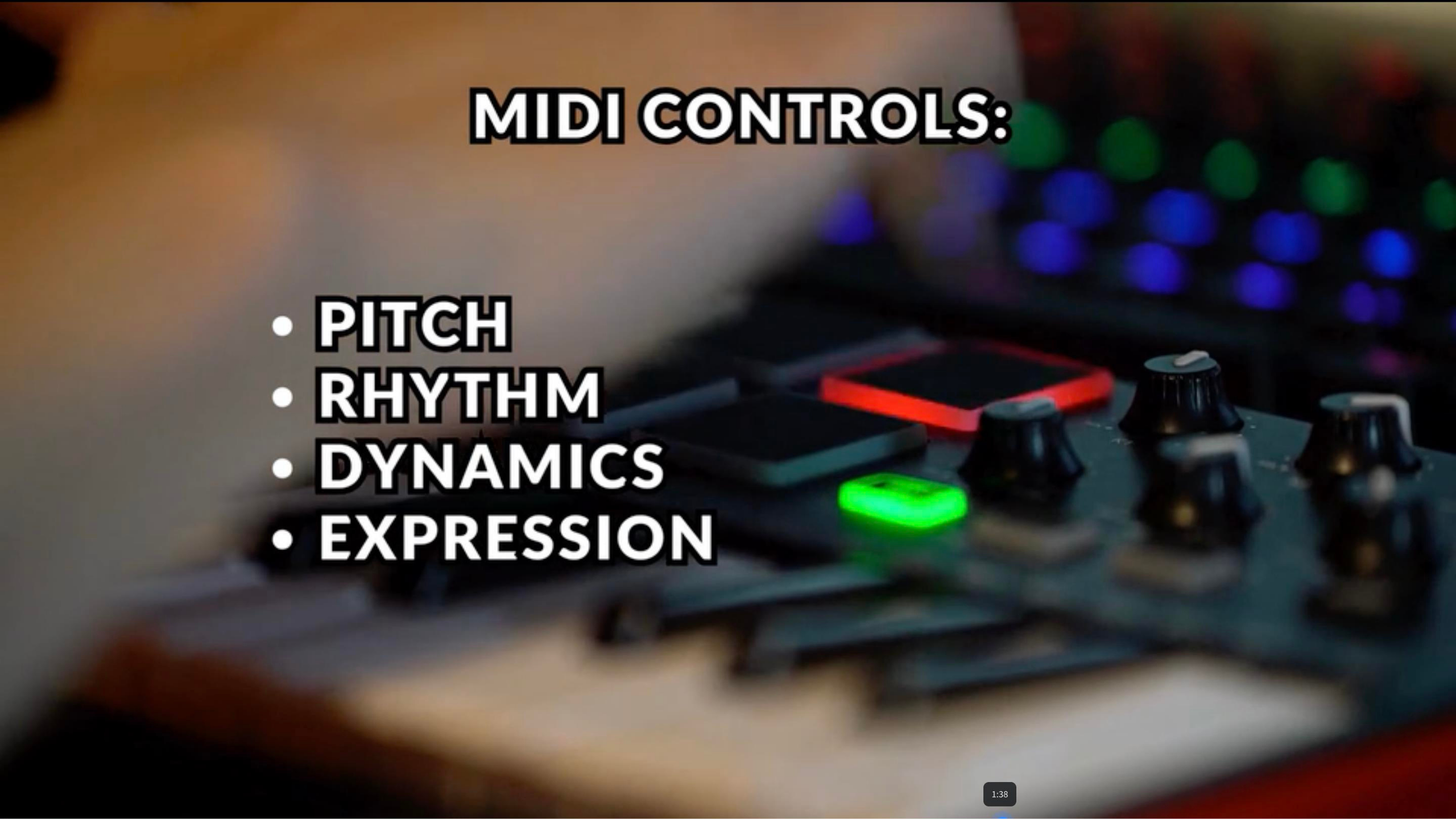
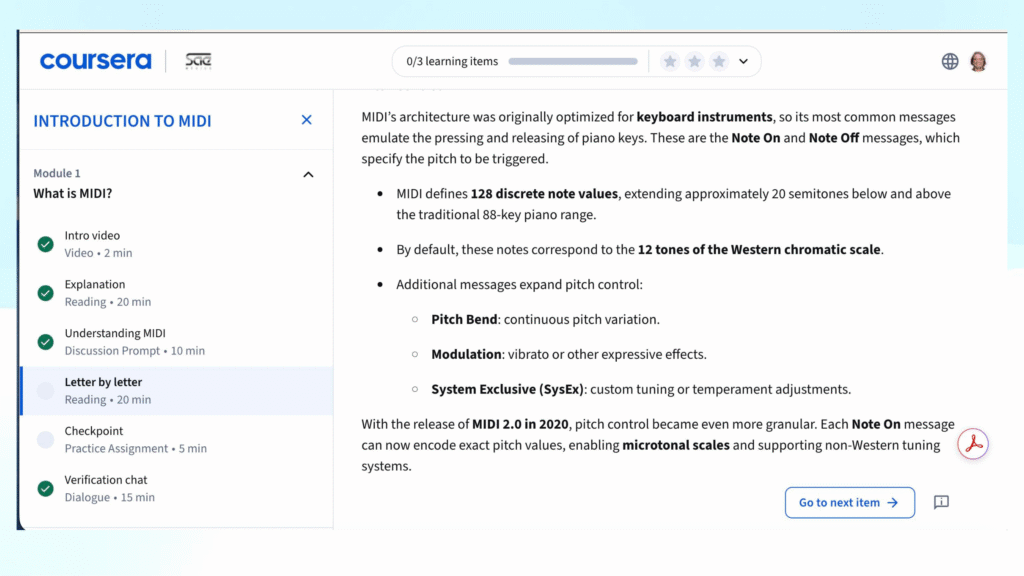
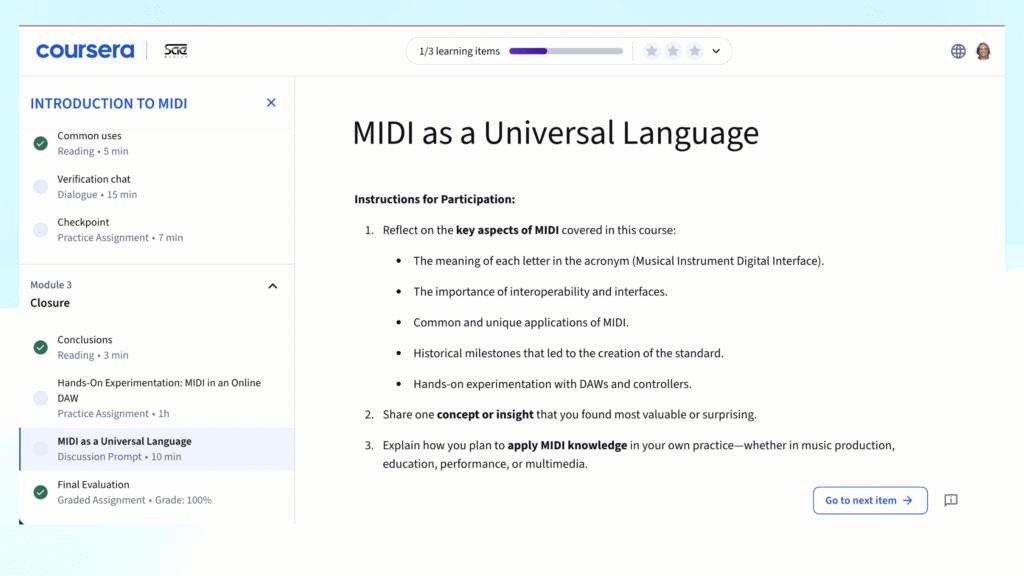
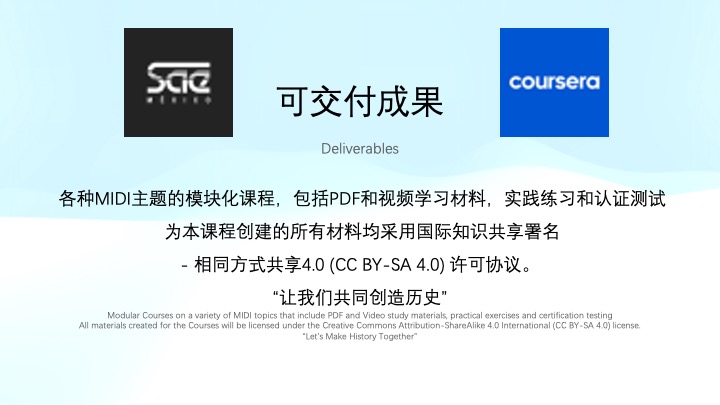
One of our major initiatives this year is the MIDI In Music Education curriculum that we are developing with SAE Mexico.
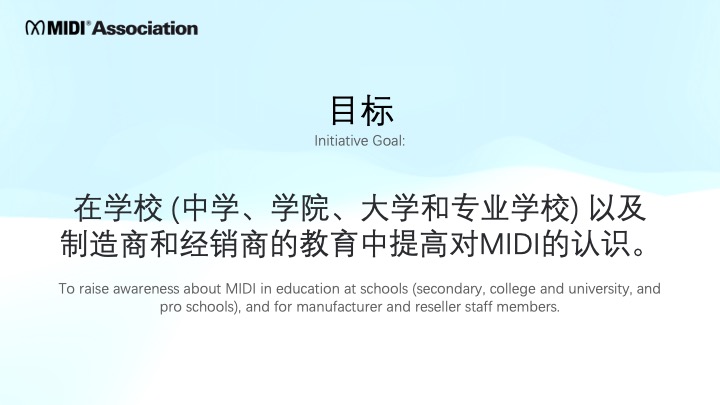
Our goal is to raise awareness about MIDI in education at schools (secondary, college and university, and pro schools), MIDI Musical Instrument manufacturers and Dealers who sell MIDI products.
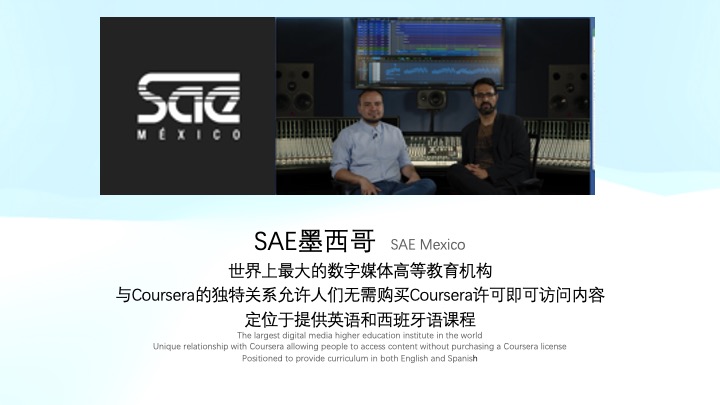
SAE Mexico, The NAMM MIDI Fund and The MIDI Association SAE Mexico has been selected to create a MIDI In Music Education curriculum in both English and Spanish by the MIDI Association.
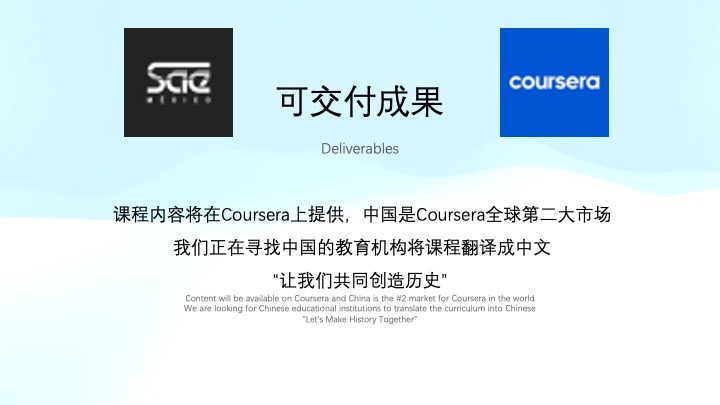
SAE Mexico have a unique relationship with Coursera, the massive open online course provider so the curriculum and certification will be available at no charge.
All of the materials created for The MIDI In Music Education curriculum will also be provided under a Creative Common license.
This means that Universities, Schools, Dealers and digital musical instrument manufacturers can include portions of the MIDI Association materials without any concerns about copyrights or licenses by just a simple Creative Commons attribution.
Again, we will be making the videos of the panel available soon.
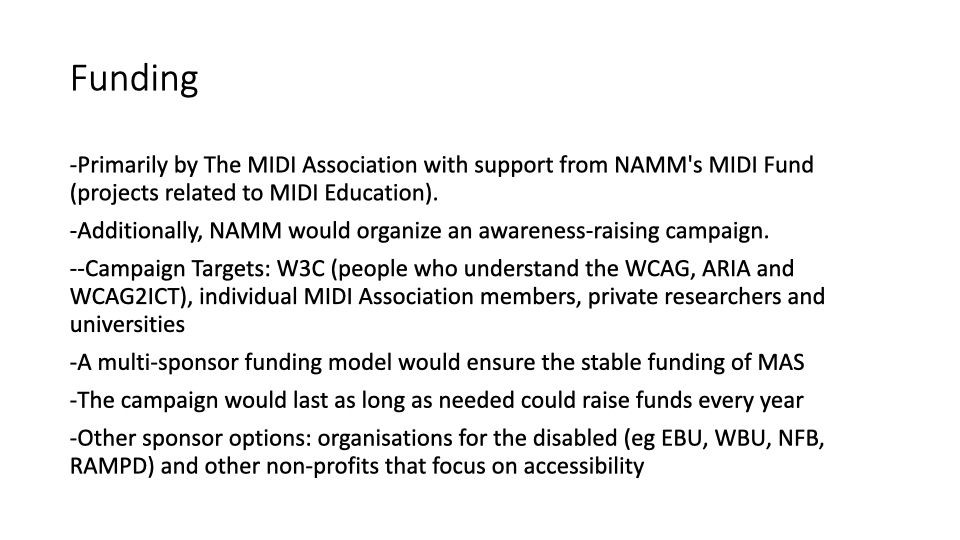
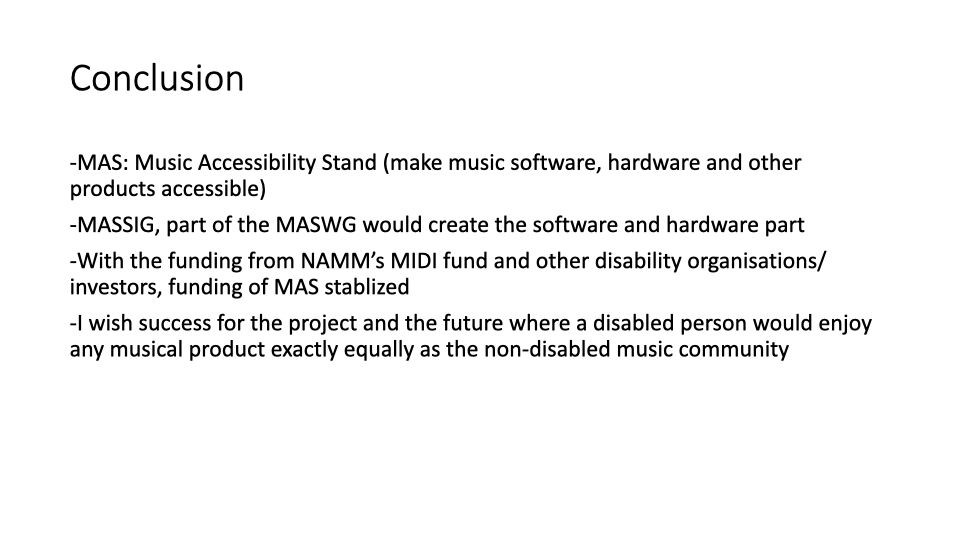
We think everyone should be able to experience the joy of making music.
We brought together music accessibility experts from all over the world to meet regularly & discuss how to make digital musical instruments more accessible.
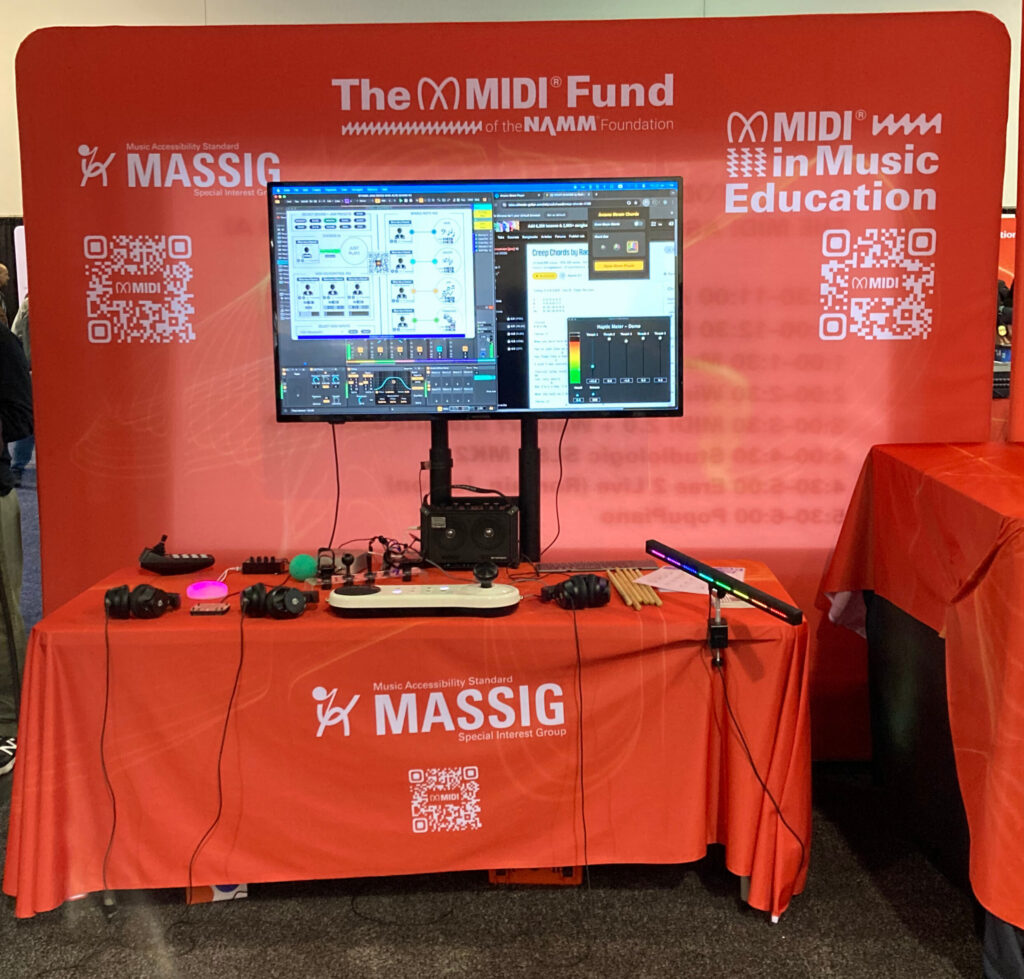
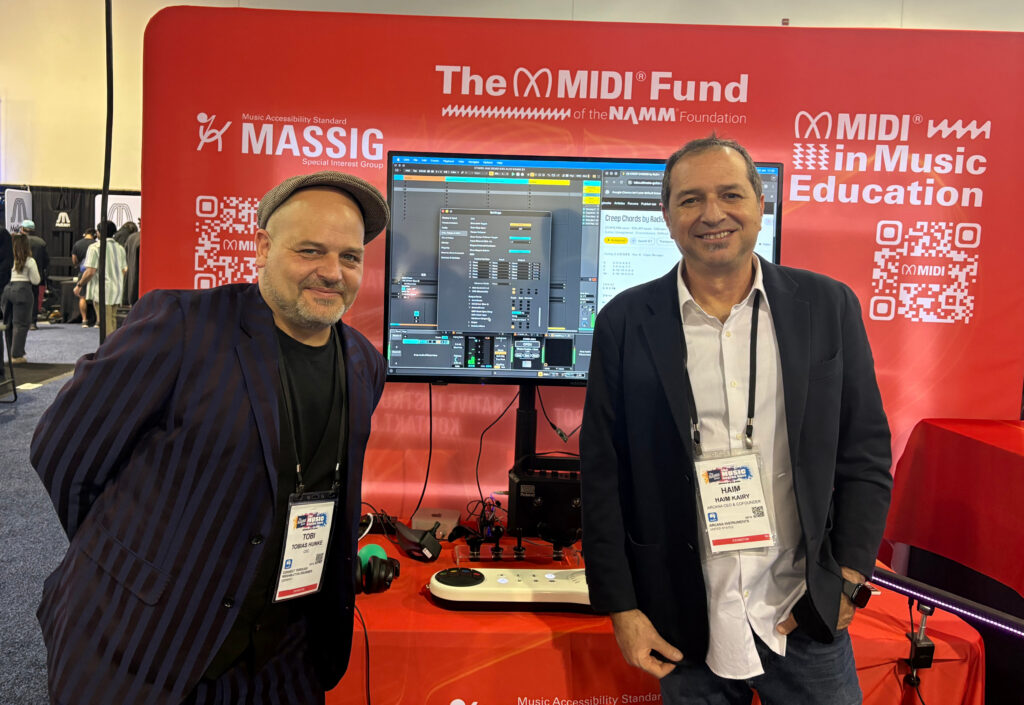
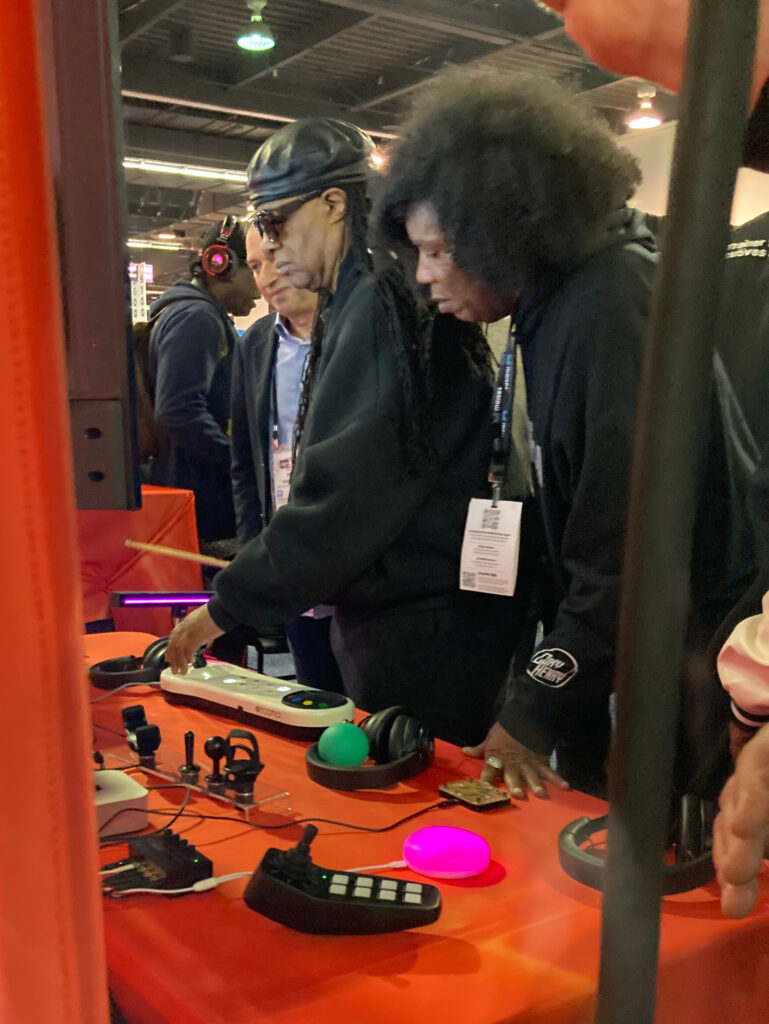
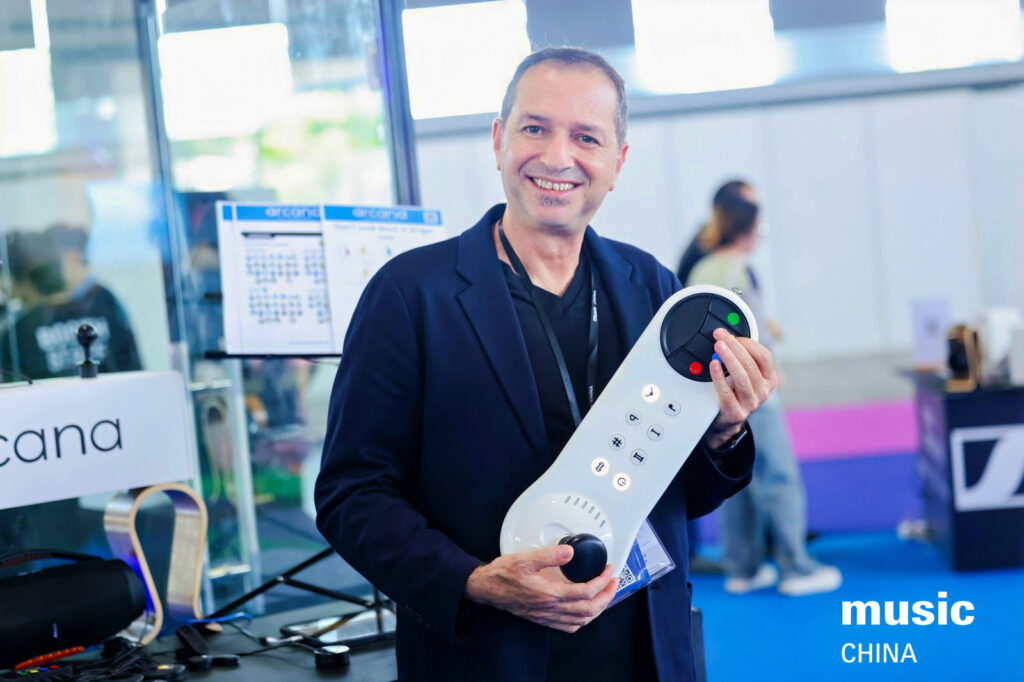
For all three days of the show, we hada MASSIG display that featured the Arcana Strum, Connect Through MIDI, Cosmos Dots, a MIDI Blaster and a Drum Beam. This is the same set up we took to Music China, Tokyo Gakki Fair and Music Tectonics.
Tobi Hunke from AbletonDrummer.com and Haim Kairy from Arcana Instruments
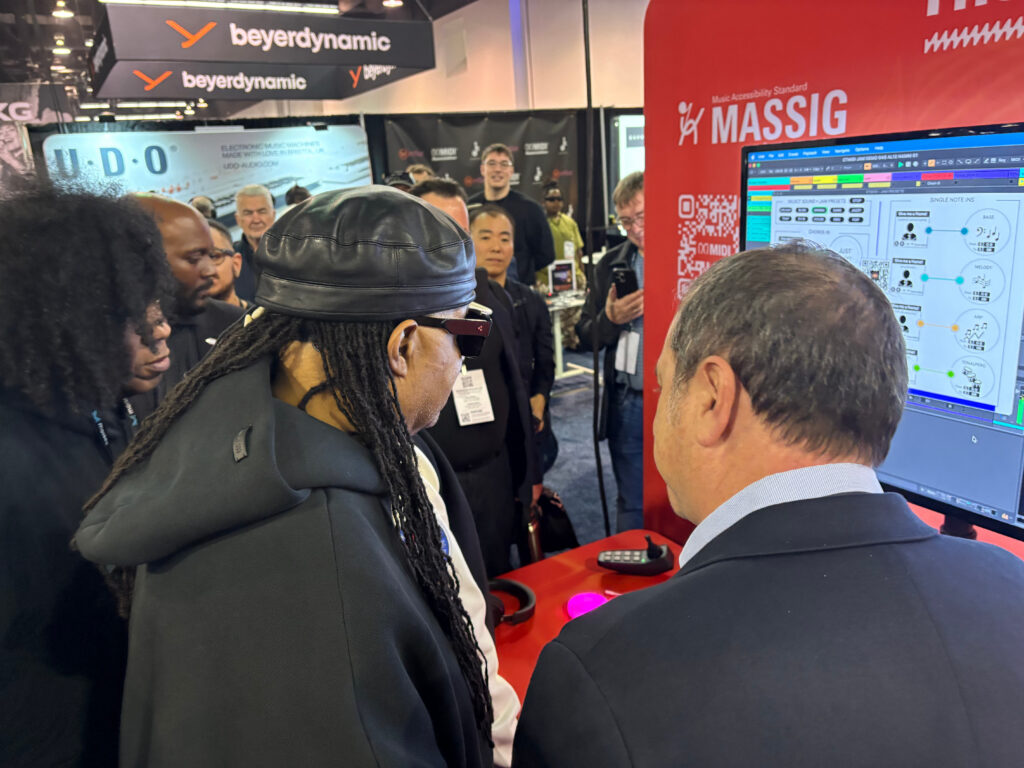
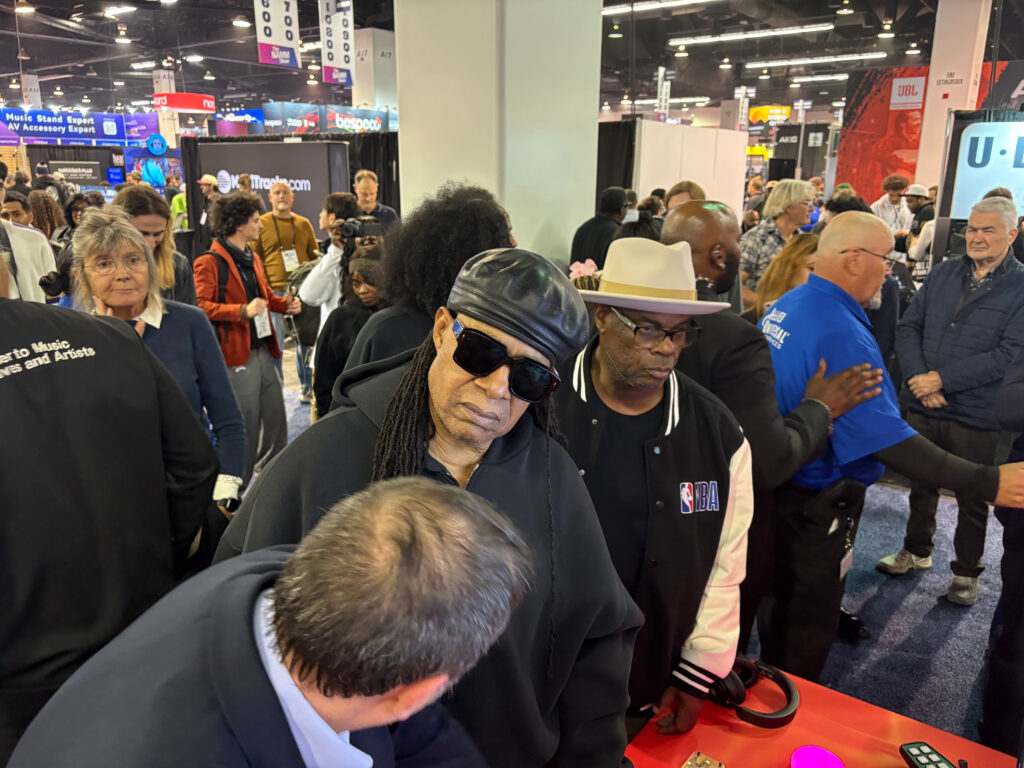
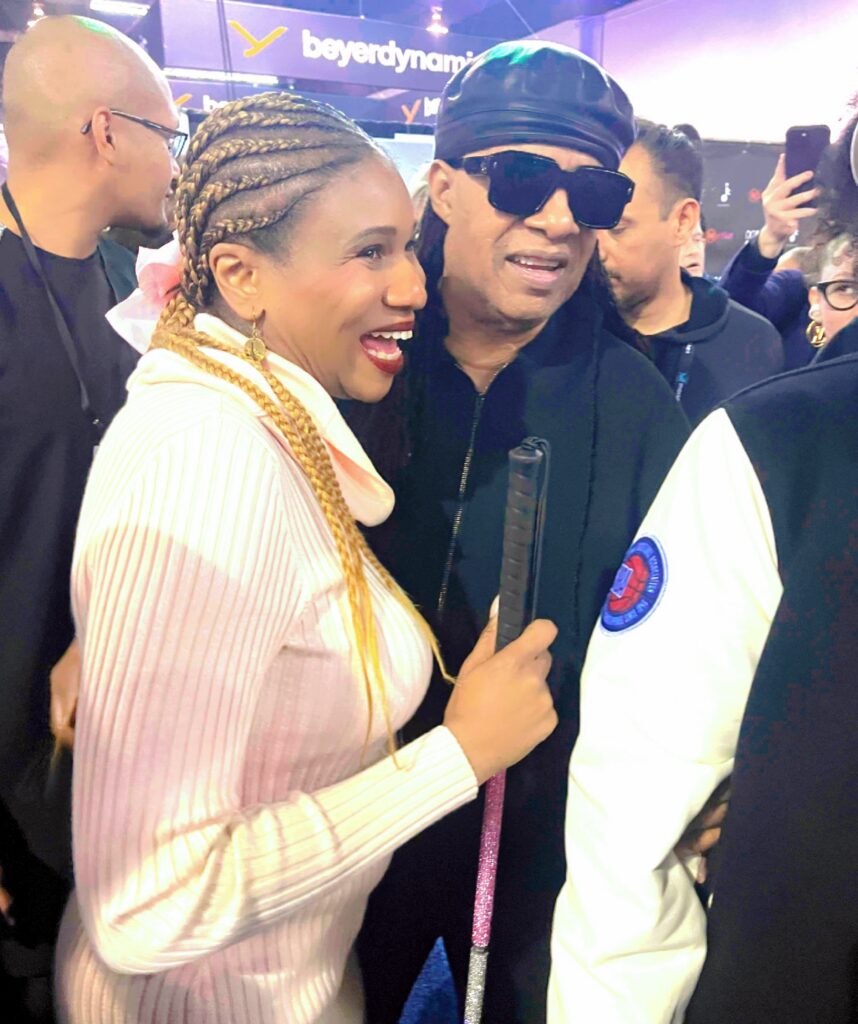
The MASSIG display was always busy and we also had a few well known guests.
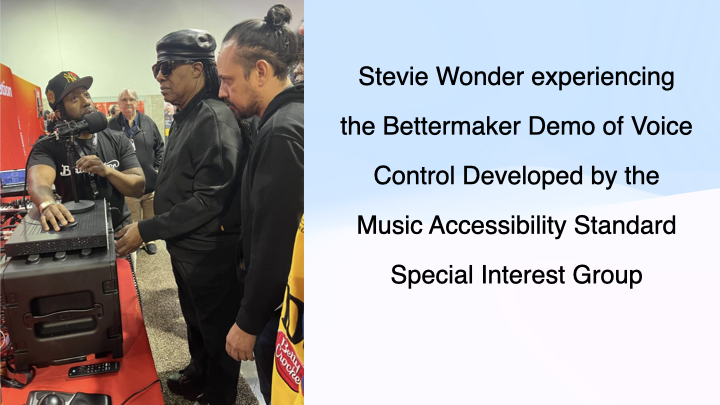
Lachi from RAMPD and Stevie Wonder at NAMM 2026
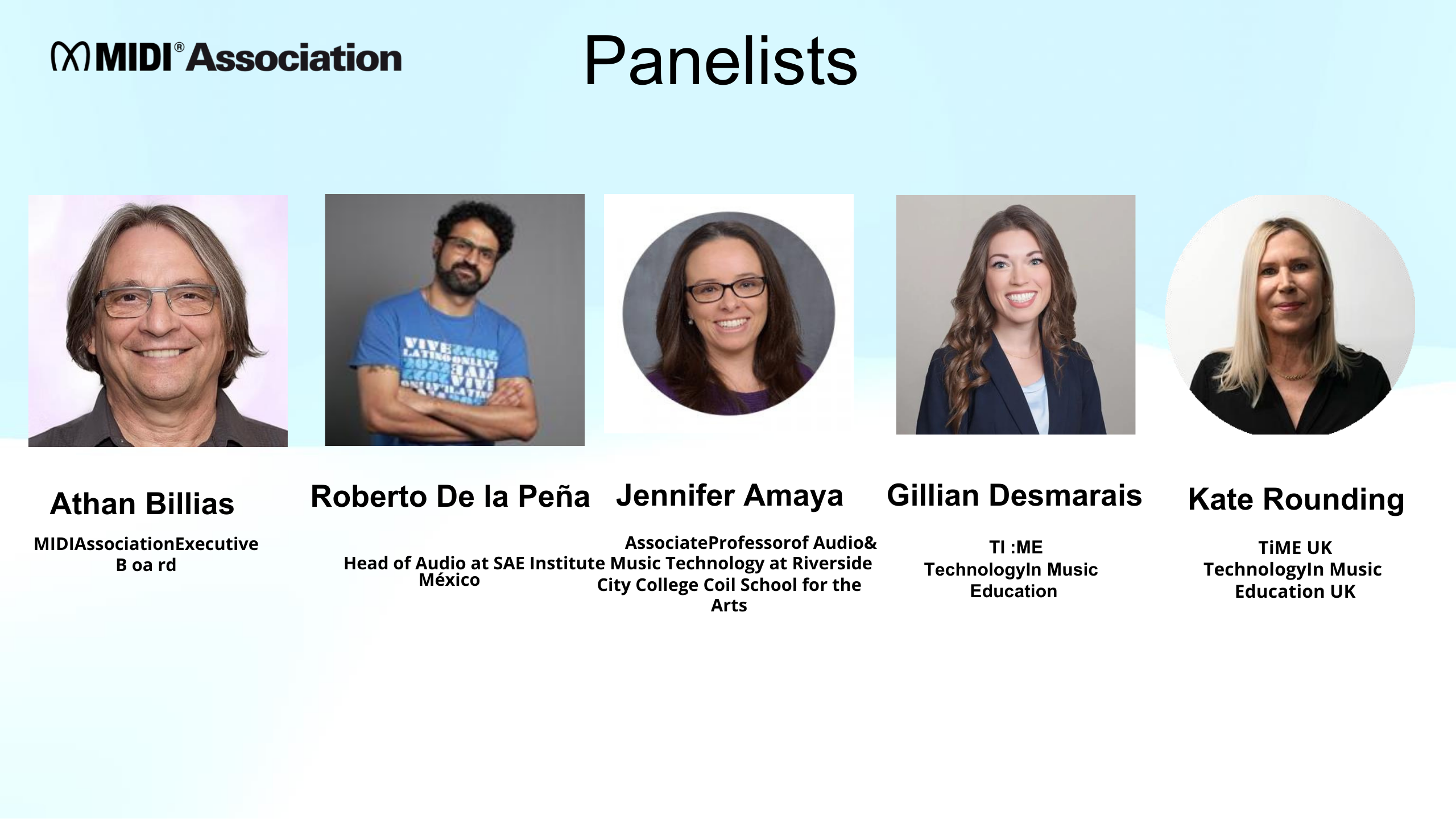
Athan Billias from the MIDI Association Executive Board, Tobi Hunke from Ableton Drummer and Connect through MIDI, Haim Kairy from Arcana Instruments, and Lachi from RAMPD held a panel discussion on the latest advances in Music Accessibility.
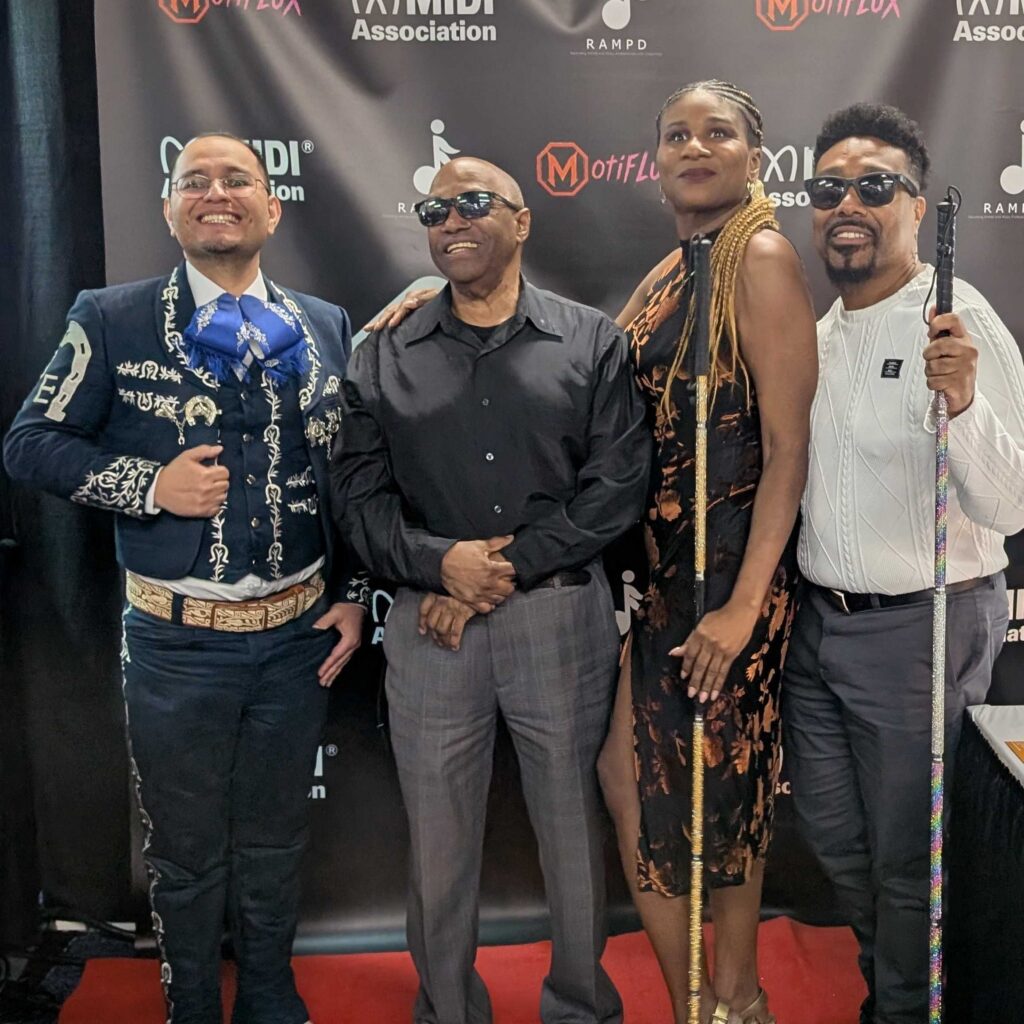
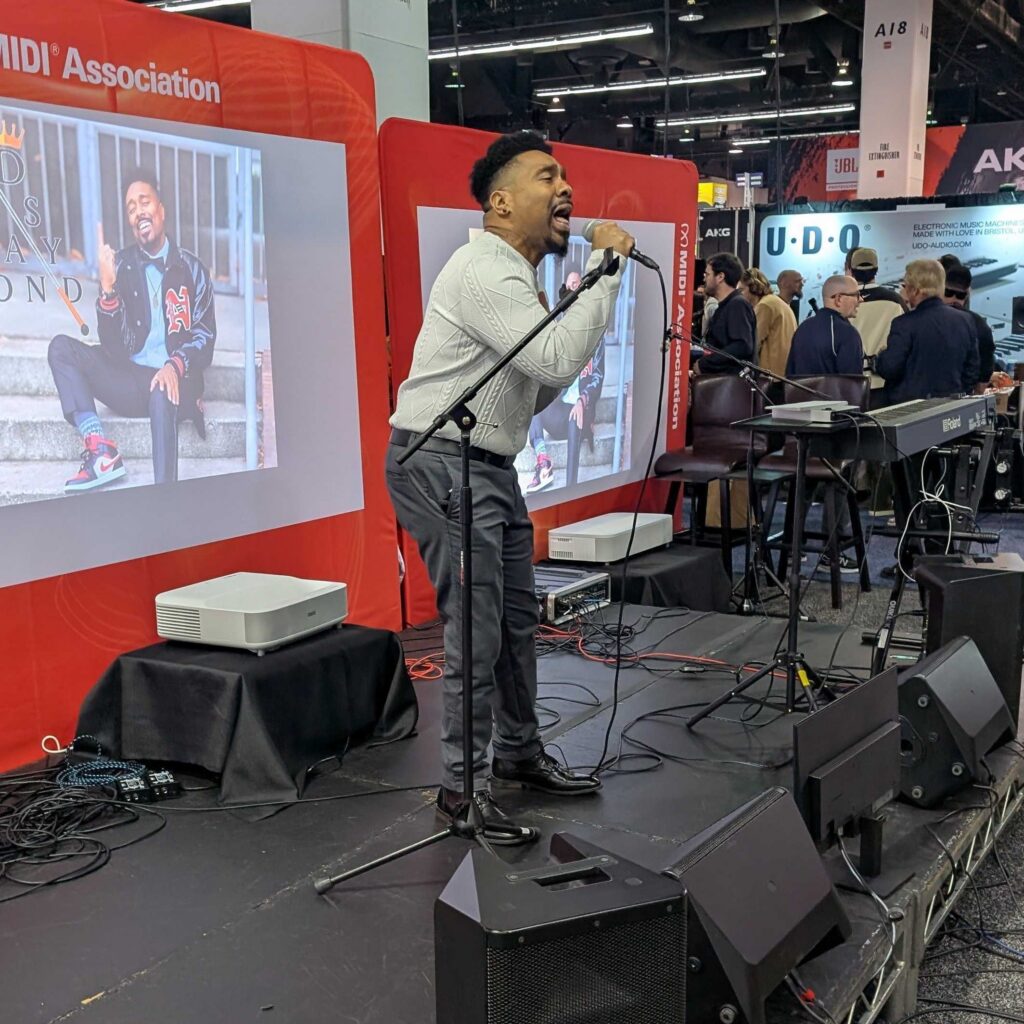
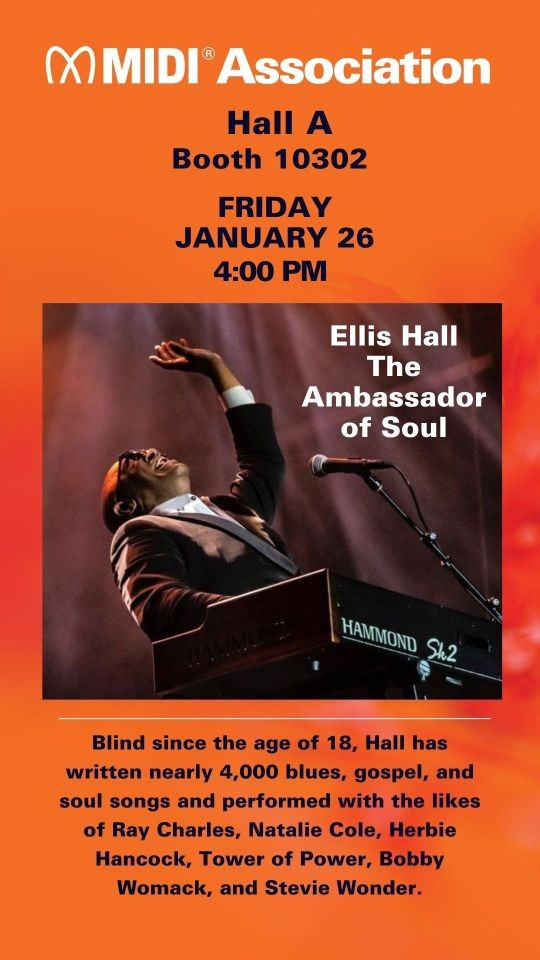
We closed the show with performances by RAMPD members and a finale with the Ambassador of Soul – Ellis Hall.
Deshaymond Solomon Deshaymond is a blind R&B artist, songwriter, producer, entrepreneur, and the visionary founder of Deshaymond Media LLC.
Ivan Estralla, is a Mariachi singer, concert producer, and cultural storyteller dedicated to preserving and sharing the rich traditions of Mexican music.
Indi Robinson is a groundbreaking deaf actress redefining the way music is experienced by blending American Sign Language with expressive artistry.
LACHI Award Winning Artist, CEO RAMPD Lachi is an award-winning recording artist, global renowned disability advocate, Recording Academy National Trustee, who’s produced a GRAMMY-Nominated album. Lachi is the Founder/CEO of the U.N.-recognized organization RAMPD.org—a consultancy group working with music industry giants on disability-inclusive solutions, as well as a global network of music creators and professionals with disabilities and neurodivergence.
Her 2023 peer-reviewed work on accessibility in the recording industry has been published by the Audio Engineering Society. Named a USA Today Woman of the Year and included in Forbes Accessibility 100 list, Lachi’s work amplifying access in the music industry has landed in Billboard, TIME Magazine, Good Morning America and the New York Times.
We can’t wait to share the amazing performances we witnessed during the show so stay tuned here for more details and updates coming in the days ahead.
The MIDI Association Booth on Monday, January 19, 2026
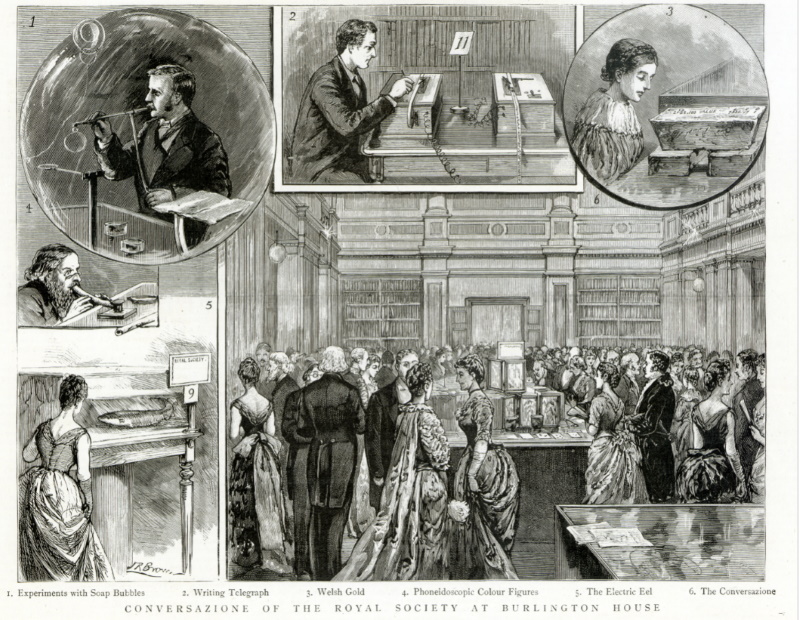
The Royal Society is a Fellowship of many of the world’s most eminent scientists and is the oldest scientific academy in continuous existence.
For over three decades the Royal Society has opened the doors to its building in central London (6-9 Carlton House Terrace) and welcomed thousands of visitors to meet the researchers behind some of the leading science in the UK.
Its history dates back to 1778, when the President at the time, Joseph Banks, started ‘conversaziones’ (later known as the Soirees). An opportunity for Fellows of the Royal Society to show their latest research and breakthroughs, they have since developed into the annual public Summer Science Exhibition.
Music Accessibility at the Royal Society Summer Science Exhibition 2025
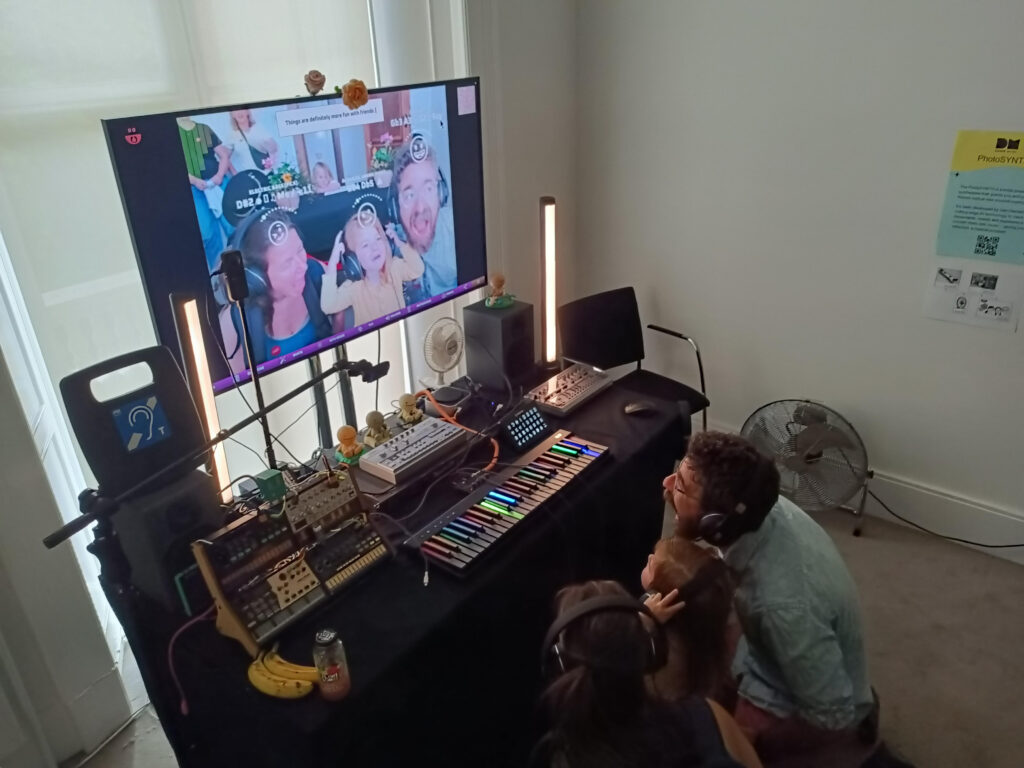
Zen Olenski and Tim Yates of the MIDI Assoication’s Music Accessibility Special Interest group were part of the Smile Powered Pop Music with PhotoSYNTH main exhibit of the Royal Society Summer Science Exhibition 2025!
Here is Zen’s wrap report that he provided to us.
The event was a complete success and we have been inundated with lovely messages of support and encouragement!
There were a few really profound moments we had with individuals that we aren’t likely to forget any time soon, and are still receiving positive and inspirational messages from people who met us through the event, who plan to use our products in everything from church dementia groups to autism schools. We are very lucky to have had this opportunity and reached a large audience, exposed many people to accessible technology and hopefully inspired and armed a whole generation of musicians as we were giving away free software synthesizers at the event! Everybody left with a musical instrument 🙂
We presented a number of accessible instruments, including the PhotoSYNTH:interFACE that you may recognise from the MIDI Innovation Awards 2021, though in a different format with a new “sympathetic synthesizer” mode innovation that converts moods into associative chords. The reception was overwhelmingly positive.
MIDI was central to the whole operation which I am really thankful for! You know I love MIDI, and it is events like these that make me extra thankful!
Reliability was important and we had no problems all weekend – the MIDI was rock solid.
We lit up a ROLI piano using facial expressions and moods via MIDI, and even passed the MIDI into our little modular for a bit of a royal rave. People really appreciated the musical relationship and we had many conversations about audio theory, music making, maths and of course, synthesizers.
Here is a photo from our “quiet Sunday session” where headphones were provided
Zen Olenski
Developer Photosynth
Music is fundamental to the human experience, but people with disabilities who aren’t able to play a traditional instrument are often excluded from making music.
Zen Olenski and Tim Yates discussed the work they’re doing to address this by trying to ensure that everyone has an instrument they can play.
Zen explained how he uses the latest face recognition technology to create the PhotoSYNTH that makes music from facial expressions, and Tim discussed some of the other amazing accessible instruments that are out there.
Here is the Youtube video of their presentation about Music Accessibility
The 2025 ABLE Assembly: Arts Better the Lives of Everyone conference, hosted by the Berklee Institute for Accessible Arts Education, delivered a powerful and inspiring program that continues to shape the future of inclusive music education and accessible performance. With more than 50 sessions, this year’s conference offered a deep and wide-ranging look at how educators, performers, technologists, and community leaders are building more equitable and expressive musical spaces for people of all abilities.
The sessions showcased not only the importance of accessible music tools and adaptive instruments, but also the deeper systemic changes needed in education, technology, and cultural institutions to truly open the door to everyone.
John Kelly and the British Invasion
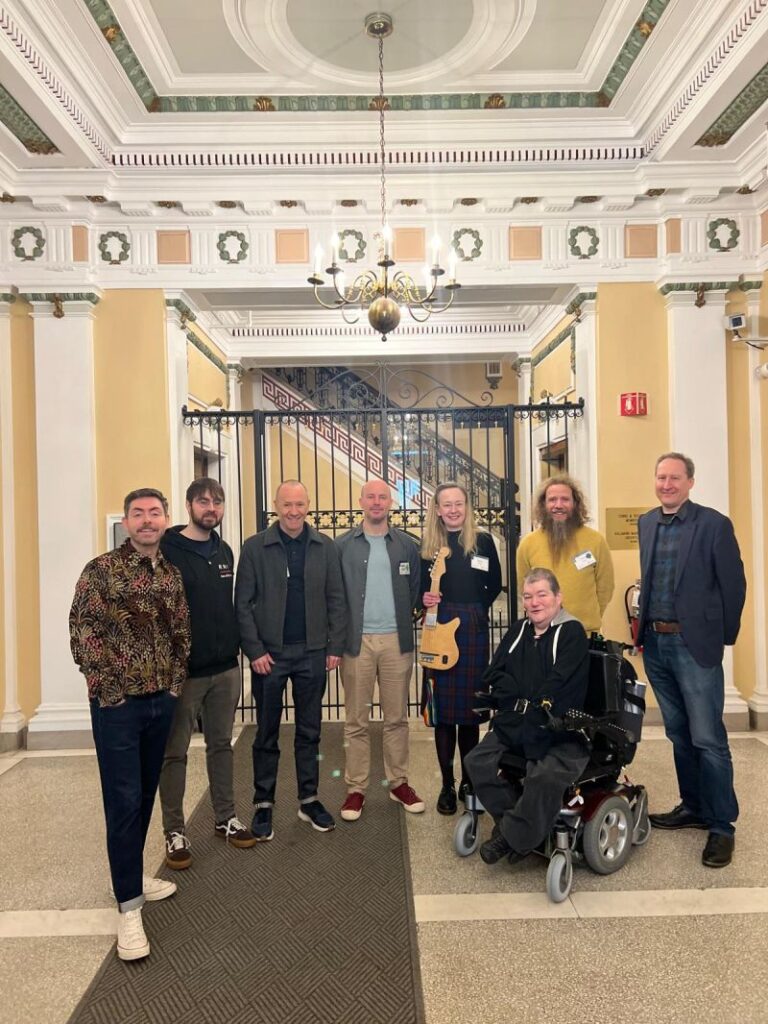
After our Friday afternoon visit to Masary Studios, we headed over to Berklee for the opening event. Our friends from Drake Music and Sound Without Sight were there as part of the “British Invasion” at the Able Assembly. A tremendous amount of positive work on music accessibility is being done in the UK.
The British Invasion at the Berklee Able Assembly – John Shortell (UK Music), Jay Pocknell (Sound Without Sight), Adrian Bossey (Falmouth University) , Sir Andrew Lansley (Glastonbury and Cheltenham Festivals) , Sally Currie (Drake Music) , Tim Yates (Drake Music), John Kelly (seated (Drake Music)), Tom Kiehl (UK Music)
Redefining Value Through Art
The keynote sessions set the tone, challenging attendees to embrace difference and reimagine success. In “The Value of a Wrong Note”, Dr. Christopher Hanson encouraged us to embrace dissonance as a source of innovation and beauty.
The Value of a Wrong Note: Shifting Perspectives and Redefining Success Presented by: Christopher Hanson
Often, in our professional experiences as artists, educators, and advocates, we are encouraged or even required to view our experiences and the experiences of others as binary.
Subsequently, our experiences are then valued by their conformity to the “right” side of binary systems of assessment. I am forced to wonder, when confronted with such realities, what happens to the “other?” What happens to the individuals who do not fit this model, whose value lies beyond binary conceptions of good and bad?
I believe the arts provide a unique opportunity to answer such questions. At a time when silence seems to be preferred over “playing the wrong note,” I would like to encourage dissonance.
I want to explore what happens when we shift perspectives of and through the arts, to not only embrace a diversity of sounds in the world, but to amplify them to reveal a more cacophonous beauty and complexity that are often discouraged and ignored?
What happens when everyone is heard?
Dr. Christopher T. F. Hanson
Conductor, violinist, composer, pedagogue, philosopher, and musicologist; Hanson
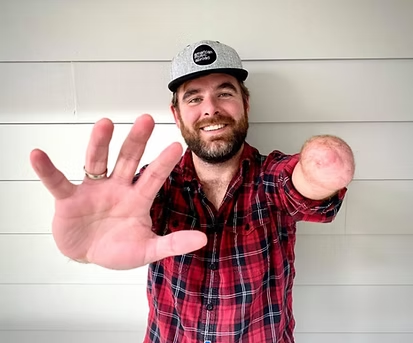
Tony Memmel’s “Determination and Duct Tape” shared his journey of overcoming physical limitations through creative adaptation.
Determination and Duct Tape: What Guitar Taught Me About Grit (And How It Can Help You, Too)!
Born with one hand, Tony Memmel taught himself to play the guitar professionally by building a homemade adaptive cast out of Gorilla Tape. He’s toured 47 states and 25 countries, sharing his music and message.
In his talk, he’ll explore how embracing perceived limitations and obstacles can lead to unique opportunities in your life.
Through story and song, Tony will encourage you to remember this… that one idea that you have that is as seemingly simple and small as learning a few songs on a guitar can shape your future and the lives of all you encounter.
Tony Memmel
Singer-songwriter, speaker, and teacher
“I taught myself to play guitar with one hand and duct tape. Obstacles can become opportunities.” — Tony Memmel
John Elder Robison’s heartfelt keynote offered a neurodivergent lens on creativity, showing how lived experience shapes artistry in powerful ways.
Look Me in the Eye: My Life with Asperger’s
In an affecting, unforgettable talk, John Elder Robison details how he overcame enormous odds to lead a remarkable life: from an anti-social child to a successful father now running a multimillion-dollar car specialty shop and his own photography business.
Though his life is unique—he’s designed guitars for KISS and toys for Milton Bradley—it’s equally rich with clues to both spotting autism in children and harnessing the best from those already diagnosed. (Some autistic kids excel at math, in engineering, and with technology.)
Robison has been applauded by thousands—the general public, teachers, mental health workers—for his storytelling skill, his on-stage compassion, and his insistence that anyone can lead a successful life according to gifts, not limitations.
Neurodiversity is not a disease that needs curing; it’s a way of experiencing life that requires only understanding and encouragement from others. Robison reminds us that people “on the spectrum” can develop throughout their lives, and that it’s never too late to hope for or expect change.
John Elder Robison
Author, Engineer, Entrepreneur
Maybe we should introduce the current United States Secretary of Health and Human Services to someone with autism who not only held a job, but started several companies and employed many people in his career.
Adaptive Tools and Accessible Design
“We co-designed the Kellycaster so I could express myself as a guitarist again.” — John Kelly, Drake Music
One of the most exciting developments for the Music Accessibility SIG was the focus on adaptive instruments and co-design.
In sessions led by Tim Yates, John Kelly, Adrian Anantawan, and Gaelynn Lea, presenters explored how inclusive technologies—from haptic vests and tactile sound systems to the Accessible Musical Instrument Collection (AMIC)—are transforming what’s possible for performers with disabilities.
The Kellycaster, an accessible electric guitar, exemplifies the kind of user-centered innovation that the MIDI Association supports through initiatives like The Music Accessibility Standard Special Interest Group.
The rise of open-source sharing and transatlantic design collaborations reflects the MIDI Association’s core mission: building standards that empower musicians globally.
Universal Design and Inclusion in the Classroom
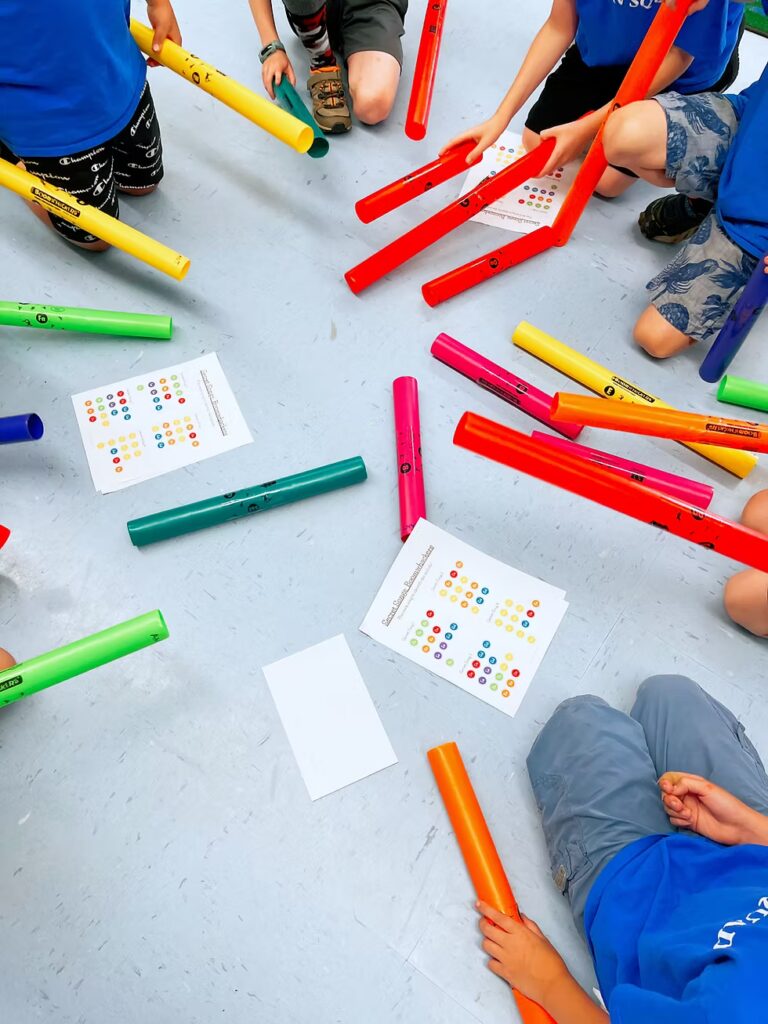
“Boomwhackers make ensemble music accessible to everyone—no prior training needed.” — Mark Buchmann
Sessions like “Bridging Abilities with a Boomwhacker Ensemble”, “Inclusive Piano Lab”, and “Chorus is for Everyone” offered hands-on strategies to adapt instruments, integrate AAC devices, and make general music classes more inclusive. Presenters emphasized designing for diversity, not retrofitting for disability.
These approaches align with the principles of Universal Design for Learning (UDL), increasingly central to the MIDI Association’s accessibility initiatives.
Music, Mental Health, and Identity
“We need to make space for musicality—not just technical ability—in our classrooms.” — Dr. Alexandria Carrico
The ABLE Assembly powerfully demonstrated how music intersects with identity and emotional well-being. From SEL-focused presentations to dynamic disability education, these sessions explored how inclusive music practices can also support mental health and social connection.
Projects like “Finding the Other Side of Silence”—an opera featuring AAC users—and “Hip Hop and Neurodivergence” brought lived experience to center stage. These sessions show how technology, identity, and creativity can converge to empower new voices in music.
Looking Forward
As the Music Accessibility Standard SIG continues developing open standards and tools to enhance access—such as tactile feedback systems, accessible notation, and device interoperability—events like the ABLE Assembly help guide our work.
This conference wasn’t just about ideas; it was about action, community, and innovation.
We invite you to learn more about our ongoing work and join us in building a world where music is truly for everyone.
In the evolving landscape of accessible music technology, Sound Without Sight (SWS) emerges as a pivotal community-led initiative dedicated to supporting blind and partially sighted musicians and audio professionals.
A Community-Driven Platform for Inclusive Music-Making
Founded in 2023 and hosted by the Technology Association of Visually Impaired People (TAVIP), Sound Without Sight serves as a comprehensive hub for blind and partially sighted individuals engaged in music and audio production. The platform offers a range of resources, including a Knowledge Hub, discussion forums, and monthly meet-ups, facilitating peer support and knowledge exchange. These initiatives aim to empower users at all stages of their musical journey, from education to professional development.
SWS focuses on three primary areas:
Audio Production: Guidance on recording, editing, mixing, and live sound work.
Music Notation: Strategies for reading and composing music, including accessible scores and screen access technologies.
Performance: Support for instrumental, vocal, and speech-based performances, for both individuals and ensembles.
Aligning with the Music Accessibility SIG’s Mission
The Music Accessibility Standard SIG aims to enhance the usability and inclusivity of music technology. Sound Without Sight’s initiatives resonate deeply with this mission by emphasizing community involvement in developing accessible solutions. By documenting user experiences and sharing practical solutions, SWS contributes valuable insights that can inform the development of more inclusive MIDI standards and practices.
For instance, the SWS Knowledge Hub compiles user-generated content, tutorials, and advice, serving as a repository of collective wisdom. This not only aids individuals in overcoming accessibility challenges but also provides developers with real-world feedback to improve the inclusivity of their products.
Browse categories on the SoundWithoutSight Knowledge Hub
Beyond resource sharing, SWS actively promotes the work of blind and partially sighted musicians.
Their Sound Without Sight podcast highlights diverse approaches to music-making, including braille notation, learning by ear, and exploring digital scores. These stories celebrate individual achievements and serve as powerful educational tools for the wider community.
SWS also encourages collaboration between users and industry professionals. By facilitating feedback loops and inclusive dialogue, the platform ensures that the voices of blind and partially sighted musicians are heard in the development of new technologies — a practice that reflects the SIG’s emphasis on inclusive, user-centered design.
Driving Industry Change Through Advocacy
Sound Without Sight’s advocacy extends beyond its community platform to influence industry-wide awareness and design practices. By demonstrating how accessible design benefits creativity, SWS positions accessibility not as a limitation, but as a catalyst for innovation.
Conclusion
Sound Without Sight exemplifies the power of community-led initiatives in shaping a more accessible and inclusive music industry. Through knowledge sharing, artist promotion, and advocacy, SWS not only supports blind and partially sighted musicians, but also contributes to the MIDI Association’s broader effort to create a future where everyone can make music.
Its alignment with the Music Accessibility Standard SIG underscores the importance of continued collaboration in building a universally accessible music technology ecosystem.
The Music Accessibility Special Interest Group (MASSIG) and how to join
The Music Accessibility Special Interest Group meets every Thursday at 8 am Pacific to discuss both the promotion of music accessibility and technical possibilities for using MIDI to improve accessibility.
It is easy to join the group by filling out this MIDI Initiatives form.
Several of the winners of the MIDI Innovation Awards in 2024 focused on accessibility.
Arcana Strum
UniMIDI Hub
Accessibility demos at NAMM 2025
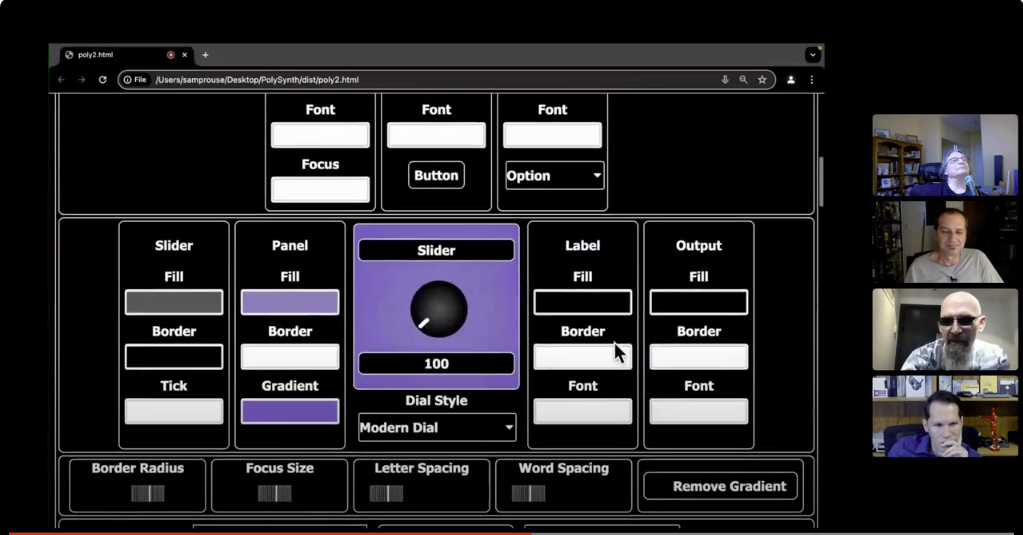
At the last NAMM show, Haim Kairy from Arcana Strum and the folks from Bettermaker along with Sam Prouse developed a prototype of voice controlled software and hardware.
We are excited to be joining Music Accessibility Special Interest Group members Jay Pocknell from Soundwithoutsight and Tim Yates from Drake Music at the Berklee College of Music Able Assembly on April 11-13.
Details of the Able Assembly
Upcoming Events
Notice
There are no upcoming events.
The Berklee Institute for Accessible Arts Education (BIAAE) is delighted to announce the 2025 ABLE Assembly: Arts Better the Lives of Everyone conference, which will take place April 11–13, 2025. In-person and online attendance options are available.
Registration is now open.
The conference registration fee is $125 and includes:
If You Attend In Person:
Sessions at Berklee College of Music in Boston
An opening reception on April 11
Lunch on April 12 and April 13
Access to recorded sessions and supporting materials after the event has concluded
Admission to the Berklee Institute for Accessible Arts Education’s (BIAAE) Digital Learning Series, 12 monthly webinars and workshops with hands-on teaching strategies that will be offered from May 2025 through April 2026; and
Livestream access to keynotes and some workshop sessions
Access to exclusive curated pre-recorded sessions and supporting materials by luminaries in the field
Day-ending synthesis discussions with opportunities to engage with the presenters
Admission to the Berklee Institute for Accessible Arts Education’s (BIAAE) Digital Learning Series, 12 monthly webinars and workshops with hands-on teaching strategies that will be offered from May 2025 through April 2026; and
Presentations by MASSIG Members at the Able Assembly
There are many great presentations at the Able Assembly, but we are really looking forward to these two by members of the MIDI Association Special Interest Group.
Adaptive Instruments: Progress, Challenges and Solutions
An Introduction to AMIC and Trans-Atlantic Instrument Development
Presented by: Sally Currie, Tim Yates, John Kelly, David Cardona, Adrian Anantawan, Chi Kim
We know that world it can be incredibly difficult, if not impossible, for anyone who needs an accessible musical instrument or accessible music tech to find something that works for them. Even if something exists it can be prohibitively expensive or hard to get hold of. We aim to address this problem by building AMIC, the Accessible Musical Instrument Collection, a national collection of accessible instruments and music technology with full online catalogue including, where available, source-code and design files for instruments. We will present this project at this workshop, outlining the issues we intend to address, how we intend to do it and where we are on the path to realising the project. There is a separate document attached with more details around AMIC and the impact we hope it might have. We would also like to propose the inclusion of a trans-Atlantic instrument development project to act as a case study of how such a resource might work. This follows the exploration in late 2024 of the exchange of design files for instruments developed in the US and the UK which will be independently and remotely built, exchanging knowledge and expertise in the process. We would then come together at the workshop for a demonstration of the instruments and an overview of the successes and challenges of the process – ideally with stac and students of BIAAE presenting the results of this co-production project alongside their UK peers.
We think this would be a compelling example of how such resources and collaborations, if more widely available, could make a difference in the availability of accessible instruments world-wide.
Accessible Music Notation: Where Are We Now?
Presented by: Jay Pocknell
Recent global collaborations in technology, standards, and good practice, led by the DAISY Consortium and supported by RNIB, have unquestionably reversed the decline in accessible music production and use.
Musicians with print disabilities can now be increasingly confident of having scores in their required formats, which has historically presented a huge barrier to equitable access.
Strategic interventions mean that in 2025:
•Print-disabled musicians can independently create and explore scores in mainstream music notation software;
•Publishers better understand accessible music formats, and music-setters can engrave scores which are ‘born accessible’ by following best practice guidance;
•The standard music file format, MusicXML, has been upgraded to include information needed for accessibility;
•MusicXML can be easily and reliably converted into braille music and Modified Stave Notation using free tools.
We now need to ensure the sector is aware these developments. We encourage you all to become accessible music champions!
The MIDI Association and the Chinese Musical Instrument Association (CMIA) have always had a close and mutually beneficial relationship. We have met every year for over decade to discuss the evolving state of the musical instrument industry with CMIA.
The important role that organizations like CMIA and NAMM play in shaping the future of the Musical Instrument Industry cannot be ignored.
During the pandemic, we actually deepened our relationship with the CMIA by providing people in China with virtual events about new MIDI products and specification hosted on The MIDI Association’s internal communication’s platform MIDIable and iframed on Music China’s WeChat channel.
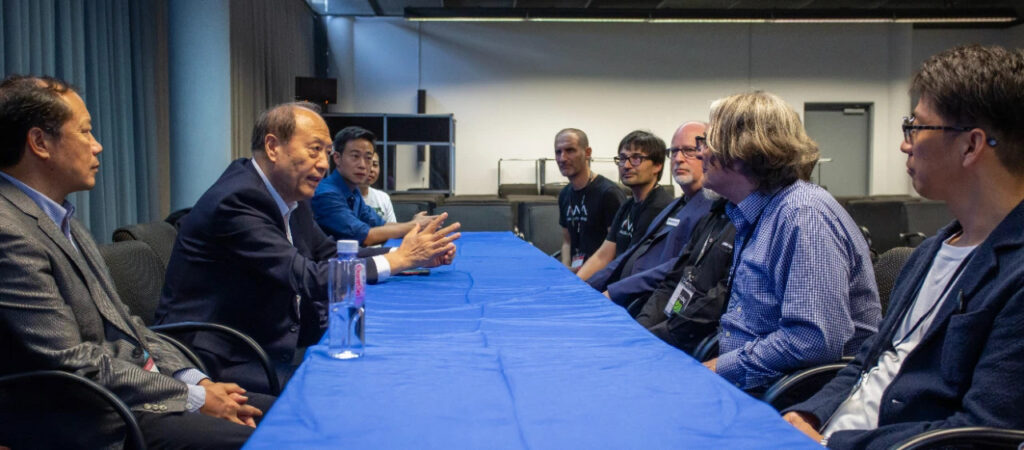
Last year when we could finally return in person to Music China, we signed the 2023 Shanghai Consensus Agreement between CMIA and The MIDI Association.
Shanghai Consensus 2023
Last year (2023) both sides agreed that over the past years, the China MIDI musical instrument industry has maintained smooth communication and multi-dimensional cooperation between CMIA and TMA and agreed to further cooperation in order to:
Stimulate MI industry development
Boost trade shows and industry events
Establish mechanisms for efficient exchange of information and data
Foster industry technology innovation
The MIDI Association’s success at Music China 2024 is directly attributable to the support we received from CMIA and from Shanghai Intex, the company that runs the Music China trade show.
Here is a statement by Wang Shicheng from our 2024 meeting at Music China .
As the cornerstone of modern digital music, the development of MIDI technology has a far-reaching impact on the future development of the entire electro-acoustic instrument industry.
The International MIDI Forum will help more people understand and master MIDI technology through the promotion of advanced MIDI technology and application technology lectures, roundtable forums and other activities, lower the threshold for music production, and enable more enthusiasts to participate in music creation.
There are a considerable number of music performance groups in China, and MIDI technology and products have great development potential in the Chinese market. The participation and contribution of the Chinese MIDI industry has played a positive role in promoting the development and growth of the international MIDI industry.
In the next step, the organizers of the exhibition will continue to increase resource support for MIDI international exhibition areas, forums, activities, roadshows and other theme activities to attract more international MIDI companies to participate in the exhibition in China.
The MIDI Association and the Japan Music Electronics Industry Association are welcome to strengthen exchanges with the Chinese MIDI industry in product manufacturing, design, branding, technology development and innovative research and development to achieve mutual benefit and win-win results.
WANG SHICHENG
PRESIDENT, THE CHINESE MUSICAL INSTRUMENT ASSOCIATION
Meeting between CMIA, AMEI and The MIDI Association at Music China 2024
Wang Shicheng emphasized that the International MIDI Forum plays an important role in promoting technological development, promoting industry exchanges, popularizing education and integrated development.
“We should make full use of the industry platform of the Shanghai International Musical Instruments Exhibition, work together with the international MIDI industry in an open and cooperative manner, and continuously enhance China’s voice and influence in the global application of MIDI 2.0 technology”.
The 2024 Future Music Technology and International MIDI Technology Development Forum
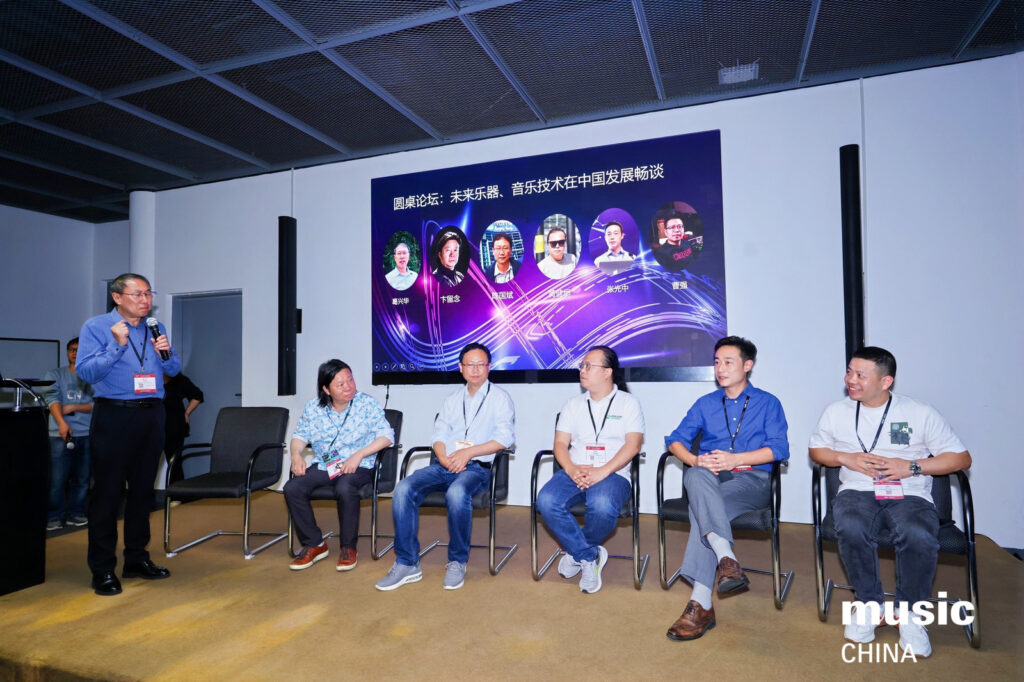
On October 12, the 2024 Future Music Technology and International MIDI Technology Development Forum was held during the Shanghai Musical Instruments Exhibition.
The entire series of activities includes international project roadshows, keynote speeches, special discussions, and roundtable forums. They are rich in content and novel in form. They deeply analyze the latest developments and future trends of current international MIDI technology and the market, and provide in-depth communication opportunities for professionals and MIDI enthusiasts.
The event was hosted by the China Musical Instrument Association and Shanghai Intex Exhibition Center Co., Ltd., organized by the Association’s Future Music Technology Committee and other organizations, and strongly supported by The MIDI Association and AMEI.
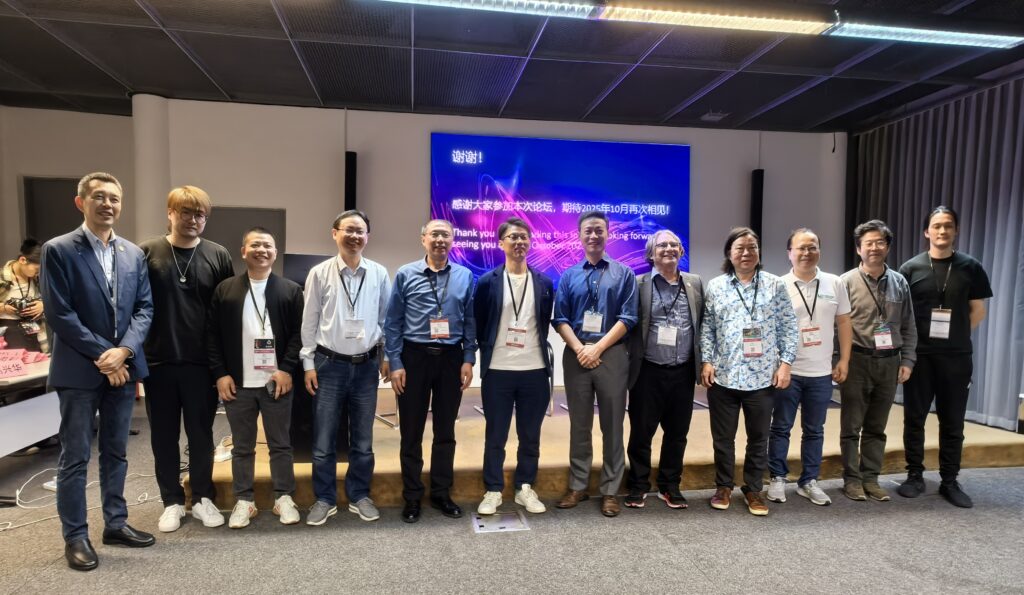
The event brought together key MIDI companies in the US, China and Japan, including Zhao Ping, Chairman of Jiangsu Yinfei Technology, Ge Xinghua, General Manager of Medeli Electronics (Shanghai) Co., Ltd., Zhao Yitian, Chairman of CME Co., Ltd., Cao Qiang, Deputy General Manager of Changsha Hotone Electronic Technology, and heads of international MIDI industry leaders such as Focusrite, Amenote, Midiable, and MIDI PLUS.
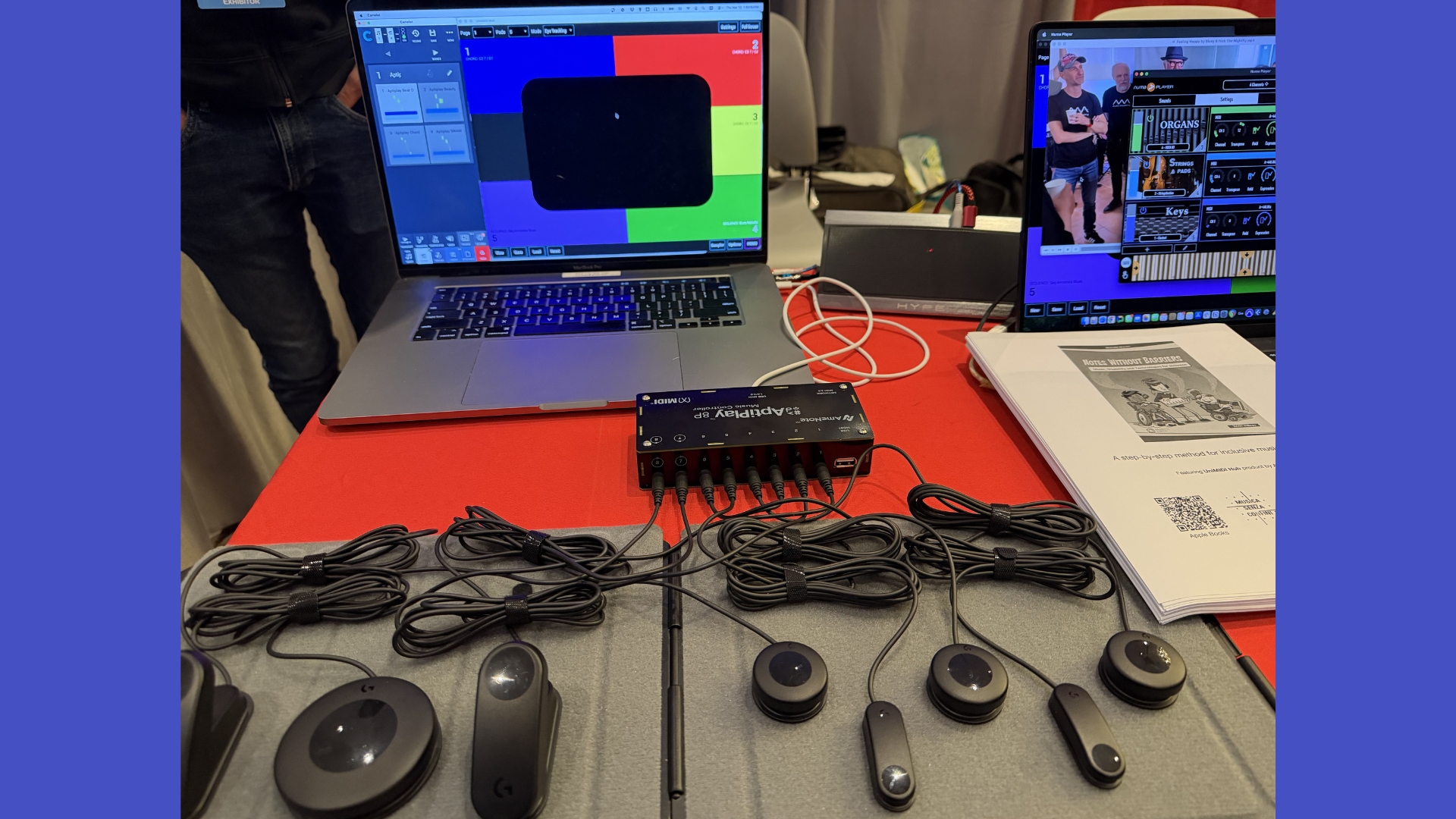
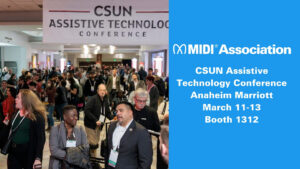
AmeNote recently introduced AptiPlay at the CSUN Assistive Technology Conference, presenting a new approach to accessible music creation for people with mobility disabilities. AptiPlay is a music controller designed to make it easier for individuals with limited movement to actively participate in making music. AptiPlay 8P Music Controller Turn any Switch or Analog Input into…
One of the most interesting activities organized by CMIA and The Future Music Technology Committee was the MIDI Innovation Award roadshow.
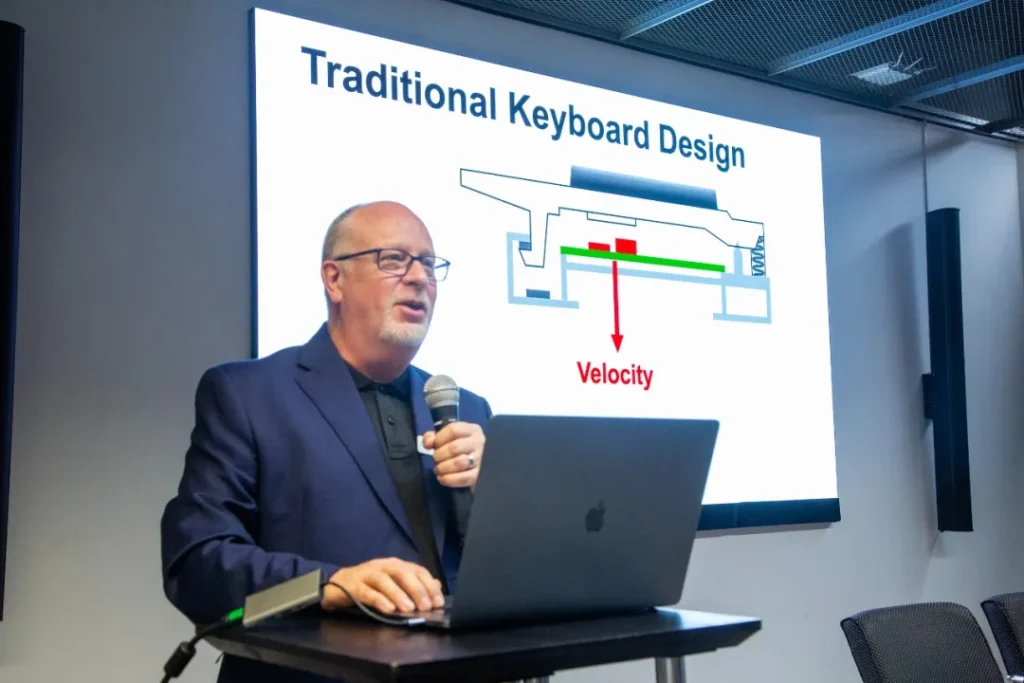
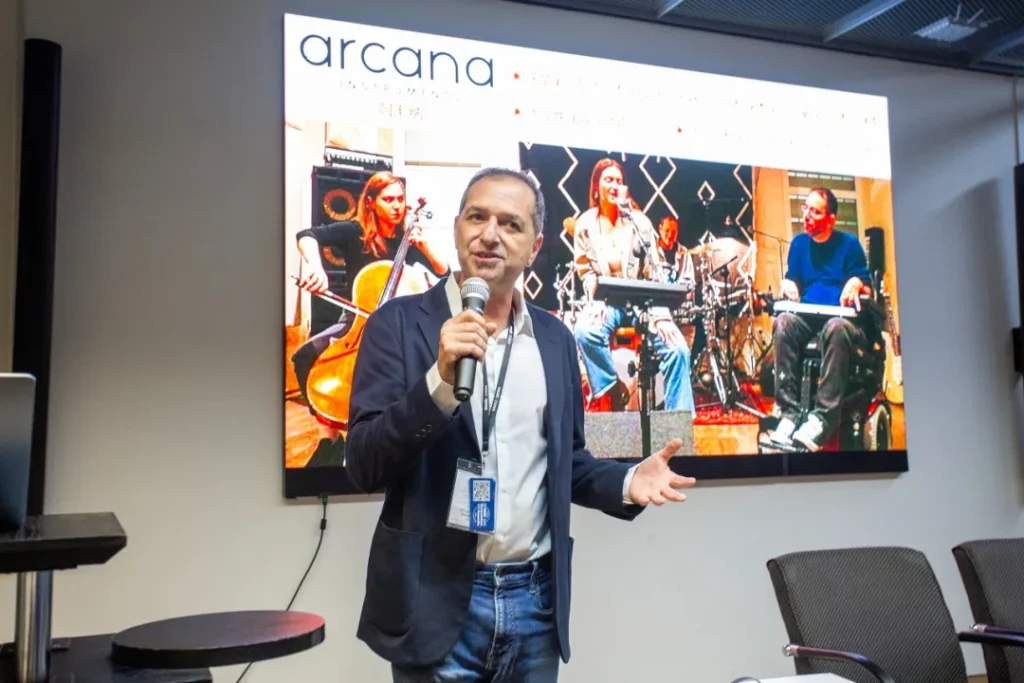
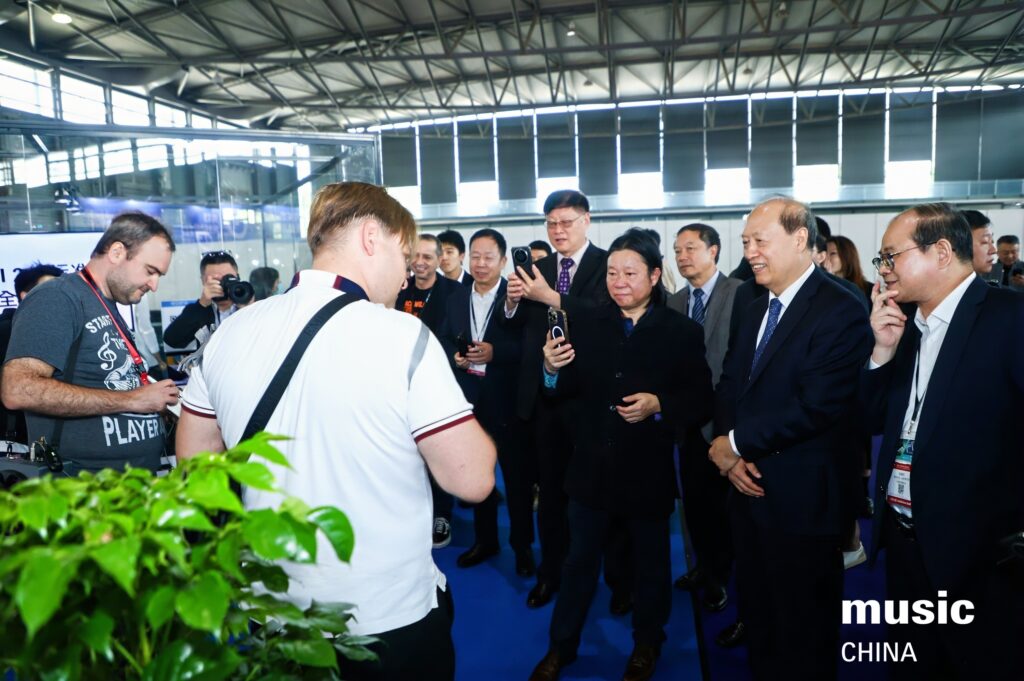
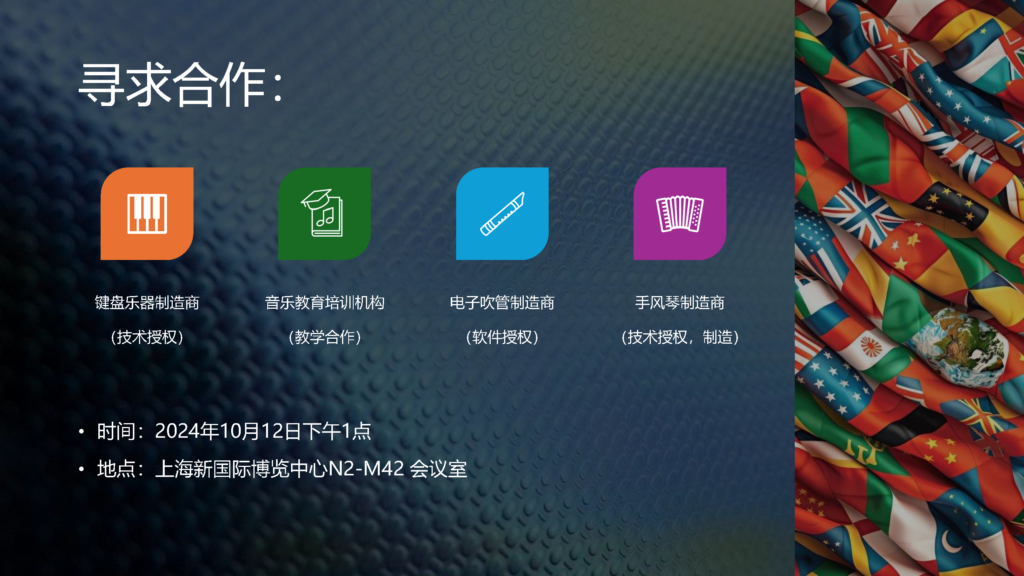
MIDI Association companies from overseas were invited to do presentations to Chinese companies and organizations. Some of the companies were looking for distribution, some were looking for exposure in the Chinese market and some were looking for possible OEM partners.
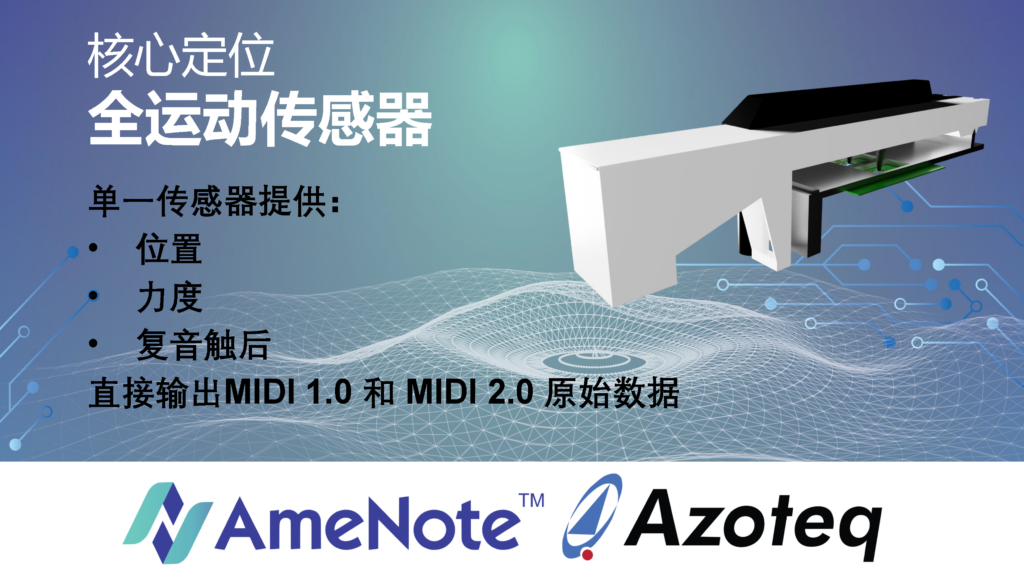
Amenote and Azoteq showed off a unique keyboard technology that is really suited to developing MIDI 2.0 products
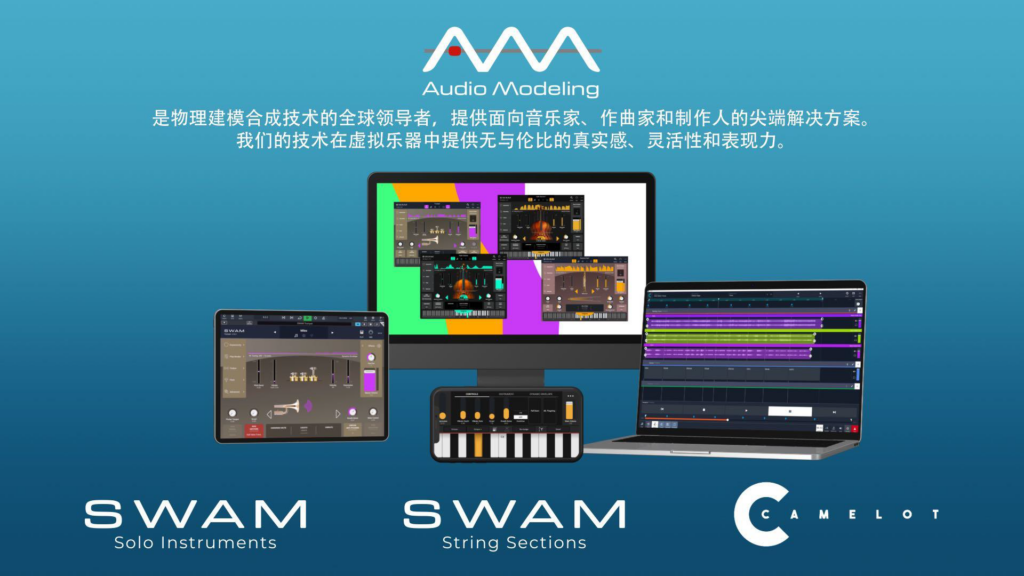
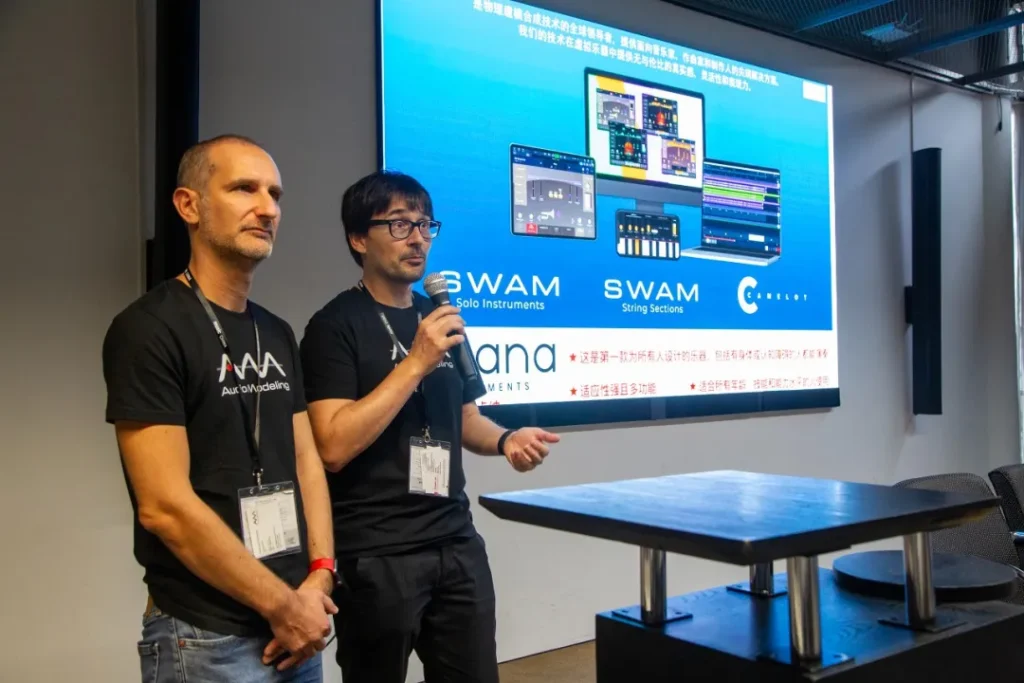
Audio Modeling was looking to develop relationships with universities to expand their presence for SWAM instruments in the education market.
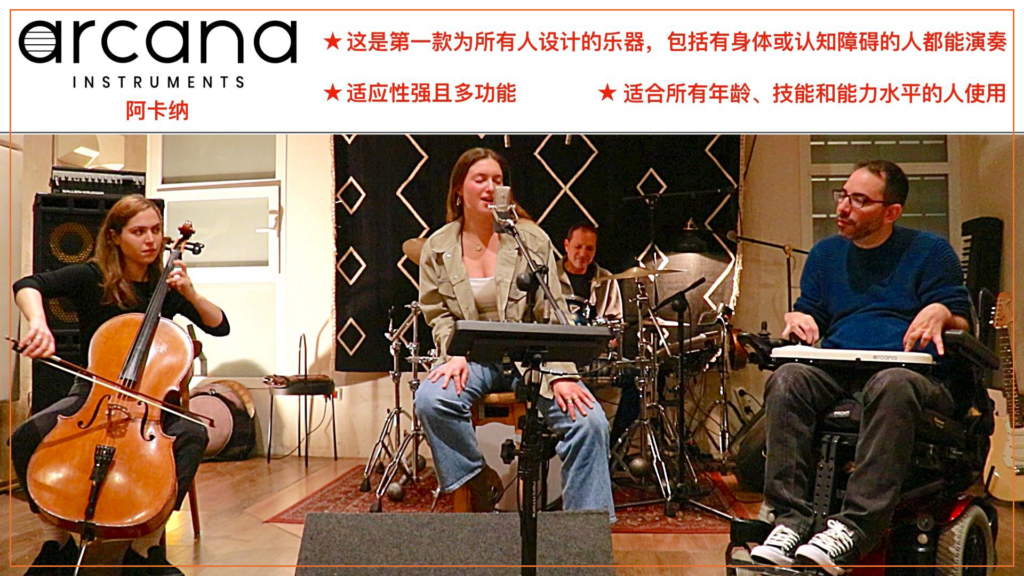
Arcana was looking for possible OEM partners to help them reduce costs to make the Arcana Strum more financially accessible.
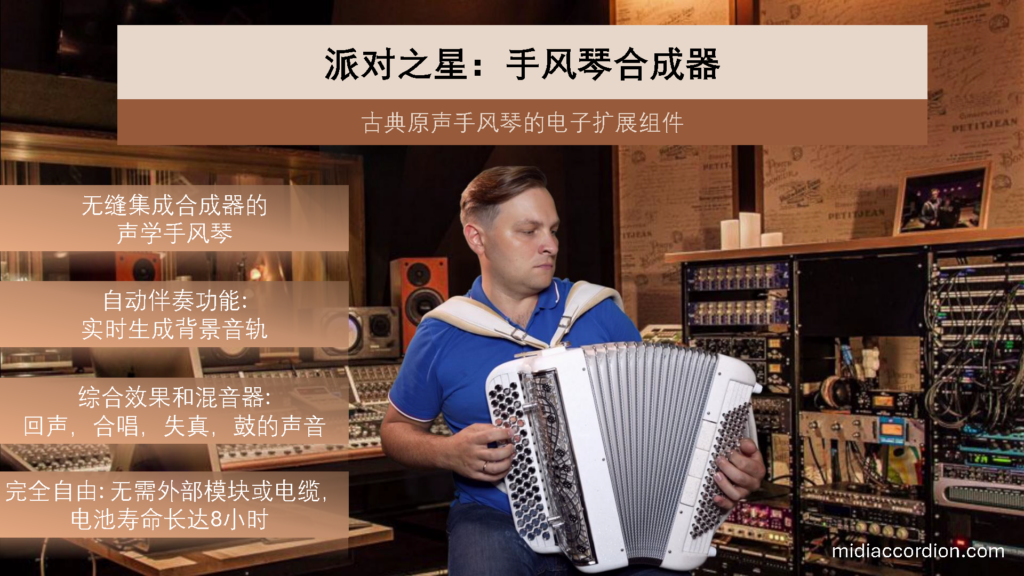
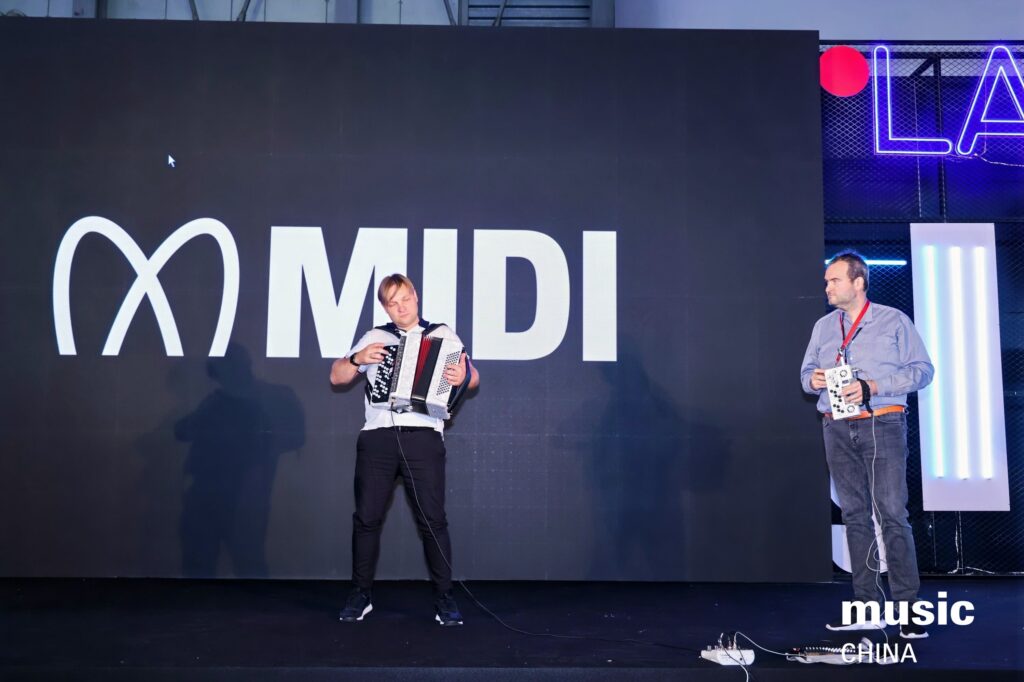
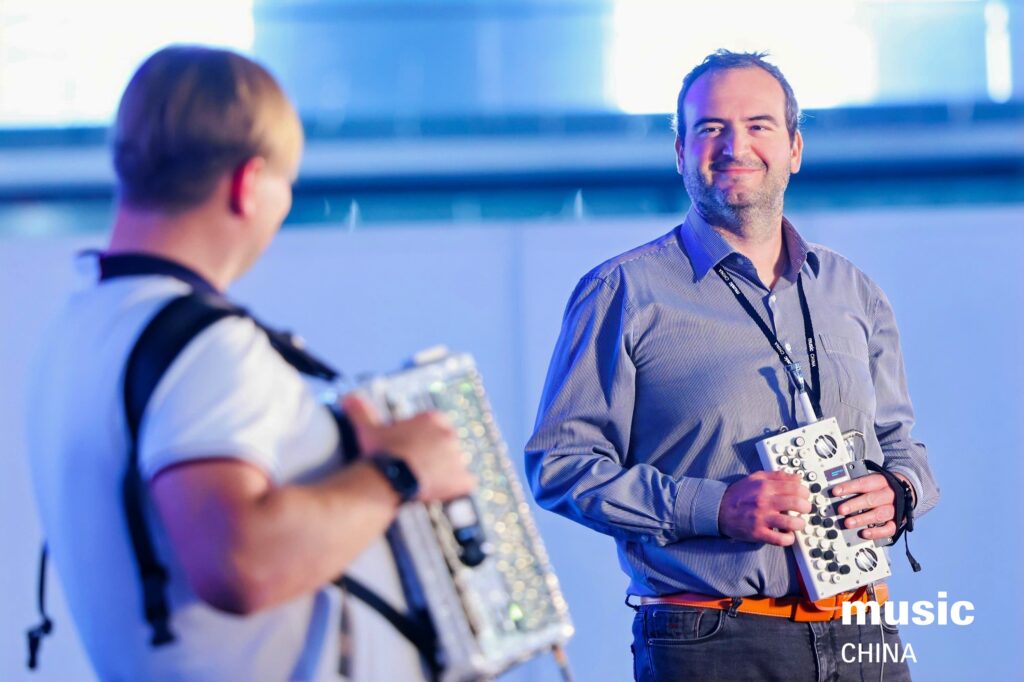
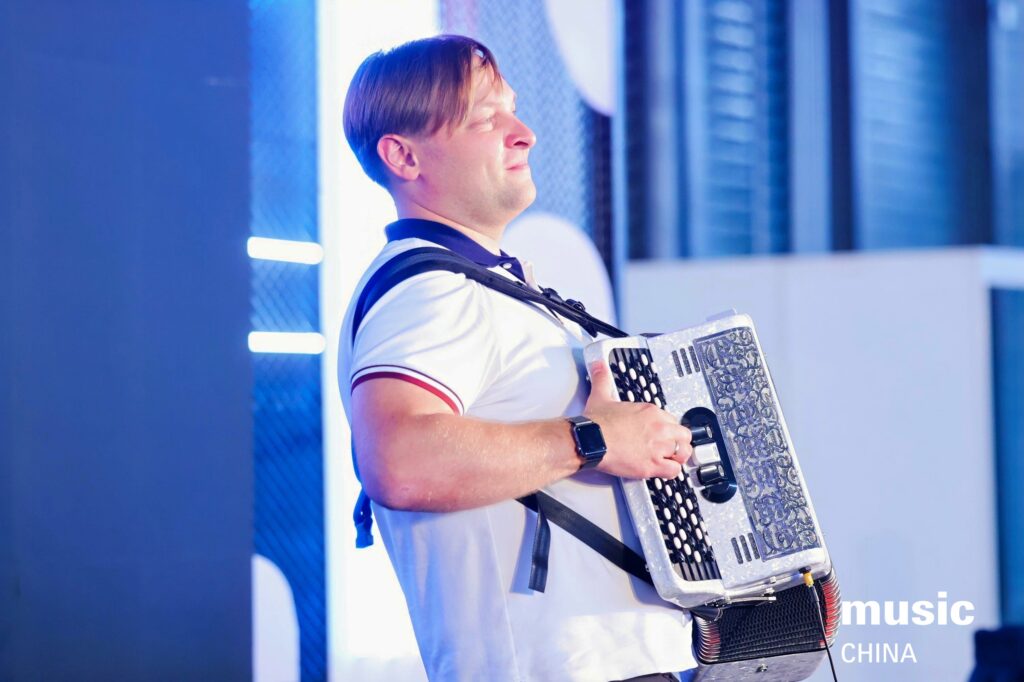
Sergey Antonovich was looking at several different collaboration possibilities for his two projects- the Flex Accordian and the Party Maker.
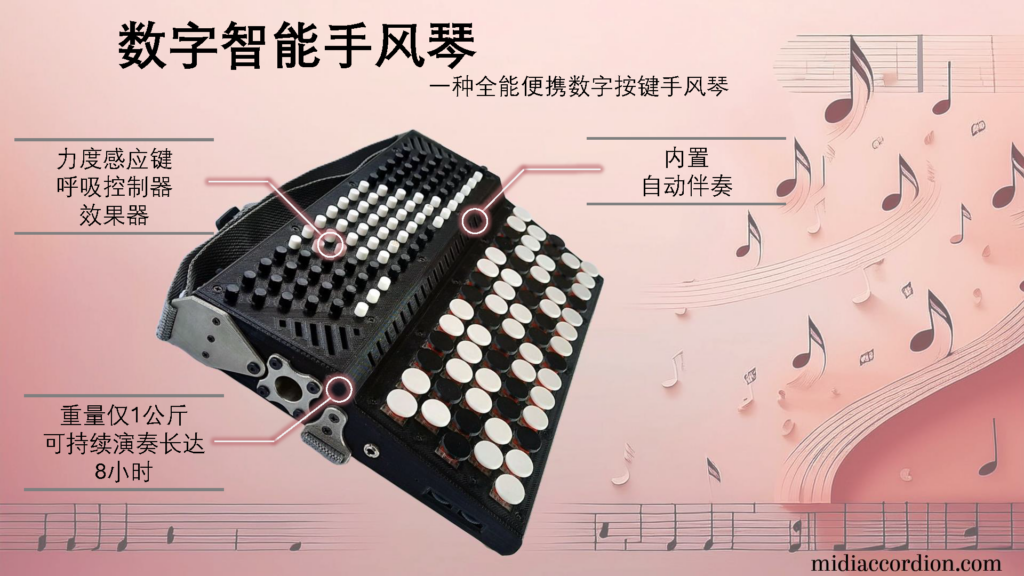
Sergey Antonovich was looking at several different collaboration possibilities for his two projects- the Flex Accordion and the Party Maker.
The Chinese Music Instrument Association, The MIDI Association, The Association of Musical Electronic Industries (Japan) and The Future Music Technology Committee all believe that the future of the musical instrument industry is digital.
We are all committed to working together to create more expressive and more inclusive digital musical instruments with a goal to make more more music makers and ensure that music and music education continues to be a vital part of people’s lives.
Music China and the Chinese Musical Instrument Association (CMIA) have really stepped up their support for MIDI and digital music making and right next to The MIDI Association booth was the X Stage where we did a number of presentations over the course of 4 days.
Brian Hardgroove and Sennheiser Immersive Audio Presentation
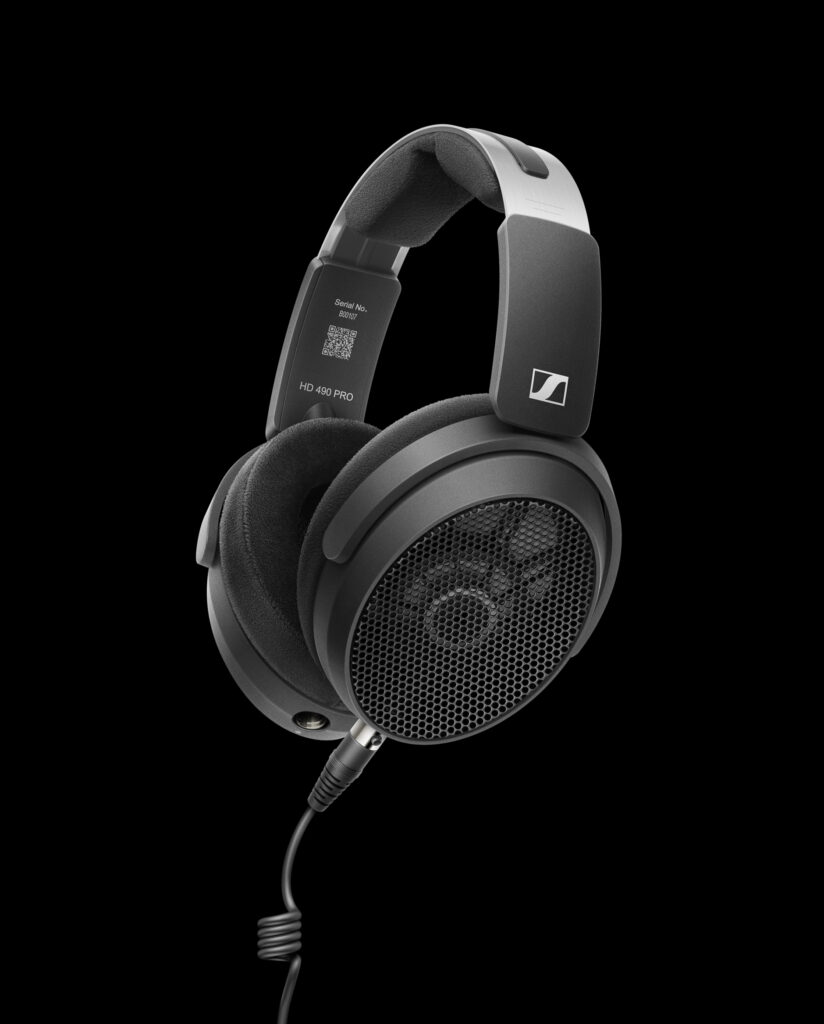
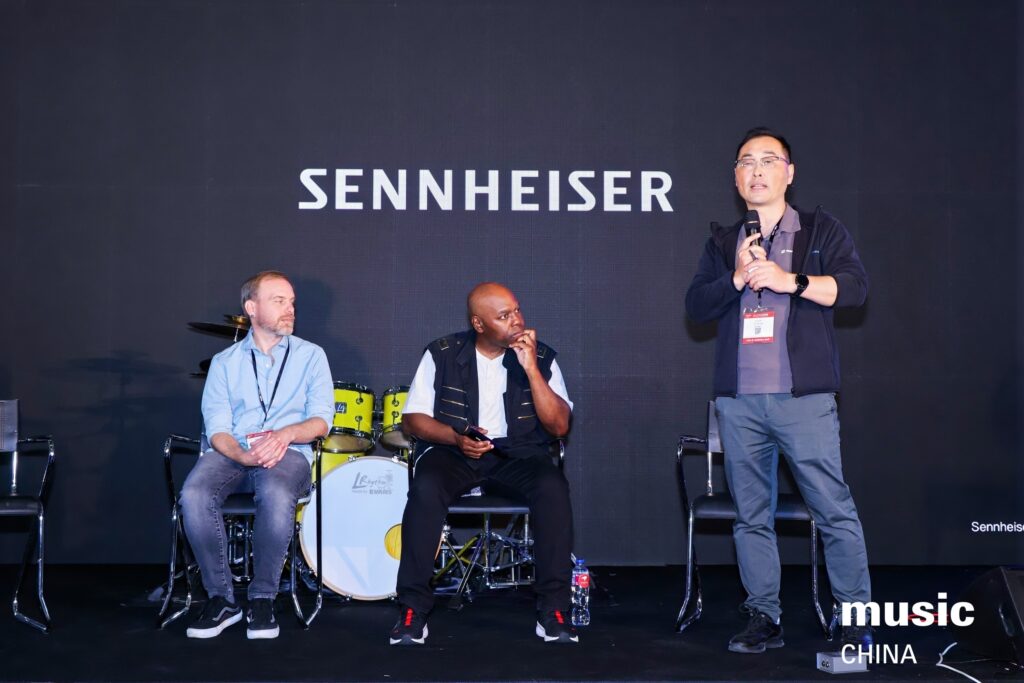
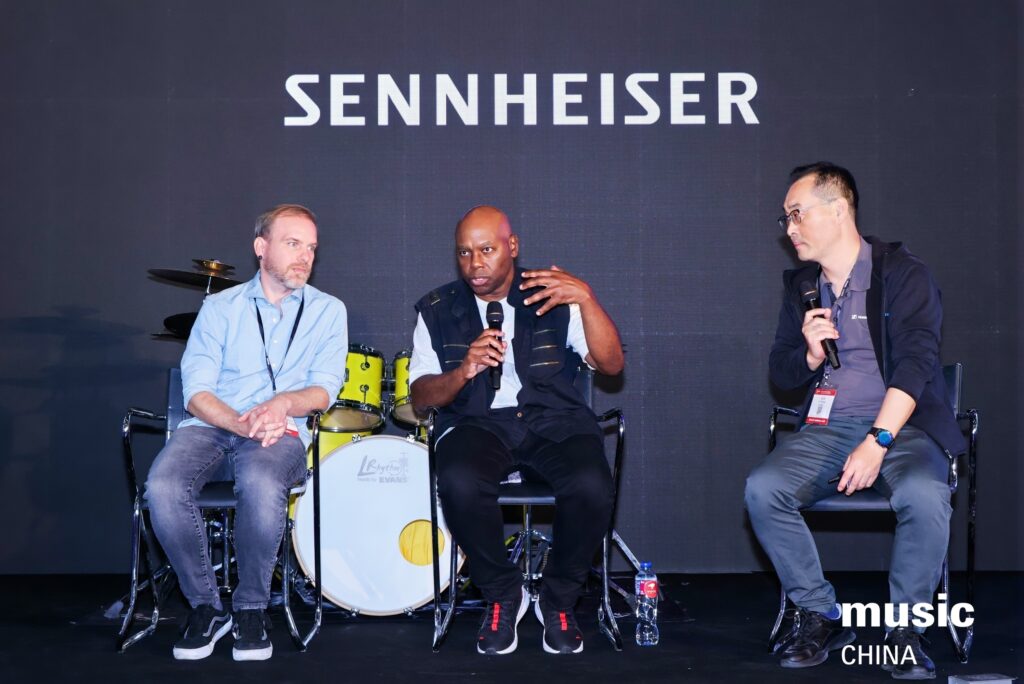
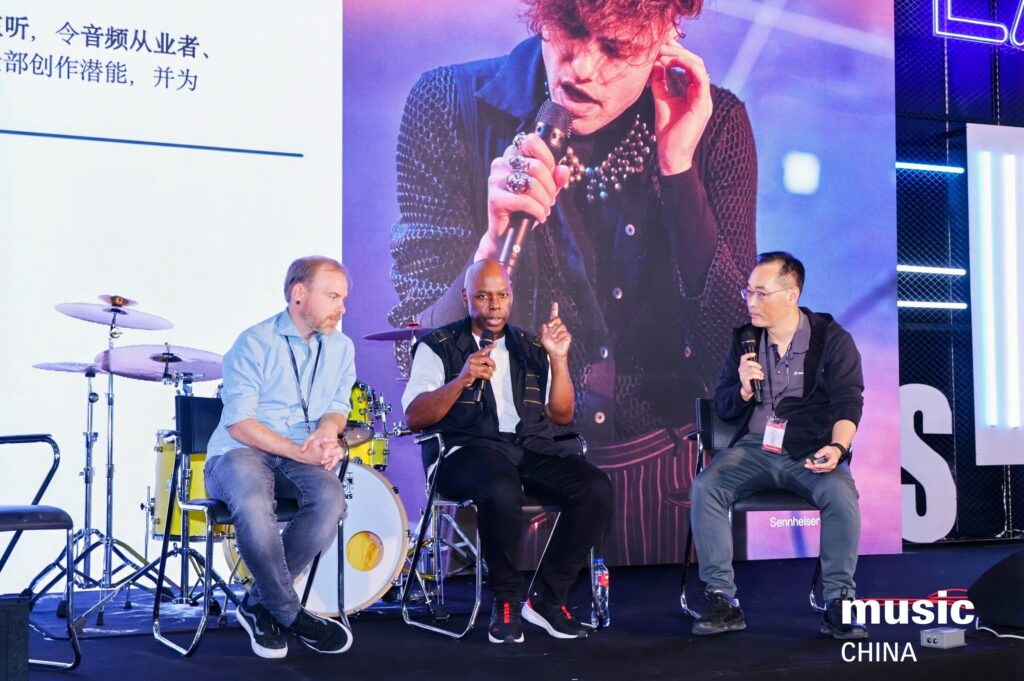
Because of a long standing relationship, Sennheiser supported Brian Hardgroove’s appearance at Music China’s opening performance. He also did the first presentation on the X Stage next to The MIDI Association. Brian along with IMAC advisory board member Nevin Domer (who ran a punk record label in China and speaks fluent Mandarin) and Zhao Yajun, engineering specialist for Sennheiser presented a talk on the X Stage. Brian focused on the process of cross border, cross cultural communication in working on songs with Bian and Kong and Zhao Yajun focused on Sennheiser products particularly the HD490 Pro headphones.
The MIDI Association had worked with Music China and Sennheiser so people could come to The MIDI Association booth and register to receive a copy of a song written by Brian which featured Bian on Erhu and Kong on piano and also enter a drawing to win a pair of headphones.
This really helped us increase traffic at the MIDI Association booth.
MIDI Innovation Awards and Chinese Users Choice Awards Presentation
Finalists in the MIDI Innovation Awards were invited to participate in Synthefest UK 2024 , Music China 2024 and NAMM 2025. Here is an article we did Synth Fest UK on the event and a picture of from the event itself.
NAMM 2026 Update Join members of the Transport Working Group as they highlight the latest progress on MIDI 2.0 transports for Bluetooth, Web MIDI and updates to the Network spec to add remote management capabilities. https://youtu.be/YHsfowljdVM
Boaz from Arcana Instruments Strum, Jean Baptiste Thiebaut from The MIDI Innovation Awards and Andrej Kobal from seqMPEror.
At Music China we had a great panel and participation by several of the winners and finalists. Here is the promotional video we created to promote the event at Music China.
MIDI Innovation Awards and Chinese Users Choice Awards
Finalists in the 2024 MIDI Innovation Awards were also entered into the Chinese Users Choice Awards where Music China promoted the products in China and users were able to vote for their favorites.
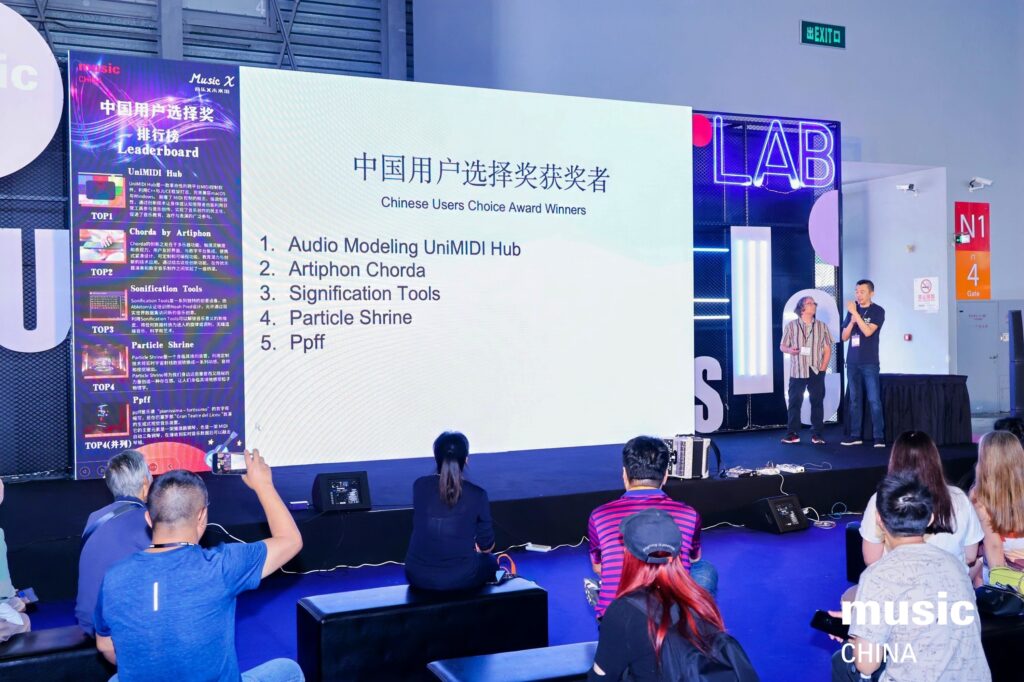
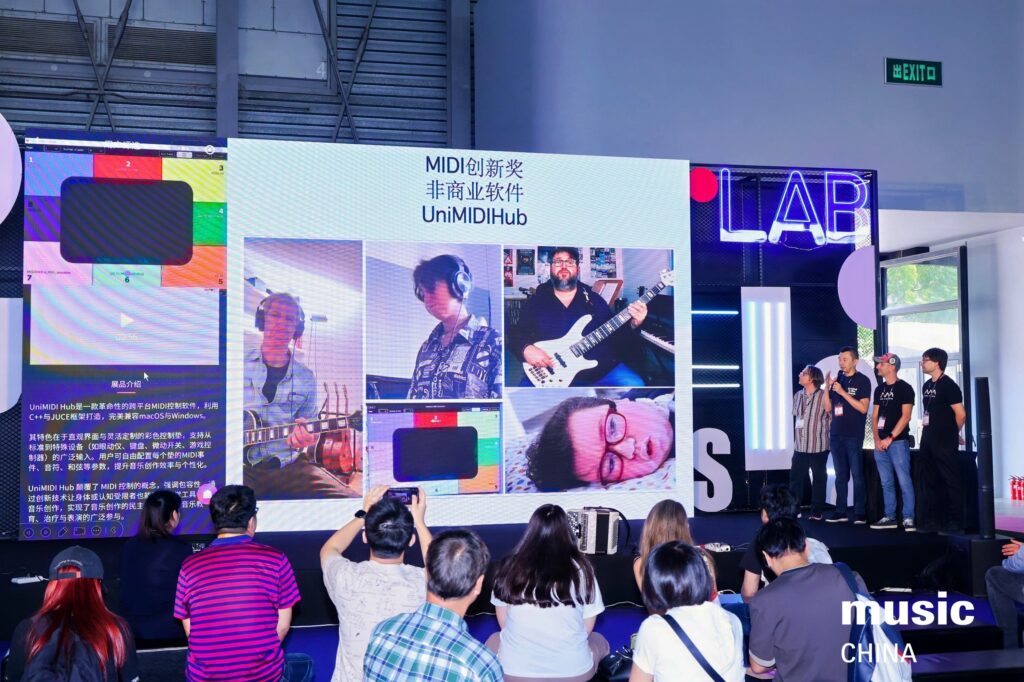
Audio Modeling won both the MIDI Innovation Awards in the non commercial software category and the Chinese Users Choice Awards. We covered this in our article The MIDI Association At Music China 2024
This picture shows the ranking of the Chinese Users Choice Award winners.
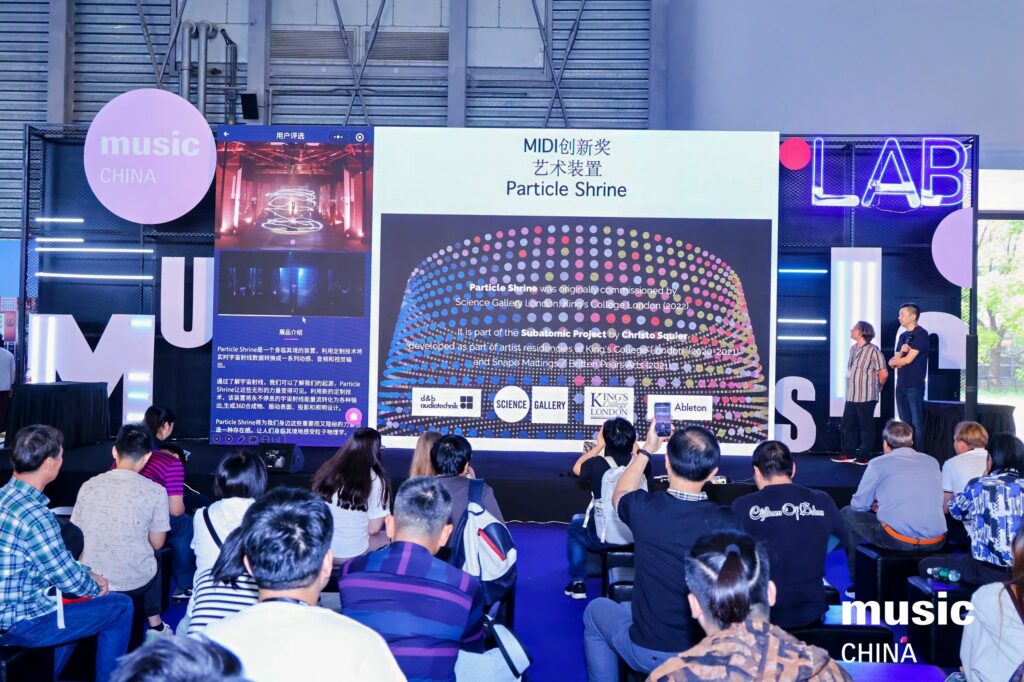
There were a lot of MIDI Innovation Award finalists and winners at Music China including Audio Modeling, Arcana Strum, Party Maker and Flex Accordion.
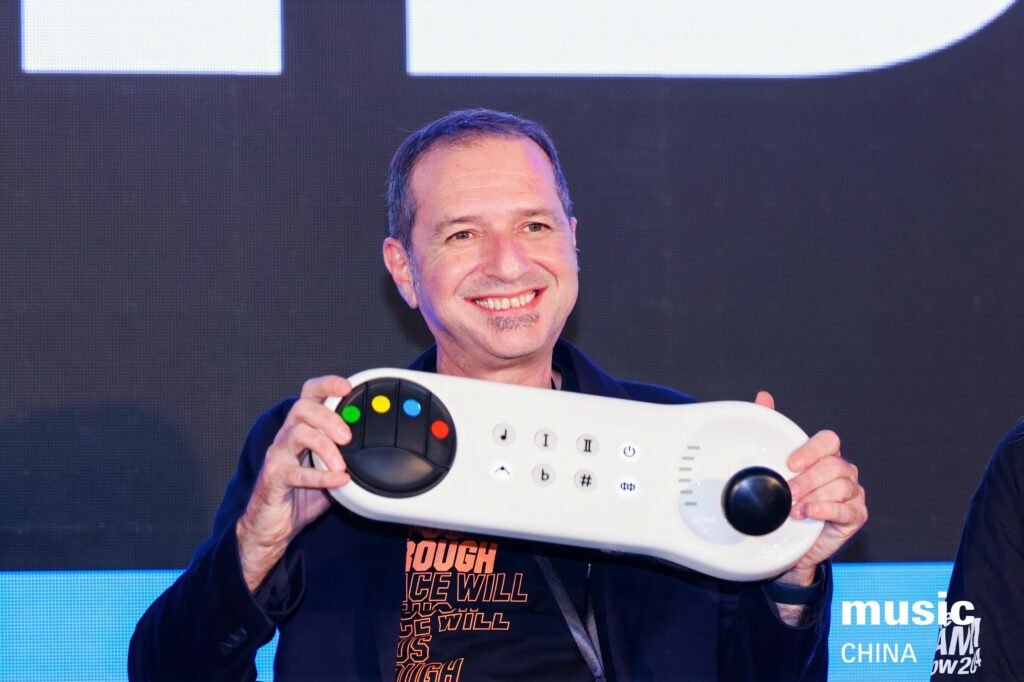
Audio Modeling explains the UniMIDI Hub at Music ChinaHaim Kairy holds up the Arcana Strum at the Music Accessibility panel at Music China 2024Particle Shrine Video at Music ChinaParty Maker and Flex Accordian
MusicX Stage Music Innovation Awards Presentation
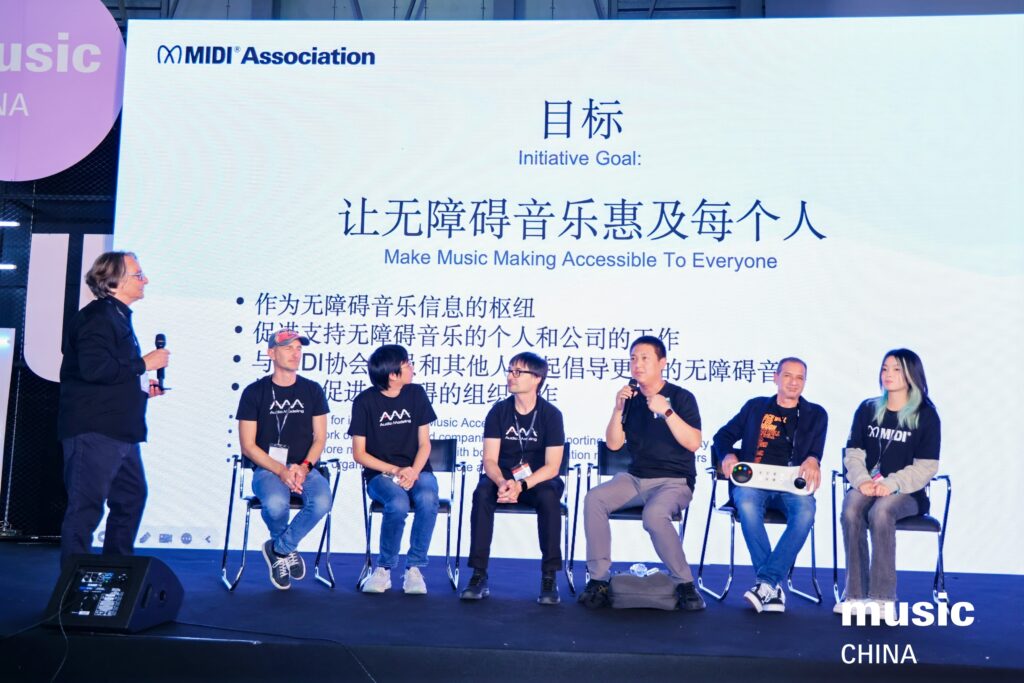
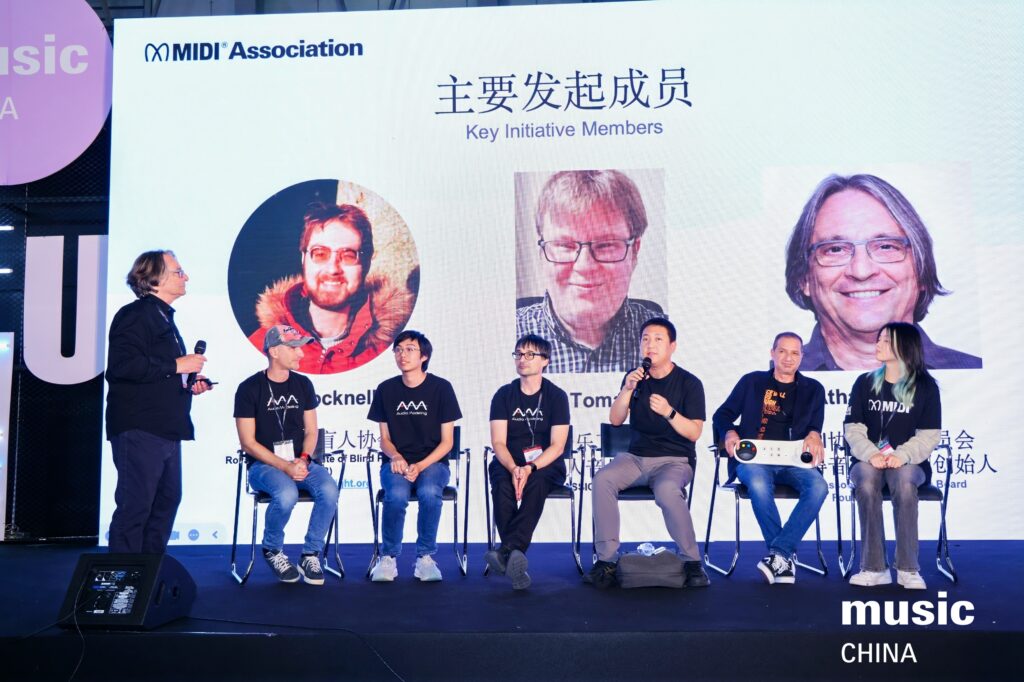
Music Accessibility Presentation
Above is the promotional video we created to promote the event at Music China.
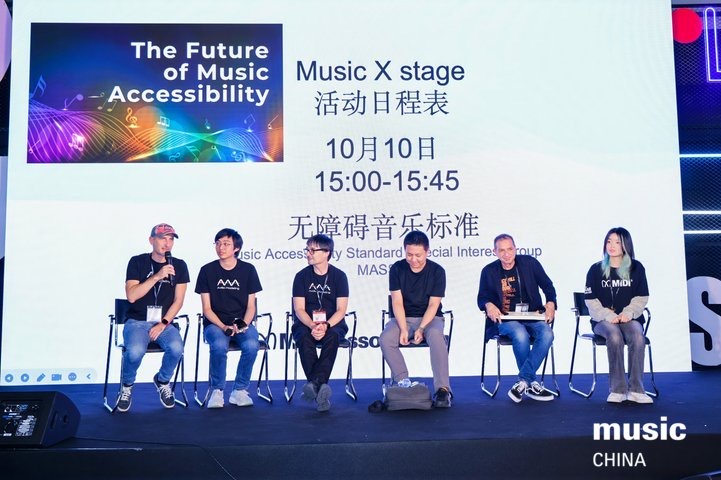
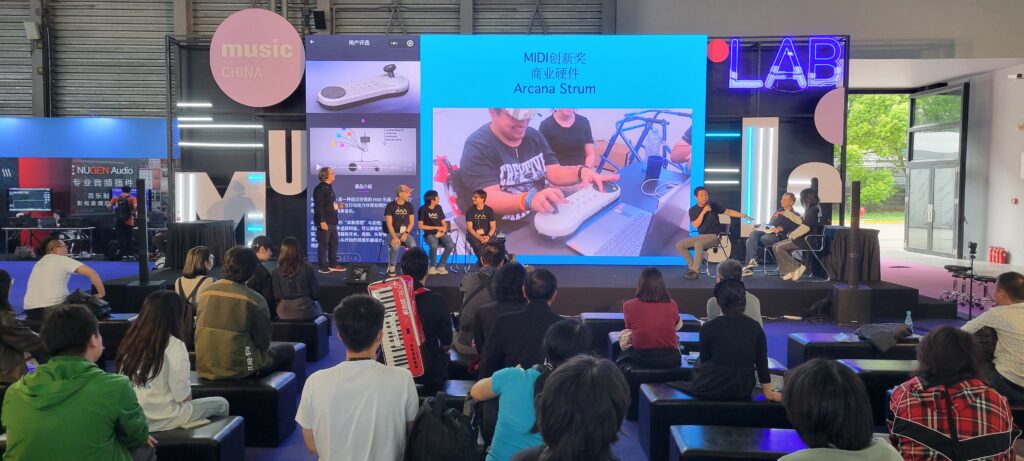
The Music Accessibility presentation at the X Stage featured two 2024 MIDI Innovation Award winners. Arcana Instruments won in the Commercial Hardware category for the Arcana Strum and Audio Modelingwon in the non-commercial software category for UniMIDIHub.
In addition to the MIDI Innovation Award winners, we invited two of brand ambassadors and a special guest, Liang Ge from Kong Audio . He showed up several minutes before the start of the presentation because he was interested in music accessibility. His company develops virtual instruments covering modern and ancient Chinese instruments as well as western orchestral instruments.
His English is great so we roped him into being the translator for the Music Accessibility presentation at the very last minute. Thanks to Kong Audio for their support.
Liang Ge from Kong AudioHaim Kairy with Arcana Strum
MIDI In Music Education Presentation
With all the support we got last year from Xinghai Conservatory of Music and this year from Shanghai Conservatory of Music, we know that MIDI In Music Education is going to be an important topic in China in the future.
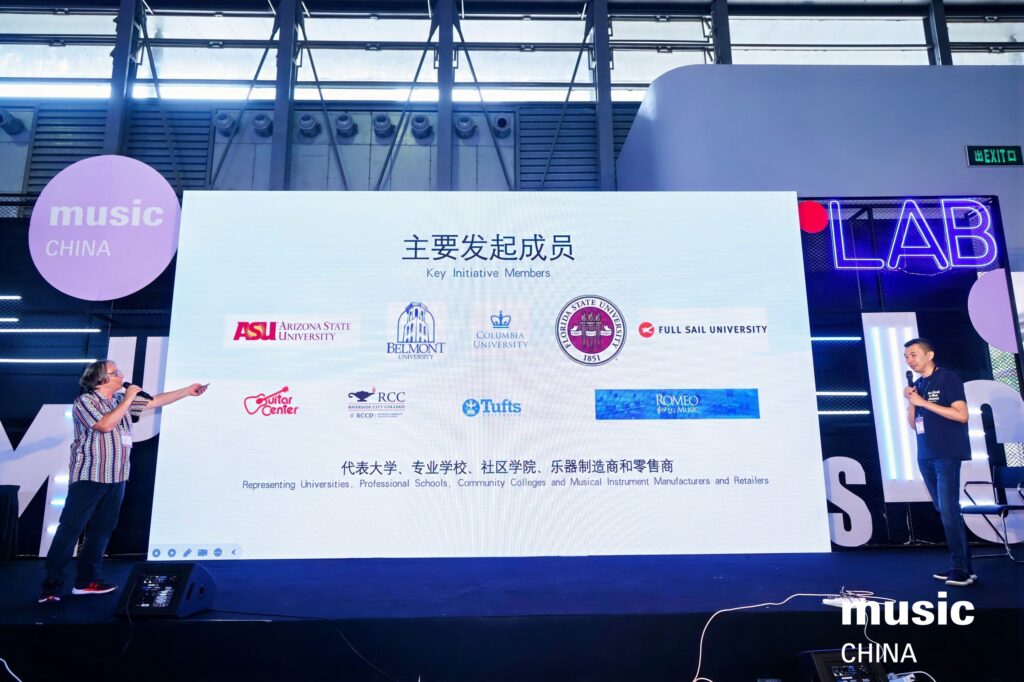
Zhao Yitian and Athan Billias from the MIDI Association executive board gave visitors to Music China an update on our plans to release a MIDI curriculum created by SAE Mexico and encouraged Chinese universities to translate our documents into Chinese.
MusicX stage MIDI in Music Education Music China 2024
In our next article, we’ll cover the 4 hour MIDI Forum that Music China arranged for Saturday, October 12, 2024.
Sound Without Sight is a new non-profit initiative, aimed at supporting sight-impaired people in the fields of audio and music. They will: showcase blind and partially sighted talent, highlight how accessibility barriers can be overcome, combine collective knowledge, and challenge stereotypes.
They have started started a monthly series of meet ups with next one being on Thursday 17th October 2024, 7pm UK time. that will feature a live demonstration of MuseScore Studio with a screen reader by headline guest James Bowden!
James is Braille Technical Officer at RNIB, and his feedback has been key in shaping the development of accessibility features within MuseScore in recent years.
The demonstration will last around 60 minutes, with a further 30 minutes for questions. This will be a relaxed, informal discussion and audience participation is encouraged.
We thought it was time to introduce the members who regularly attend these meetings so you can get to know their backgrounds and why they are passionate about making music making accessible to everyone. The Music Accessibility Standard Special Interest Group in The MIDI Association has been meeting regularly for over a year now every other Wednesday at 8 am Pacific Time.
Juho Tomanien- MASSIG Chair
Juho Tomanien is a student from Finland who had a vision for a Music Accessibility Standard. Just because you are blind, doesn’t mean that you can’t have a vision. Take Stevie Wonder whose Inner Visions album is considered one of the greatest records of all time.
Juho reached out to the MIDI Association after someone of KVR Audio suggested that perhaps The MIDI Association might be a good place to start up a conversation about Accessibility.
It turned out that there were already a number of MIDI Association member companies who had been working with accessibility consultants like UK producers/recording engineers Scott Chesworth and Jason Dasent and had already been adding accessibility features to their products. Juce which runs the Audio Developer Conference was also already onboard and had been hosting accessibility workshops at ADC for several years.
In 2023 at the ADC conference Jay Pocknell from the Royal Institute for the Blind hosted a packed session of developers trying to learn how to use Juce to add accessibility features to their products.
Workshop: An Introduction to Inclusive Design of Audio Products – Accessibility Panel – ADC23
MIDI Association members from Audio Modeling, Arturia, Native Instruments, Roland and more have joined together with The Royal Institute for the Blind and visually impaired producers and musicians like Juho, Scott Chesworth Jason Dasent and more to discuss how MIDI 2.0 might enable Music Accessibility and make making music accessible to everyone.
Jay Pocknell-SoundWithoutSight.org and the Royal Institute For The Blind
Jay Pocknell, SoundWithoutSight.org and the Royal Institute For The Blind
As a sight-impaired musician, I first considered plans for a project in 2018. I was achieving my dream of working in commercial recording studios but also found that there were significant barriers to accessing the equipment and culture. I became aware that my fully-sighted peers could be more agile within the industry. Rather than becoming frustrated, I wanted to use my experience as motivation to inspire change. I refused to believe that I was the only person to have struggled.
Ph.D. student at the Music Informatics Laboratory at the University of Milan, in collaboration with Audio Modeling.
From a young age, I was captivated by the transformative power of music. However, as I delved deeper into the world of digital instruments, I began to notice a glaring gap in accessibility. The tools that are supposed to empower creativity often come with barriers that exclude many from fully engaging in music-making. This realization fueled my desire to create digital instruments that are not only innovative but also inclusive, designed to be accessible and usable by everyone, regardless of their physical abilities or technical expertise.
Through my research, I aim to challenge the status quo by designing instruments that are adaptable and intuitive, ensuring that the joy of music is within reach for all. To deepen my understanding and to extend my vision of accessibility, I joined MASSIG (the Music Accessibility Standard Special Interest Group). Being part of this community has allowed me to connect with musicians who face real challenges in their everyday interactions with digital instruments. These interactions have been invaluable in shaping my research, providing me with insights into the practical needs and problems that must be addressed.
My journey is driven by the belief that music should be a universal language, and to achieve that, the tools we create must be as inclusive as the art form itself. As I continue my work, I am committed to breaking down barriers and ensuring that every musician, regardless of their background or ability, has the opportunity to express themselves through digital music. Short bio: I’m Vanessa, and I am currently pursuing a Ph.D. at the Music Informatics Laboratory at the University of Milan, in collaboration with Audio Modeling. My passion for music and technology has led me to a research project that sits at the intersection of both fields: the ideation and development of accessible digital music instruments.
Emanuele Parravicini, co-founder and CTO of Audio Modeling
Emanuele Parravicini is the co-founder and CTO of Audio Modeling. He holds a degree in Telecommunications Engineering and a Master’s in Information Technology. With a deep passion for music and music technology, Emanuele is a strong advocate for inclusivity, particularly in the realm of musical technology.
At Audio Modeling, he leads the development of innovative products, including the UniMIDI Hub, a software platform designed to integrate various accessible devices. This platform enables real-time control of digital instruments or music production software by multiple users simultaneously, whether they are individuals with disabilities, students, amateurs, or professionals.
Emanuele’s commitment to making music technology accessible to everyone is the driving force behind his involvement in the MASSIG – Music Accessibility Standard Special Interest Group. His expertise and dedication to inclusivity in the field align perfectly with the group’s mission.
I am Emanuele Parravicini, co-founder and CTO of Audio Modeling. I hold a degree in Telecommunications Engineering and a Master’s in Information Technology. With a deep passion for both music and music technology, I am a strong advocate for inclusivity, especially within the realm of musical technology.
In my role at Audio Modeling, I oversee the development of our products, including one of our latest projects, the UniMIDI Hub. This software platform aims to integrate various accessible devices, allowing real-time control of digital instruments or music production software by multiple users at once, whether they are individuals with disabilities, students, amateurs, or professionals.
My commitment to making music technology accessible to everyone is what led me to join the MASSIG – Music Accessibility Standard Special Interest Group. I believe that inclusive technology can empower people to create and enjoy music, and I am dedicated to contributing to this important mission.
Emanuele Parravicini
Haim Kairy- CEO – Arcana Instruments
I am an engineer, software developer, maker, entrepreneur, and musician, currently serving as co-founder and CEO of Arcana Instruments. Throughout my professional career in technology startups and consulting for banks, energy, and insurance companies, I never found a true sense of purpose. Music has always been central to my life, playing, recording, producing, and performing. Without it, I would surely be lost.
Eight years ago, everything changed when my friend Boaz, a music-school teacher, showed me a video of Gil, a 12-year-old girl with cerebral palsy, trying to play the guitar. Unfamiliar with CP, I was moved by her passion and frustration as she struggled to control her hands and fingers. Realizing that no suitable instrument existed for her, we were heartbroken. However, seeing Gil controlling her motorized wheelchair with a joystick inspired us to create an accessible musical instrument she could play.
What began as a hackathon project for one girl evolved into a year of research, working with individuals aged 5 to 95 to develop the Arcana Strum, an inclusive, adaptable musical instrument. We raised capital from angel investors and government grants, left our day jobs, and fully committed to this mission.
Meeting hundreds of people with disabilities and making music accessible to them has made a huge impact on me. I’ve come to understand that a significant portion of the population is systemically excluded from learning and playing music, a body-brain-developing, spirit-lifting activity I once took for granted.
As part of the MIDI Association Special Interest Group, Arcana gains invaluable insights from musicians and professionals about music accessibility needs. We aim to contribute our resources, knowledge, and experience to create an inclusive and accessible music landscape for everyone.
Micheal Strickland , Specialized Faculty in Music Technology at Florida State University
Michael Strickland is a passionate advocate for music education and accessibility, leveraging his expertise in music technology to create innovative learning and performance environments. As a member of the MIDI Association, he participates in the Music Education and Accessibility Special Interest Groups, where he promotes the use of MIDI as a tool for enhancing musical expression and inclusion. He is also a skilled performer, engineer, and researcher, with a diverse background in physics, music, and improvisation. He is honored to serve as a judge for the MIDI Innovation Awards and celebrate the creative potential of MIDI.
I have previously worked in the broadcast industry, delivering control and monitoring interfaces for visually impaired users and improving access to various production tools.
I know that improvements to a product’s accessibility improves workflows for all of its users and that considering the access to all elements of a product, for all users at the earliest stage of design is the best way to deliver a product that works best for the widest audience. This is not just a social benefit, it is good business practice. Whilst engaging where necessary with product modifiers (such as screen readers), I much prefer to design products that work for each user’s ability. I consider what interface the users can use and how they can access the features of a product. That includes forgetting about GUI for totally blind users, reconsidering tactile controls for users without physical reach or dexterity, designing workflows with appropriate levels of complexity for users with different cognitive abilities, etc.
All of these considerations, and more should be fitted into as many of our products as we can. The core learning is that user interfaces may be significantly different for different users of the same product, to provide a similar user experience.
I have done this in the past and strive to do so with the projects I work on now and in the future. It is this experience, skillset and aspiration to improve musicians experience that attracts me to MASSIG.
Design for all and all benefit.
Sam Prouse- Music Technologist
Samuel Prouse is a passionate music technologist whose journey with sound began in the vibrant 1980s, inspired by the iconic synths that defined the era. Growing up, He channelled this passion into building rigs, DJing, and live performances, initially as a hobby. In 2008, a deep love for music technology led to a bold career shift, prompting him to pursue formal education in the field. However, just before beginning these studies, life took an unexpected turn with the sudden loss of sight in the left eye, later leading to a diagnosis of multiple sclerosis. By the end of his BTEC studies, He was registered visually impaired, which brought unique challenges to his educational journey and professional aspirations.
Despite these obstacles, Samuel demonstrated remarkable resilience, earning a foundation degree, a BA Hons, and an MSc in Music Technology. Throughout this academic journey, Samuel explored the creative implications of device interfaces, both hardware and software, with a particular focus on visual accessibility. In 2021, when JUCE released version 6.1 with enhanced accessibility features, he developed skills in C++ and interface design, driven by a commitment to improving accessibility in music technology.
After graduating with distinction, Samuel ‘s PhD bursary proposal was accepted, allowing him to focus his research on universal design concepts within the music technology industry. As an active member of the Music Accessibility Standard Special Interest Group, Samuel has found a collaborative space to share innovative ideas and concepts, further strengthening his research. Being part of such a committed group has provided constant inspiration to develop new ways of interacting with music technology. Today, he is dedicated to pioneering new ways of interacting with music technology, ensuring that the industry evolves to be more inclusive and accessible for all.
Sam Prouse demoing accessibility settings to the Music Accessibility Standard SIG
Same Prouse Highlights Music Accessibility on YouTube
Demystifying screen readers #1 We can drag and drop.
Accessible prototype synthesiser with voice activated parameters
Accessible piano roll and break point generator prototypes
Designing Plugins for low vision
Music Accessibility at Music China and ADC
We are planning a number of upcoming Music Accessibility events – one at Music China in October and then another led by Jay Pocknell at Audio Developers Conference in November.
Here is a promo video for the event at Music China and then a list of recent posts.
MIDI Association members from Audio Modeling and Sound Without Sight present the Music Accessibility Standard Special Interest Group and their work to make music accessible to everyone. Adapted from the ‘Future of Music Accessibility’ session at the NAMM Show 2024.
Link to sign up for the MASSIG: https://midi.activehosted.com/f/37
Link to Sound Without Sight: https://soundwithoutsight.org/
Video chapters:
00:00 Introduction by Athan Billias and Jay Pocknell.
03:03 Useful definitions.
04:14 Why is accessibility important?
05:37 Why design inclusively?
07:12 Inclusion in music-making: the current situation.
09:05 Breaking the loop: what we can do together.
09:48 Practical inclusive design tips from Tim Yates (Drake Music).
16:32 Which companies are already supporting accessibility?
17:37 What needs to happen next?
19:09 The MIDI Association’s Music Accessibility Standard.
25:13 Q&A with Emanuele Parravicini (Co-Founder, Audio Modeling).
Fast Company recently contacted The MIDI Association about the Music Accessibility Standard.
Janko Roettgers from Fast Company reached out to us and we arranged some interviews with members of the Music Accessibility Standard Special Interest Group (MASSIG).
It really seems like this Music Accessibility initiative is gaining more and more traction.
The MASSIG meets every other Wednesday at 8 am Pacific to accommodate the many EU based members.
You can join The MIDI Association’s Music Accessibility Standard by registering on the site and indicating Music Accessibility as one of your interests or send an email to info@staging.midi.org and we can get you set up.
Here are some quotes from the article.
The MIDI Association’s work in this field includes an effort to create a technical standard that could help vision-impaired musicians to more easily control their recording and production gear by loading accessibility settings whenever they plug one of their devices into another. The nonprofit also plans to help spread the word about accessibility, and potentially steward open source software efforts in the field.
For Chesworth, the biggest thing music tech companies can do to further accessibility is to actually listen to blind and vision-impaired people. “ The best people to write a screen reader user experience are screen reader users,” he says. Chesworth believes that companies would ideally hire blind developers to work on accessibility, and he even taught himself programming to contribute to the Reaper accessibility extension.
Written for Fast Company by Janko Roettgers, a San Francisco-based reporter who has written for Variety, Protocol, and Gigaom, among other publications.
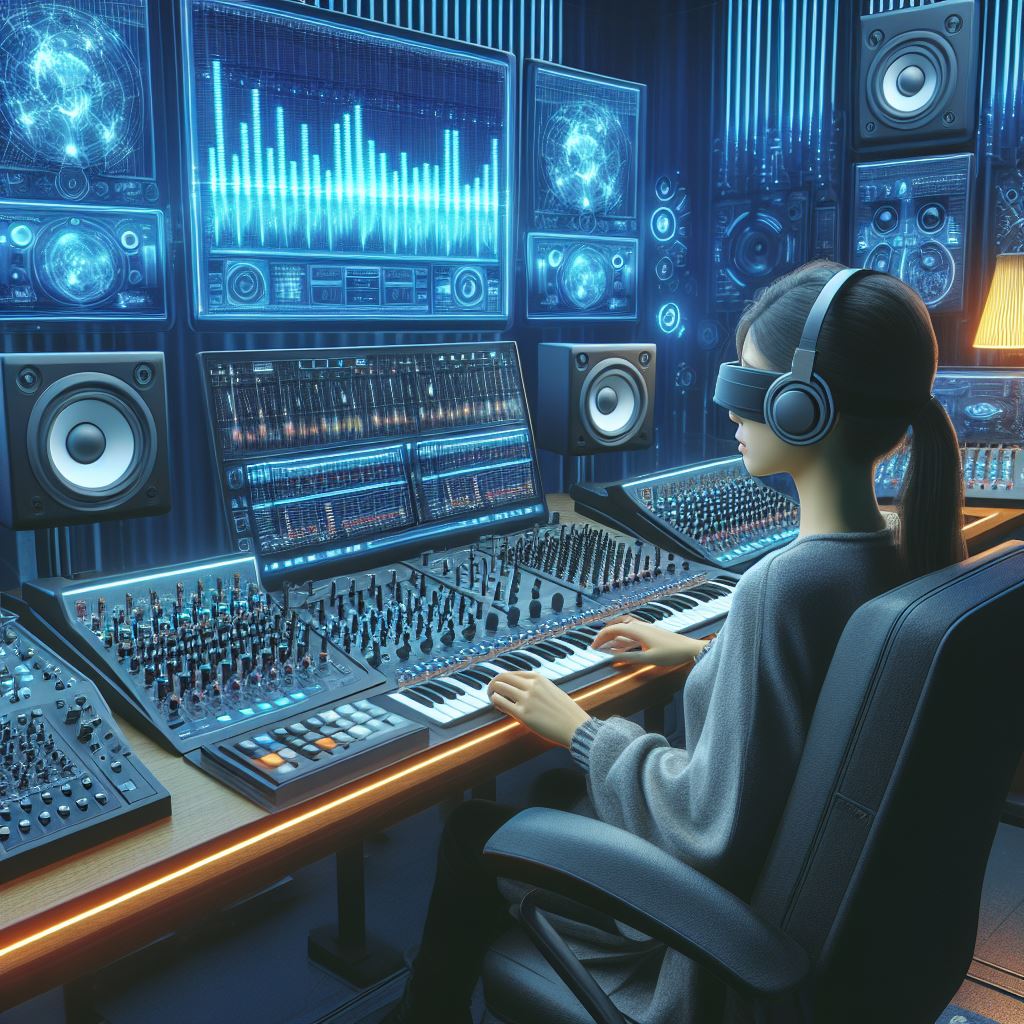
BTW, the image for this article was generated by AI with the simple prompt ” Futuristic Music Production Studio for people with accessibility challenges”.
Join us on Youtube for the Piano Profile Demo at NAMM 2024 featuring Roland Artist Scott Tibbs.
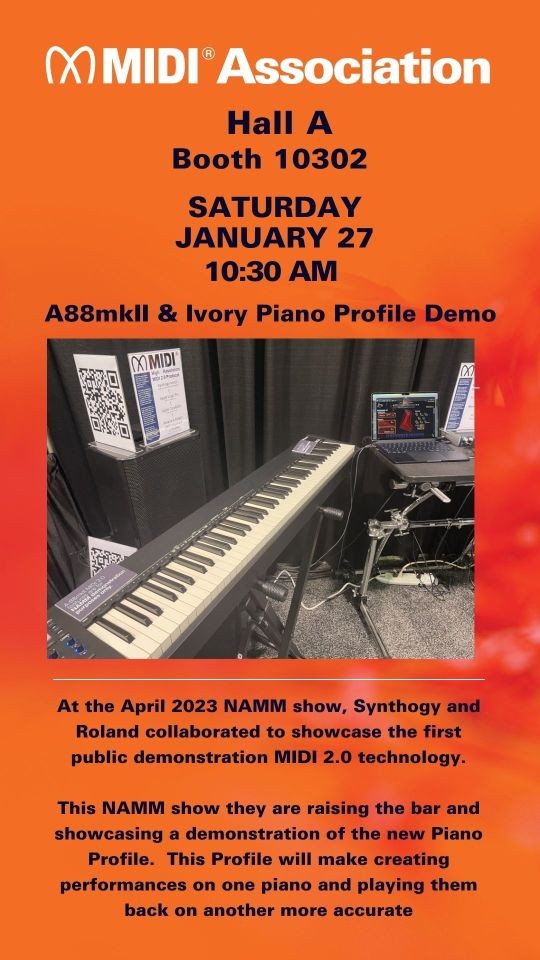
At the April 2023 NAMM show, Synthogy and Roland collaborated to showcase the first public demonstration MIDI 2.0 technology.
At the 2024 NAMM show they raised the bar again and showcased a demonstration of the new Piano Profile.
This Profile will make creating performances on one piano and playing them back on another more accurate.
Roland Product Specialist Scott Tibbs performed.
Scott has amassed a large body of music with numerous recording artists such as Beyoncé, Mary J. Blige, Howard Jones, Bruce Springsteen, Nelly, Lil’ Wayne, Jamie Fox, Robin Thicke, Bette Midler, Destiny’s Child, Jazmine Sullivan, Amerie, Jamie Foxx, Teddy Riley, Omar Hakim, Billy Cobham, and more.
Background
The piano is arguably the most important musical instrument in Western music traditions. It is essential to all styles of music from classical to jazz to pop, so when the MIDI Association started to develop Profiles, a Piano Profile was at the top of the list.
This piano Profile is focused on Acoustic Pianos with mechanical key mechanisms driven by MIDI, Digital Acoustic Piano Tone Generators (both hardware and software), and physical MIDI keyboards that send MIDI messages and the most common of all – Digital Pianos which incorporate both Digital Acoustic Piano Tone Generators and physical MIDI keyboard. The Profile does not address electro-mechanical pianos or the extended features of digital ensemble pianos.
Goals
The goal is a Piano Profile that defines the MIDI Messages and bi-directional MIDI-CI communication necessary to allow the performance of an acoustic piano piece on one device that supports the Piano Profile to be accurately rendered on any other device which also supports the Profile.
The Piano Profile defines the MIDI Messages and bi-directional MIDI-CI communication necessary to allow the performance of an acoustic piano piece on one device that supports the Piano Profile to be accurately rendered on any other device which also supports the Profile.
The Profile provides support for remote (over the internet) performance.
The Piano Profile details what information needs to be included in a Standard MIDI File (SMF2) and the mechanisms needed to accurately reproduce a piano performance from a file.
The Piano Profile addresses the following use cases:
Piano + tone generator (the most typical MIDI 1.0 use case)
Online live broadcasting of piano performances
Online lessons with a teacher and student
MIDI Streaming of recorded piano performances
Music production (use of the Piano Profile with DAWs)
The MIDI 2.0 Workbench is a free tool to help developers develop, debug (and deploy) MIDI 2.0 Applications and Devices. It runs on Windows, Mac and Linux. The Workbench connects to your device or software, to test various MIDI 2.0 implementation features against official specifications. The MIDI 2.0 Workbench is the only automated tool that generates the MIDI 2.0 Compliance Checklist required to license the MIDI 2.0 Logo from the MIDI Association. The MIDI 2.0 Workbench is currently available as source code for you to compile. We will release binaries shortly.
AmeNote ProtoZOA and USB MIDI 2.0 Device
The AmeNote ProtoZOA hardware platform is a flexible prototyping tool for MIDI 2.0 and is the standard testing device chosen by and funded in part by the MIDI Association. Open source firmware provides MIDI 2.0 interfaces and functions for developers to use in their own hardware and software products. ProtoZOA provides a USB MIDI 2.0 Class Compliant Device on a Raspberry Pico, designed specifically to jump-start prototyping and validation of Universal MIDI Packet (UMP) functions and fuel the MIDI 2.0 revolution. ProtoZOA integrates closely with the MIDI 2.0 Workbench.
Tiny USB MIDI 2.0 Device
This is a Tiny USB Device driver for USB MIDI 1.0 and USB MIDI 2.0 as a unified device. Allows implementor to create hardware MIDI devices which are fully compliant with USB Device Class specifications. Includes the fallback mechanism from 2.0 to 1.0 as defined in USB MIDI 2.0.
USB MIDI 2.0 Descriptor Builder
This is tool for easily creating valid descriptors for USB MIDI 2.0 Devices, which are so easy to get wrong. Fill in properties in a form to generate an output of the necessary descriptors. Supports the tusb_ump library, a USB Device used in the ProtoZOA, and the Linux MIDI2 Gadget Driver.
ni-midi2
The library provides the basic functionality of UMP 1.1 and MIDI-CI 1.2 by providing base classes for all UMP 1.1 packet types, (Universal) System Exclusive messages and MIDI-CI messages. There are concrete types for controllers, velocity and pitch, plus type aliases for common message field types. Mathematical operators allow to do integer / fixed point math on pitches and controllers, type constructors allow initialization with values of different resolution. Conrete instances of packets or messages are created using factory functions. Incoming packets and messages are inspected using data views. The library is completed by a number of helper functionalities dealing with conversion from / to MIDI 1 byte stream data format, collecting sysex messages and more.
AM_MIDI2.0Lib
This is a general purposes Library for building MIDI 2.0 Devices and Applications. This library is targeted to work on everything from Arduinos through to large scale applications. It provides foundational building blocks, processing, and translations needed for most MIDI 2.0 Devices and Applications.
*Note: This MIDI2 Developer Collaboration is not a project of the The MIDI Association, but was founded by key participants in the development of MIDI 2.0, working as members of the MIDI Association. The MIDI 2.0 Logo is a registered trademark of the MIDI Association, used under license. The M2 Logo is a trademark of the MIDI2 Developer Collaboration at MIDI2.dev.
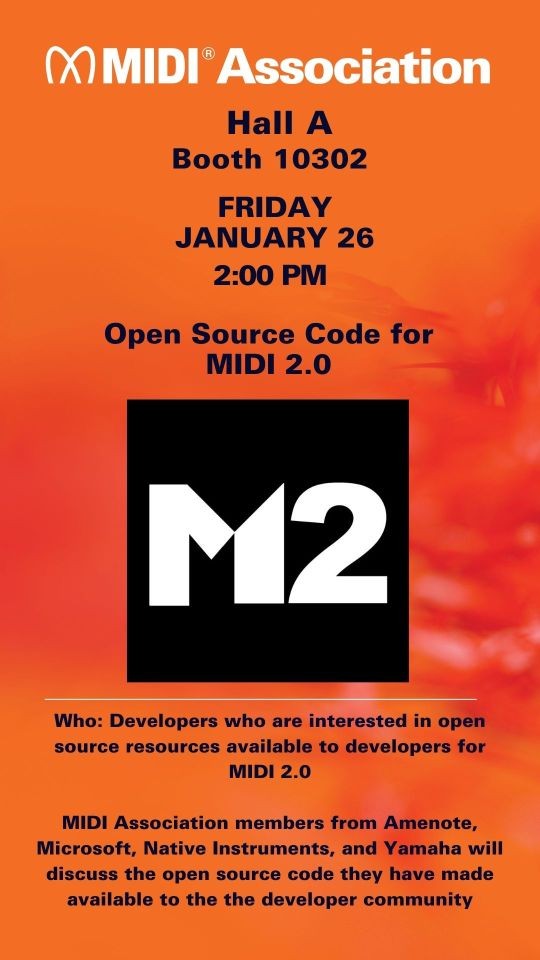
Join us on Youtube for the Open Source Code for MIDI 2.0 At Winter NAMM 2024 panel discussion.
At the April 2023 NAMM show, Synthogy and Roland collaborated to showcase the first public demonstration MIDI 2.0 technology.
This NAMM show they are raising the bar and showcasing a demonstration of the new Piano Profile.
This Profile will make creating performances on one piano and playing them back on another more accurate.
Roland Product Specialist Scott Tibbs will perform.
Scott has amassed a large body of music with numerous recording artists such as Beyoncé, Mary J. Blige, Howard Jones, Bruce Springsteen, Nelly, Lil’ Wayne, Jamie Fox, Robin Thicke, Bette Midler, Destiny’s Child, Jazmine Sullivan, Amerie, Jamie Foxx, Teddy Riley, Omar Hakim, Billy Cobham, and more.
Background
The piano is arguably the most important musical instrument in Western music traditions. It is essential to all styles of music from classical to jazz to pop, so when the MIDI Association started to develop Profiles, a Piano Profile was at the top of the list.
This piano Profile is focused on Acoustic Pianos with mechanical key mechanisms driven by MIDI, Digital Acoustic Piano Tone Generators (both hardware and software), and physical MIDI keyboards that send MIDI messages and the most common of all – Digital Pianos which incorporate both Digital Acoustic Piano Tone Generators and physical MIDI keyboard. The Profile does not address electro-mechanical pianos or the extended features of digital ensemble pianos.
Goals
The goal is a Piano Profile that defines the MIDI Messages and bi-directional MIDI-CI communication necessary to allow the performance of an acoustic piano piece on one device that supports the Piano Profile to be accurately rendered on any other device which also supports the Profile.
The Piano Profile defines the MIDI Messages and bi-directional MIDI-CI communication necessary to allow the performance of an acoustic piano piece on one device that supports the Piano Profile to be accurately rendered on any other device which also supports the Profile.
The Profile provides support for remote (over the internet) performance.
The Piano Profile details what information needs to be included in a Standard MIDI File (SMF2) and the mechanisms needed to accurately reproduce a piano performance from a file.
The Piano Profile addresses the following use cases:
Piano + tone generator (the most typical MIDI 1.0 use case)
Online live broadcasting of piano performances
Online lessons with a teacher and student
MIDI Streaming of recorded piano performances
Music production (use of the Piano Profile with DAWs)
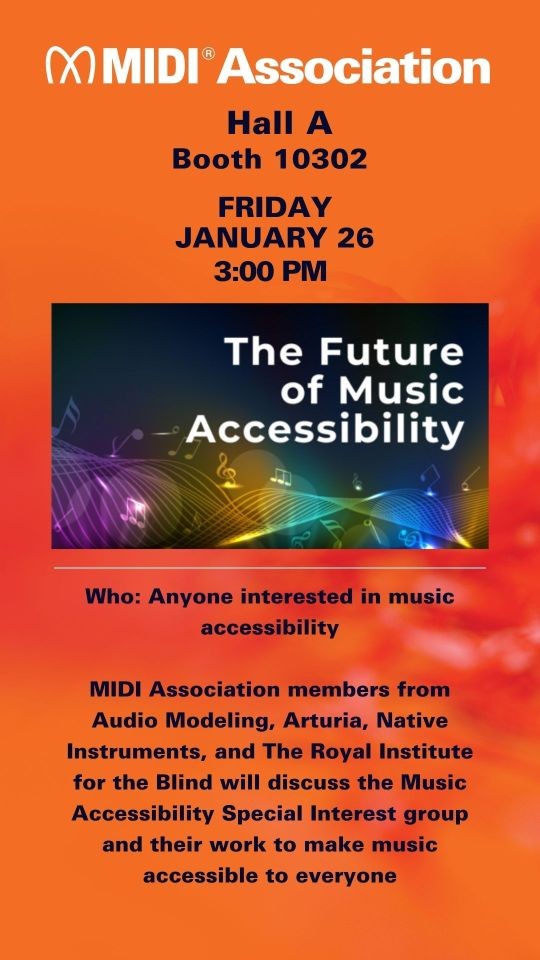
MIDI Association members from Audio Modeling, Arturia, Native Instruments, and The Royal Institute for the Blind will discuss the Music Accessibility Special Interest group and their work to make music accessible to everyone
The MIDI 2.0 Workbench is a free tool to help developers develop, debug (and deploy) MIDI 2.0 Applications and Devices. It runs on Windows, Mac and Linux. The Workbench connects to your device or software, to test various MIDI 2.0 implementation features against official specifications. The MIDI 2.0 Workbench is the only automated tool that generates the MIDI 2.0 Compliance Checklist required to license the MIDI 2.0 Logo from the MIDI Association. The MIDI 2.0 Workbench is currently available as source code for you to compile. We will release binaries shortly.
AmeNote ProtoZOA and USB MIDI 2.0 Device
The AmeNote ProtoZOA hardware platform is a flexible prototyping tool for MIDI 2.0 and is the standard testing device chosen by and funded in part by the MIDI Association. Open source firmware provides MIDI 2.0 interfaces and functions for developers to use in their own hardware and software products. ProtoZOA provides a USB MIDI 2.0 Class Compliant Device on a Raspberry Pico, designed specifically to jump-start prototyping and validation of Universal MIDI Packet (UMP) functions and fuel the MIDI 2.0 revolution. ProtoZOA integrates closely with the MIDI 2.0 Workbench.
Tiny USB MIDI 2.0 Device
This is a Tiny USB Device driver for USB MIDI 1.0 and USB MIDI 2.0 as a unified device. Allows implementor to create hardware MIDI devices which are fully compliant with USB Device Class specifications. Includes the fallback mechanism from 2.0 to 1.0 as defined in USB MIDI 2.0.
USB MIDI 2.0 Descriptor Builder
This is tool for easily creating valid descriptors for USB MIDI 2.0 Devices, which are so easy to get wrong. Fill in properties in a form to generate an output of the necessary descriptors. Supports the tusb_ump library, a USB Device used in the ProtoZOA, and the Linux MIDI2 Gadget Driver.
ni-midi2
The library provides the basic functionality of UMP 1.1 and MIDI-CI 1.2 by providing base classes for all UMP 1.1 packet types, (Universal) System Exclusive messages and MIDI-CI messages. There are concrete types for controllers, velocity and pitch, plus type aliases for common message field types. Mathematical operators allow to do integer / fixed point math on pitches and controllers, type constructors allow initialization with values of different resolution. Conrete instances of packets or messages are created using factory functions. Incoming packets and messages are inspected using data views. The library is completed by a number of helper functionalities dealing with conversion from / to MIDI 1 byte stream data format, collecting sysex messages and more.
AM_MIDI2.0Lib
This is a general purposes Library for building MIDI 2.0 Devices and Applications. This library is targeted to work on everything from Arduinos through to large scale applications. It provides foundational building blocks, processing, and translations needed for most MIDI 2.0 Devices and Applications.
*Note: This MIDI2 Developer Collaboration is not a project of the The MIDI Association, but was founded by key participants in the development of MIDI 2.0, working as members of the MIDI Association. The MIDI 2.0 Logo is a registered trademark of the MIDI Association, used under license. The M2 Logo is a trademark of the MIDI2 Developer Collaboration at MIDI2.dev.
Members of the Network Transport WG will explain and demo working prototypes of the new network Transport
This specification defines the mechanisms and the message format for exchanging Universal MIDI Packet messages via a local area network. This enables the transport of MIDI 1.0 Protocol and MIDI 2.0 Protocol. This also defines discovery of available Network MIDI devices and Hosts, and management of Network MIDI Sessions.
Some examples of use-cases in this specification may include:
The vast majority of people who use MIDI have some type of home studio with a computer and multiple MIDI devices connected together. They record audio and MIDI using Digital Audio Workstation software.
Most live performance venues and performances combine both networked multi-channel digital audio and a variety of MIDI instruments and controllers.
Commercial facilities that include broadcast studios, recording studios, and universities with networked electronic music/piano labs.
This specification defines a way to connect those home studios or those performance venues via Ethernet and WiFi on a local area MIDI network.
As of early 2024, the only available transport for MIDI 2.0 UMP is the USB Device Class Definition for MIDI Devices v2.0. An Ethernet network has some advantages over USB:
A USB cable length is generally limited to about 3 meters (about 9 feet and 10 inches). Ethernet cables can transmit data up to 100 meters without any signal loss or degradation.
USB can create problems with grounding noise. Ethernet connections are electrically isolated while USB is not.
The connection topology can be changed in software without having to move physical cables.
Many transports for audio use Ethernet. Some of those are open standards (i.e. AES67) and some are proprietary (i.e., Dante by Audinate and Q-LAN by QSC).
Being able to run MIDI 2.0 as a control protocol over the same cables that run audio can greatly expand the use of MIDI 2.0. MIDI 2.0 expands outside the limitations of MIDI 1.0, now using 32 bit words, no bandwidth limitations, and room for thousands of new messages. For example, the high resolution of MIDI 2.0 makes it possible to directly specify and control frequency parameters from 20Hz to 96KHz (and above).
A MIDI 2.0 UDP transport specification has many benefits for both end users and companies that make MIDI and audio products.
This project is the next-generation MIDI API for Windows, including MIDI 1.0, MIDI CI, and MIDI 2.0. It includes enhancements, a new USB class driver, new transports, and a suite of essential tools. The project adds many enhancements and bug fixes to our MIDI 1.0 support, and importantly adds support for the latest revisions to MIDI CI and MIDI 2.0 as approved by The MIDI Association.
The open source USB MIDI 2.0 driver has been generously donated by AMEI, the Association of Musical Electronics Industry, and developed by AmeNote ™️ in partnership with Microsoft. Please see the file headers for any additional copyright notices. A huge thank you to AMEI and its member companies for making this happen!
This is an official Microsoft project. Although Microsoft is an active member of the MIDI Association, and Pete Brown is the chair of the MIDI Association Executive Board, and other contributors are on standards boards, this project is not affiliated with the MIDI Association other than as a consumer of and contributor to the standards. Affiliation with AMEI is disclosed above.
The MIDI Association booth (Booth 10302 at the front of Hall A) at Winter NAMM 2024 is very different than our booths in years past.
It is larger with a 30′ by 30′ footprint. A 10′ by 30′ area will be divided into thirds with displays of MIDI 2.0 products, a MIDI Showcase stage for presentations/performances and an area focused on our MIDI In Music Education, Music Accessibility Standard and Interactive Audio Special Interest Groups. But 75% of the booth is dedicated to 50 seats each with a set of wireless headphones so people can come and comfortably watch and listen to presentations and performances.
We also have Booth 10604 which is a 10′ by 10′ booth shared between Intuitive Instruments who won the Commercial Hardware category in The MIDI Innovation Awards in 2023 and the other MIDI Innovation Award winners
Audio Modeling- Camelot Pro
Hitar- augmented guitar for percussive fingerstyle
Sound Sculpture-an interactive musical instrument comprised of 25 location-aware cubes
Studio 108 is a small meeting space for private meetings during the show.
We are being helped again this year by Jennifer Amaya, Associate Professor of Music at the Riverside City College Coil School for the Arts and member of The MIDI In Music Education Special Interest Group.
We will have 70 students helping with all aspects of the booth including running the Yamaha TF3 digital mixer.
We have put together over 20 different presentations and performances highlighting the innovative power of creating music and art with MIDI.
Below is a listing of all the presentations we have planned. The list starts with a Youtube video summary of the each day’s events and then includes the details of each individual event.
Each day ends with a solo performance by one of the artists who performed in our MIDI@40 celebration at the April 2023 NAMM show on the Yamaha Grand Plaza stage.
Thursday, January 25
Friday, January 26
Saturday, January 27
Sunday, January 28
Full Four Day Schedule (3 minutes and 38 seconds)
MIDI Association Companies at NAMM
37 MIDI Association companies will have booths at the 2024 Winter NAMM show.
Many are in the MIDI showcase area, but there are plenty who are spread around the show in different areas including some of the larger companies like Avid, Steinway and Yamaha.
Here is an alphabetical list of The MIDI Association companies at the 2024 Winter NAMM show with their booth numbers.
Music Accessibility Standard Special Interest Group kicks off with a Youtube Live Stream
Members of the Music Accessibility Standard Special Interest Group (MAS SIG) outlined their vision for the future of Music Accessibility in a Youtube Live event on the MIDI Association Youtube channel.
Musicians and producers who face accessibility challenges including Juho Toumainen, Jason Dasent and Scott Chesworth joined developers and representatives from companies like Arturia, Audio Modeling, Native Instruments and Roland who are participating in the MAS SIG. The group meets every two weeks.